
ARTICLE AD BOX
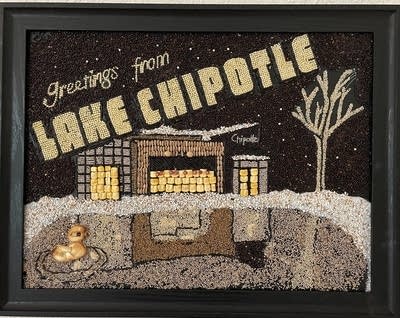
With more submissions than ever before, it’s a bumper year for crop art at the Minnesota State Fair. So MPR News host Cathy Wurzer, a hobby mosaic artist in her own right, decided that it was finally time to give it a try.
She called Jill Moe, who teaches crop art classes at Wet Paint in St. Paul, to set up a lesson.
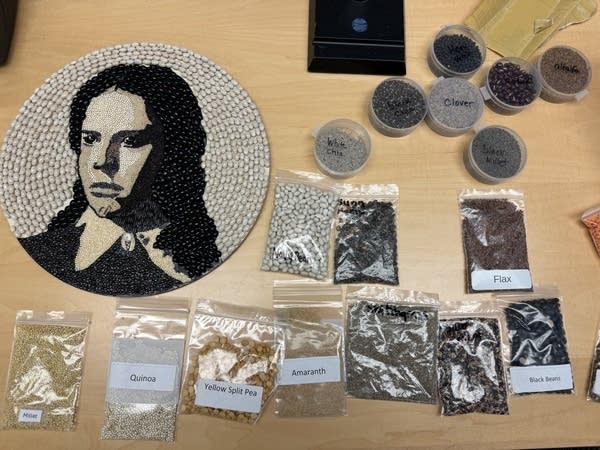
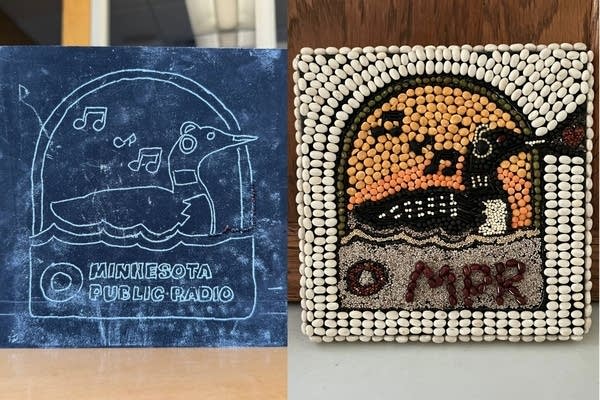
To start, Moe laid out a slew of materials — including canola, quinoa, wild rice and hominy — for Cathy to try. For her part, Cathy brought an MPR logo of a loon wearing headphones.
She was a tad concerned the piece would end up looking like a grade school art project, akin to the classic construction paper and macaroni mosaic. Moe said not to worry:
“This is a primal skill that we all have. People get intimidated because, I feel like, anytime you say art, people think, ‘Oh, I’m not an artist,’ right? No, you are,” Moe assured Cathy. “It really is something whether people all over Minnesota are making and creating, and then they come and share. It really is show-and-tell.”
Armed with chalk and Elmer’s glue, Moe demonstrated how to transfer Cathy’s chosen design onto a primed square board. She then began placing the first line of canola seeds with a stylus. Toothpicks work, too, and a straight edge like a credit card can help neatly arrange stubborn, tiny materials.
Moe explained that you can get many seeds at your neighborhood co-op, but she also recommended stopping by a rural hardware store for rarer finds — advice she learned on her own crop art journey that began about a decade ago.
Moe and her family moved to Minnesota from Seattle back in March of 2008.
“And our neighbors across the street were asking us if we were going to the fair, and we thought that maybe Minnesota did their fair in April, or like, a spring fair,” Moe said. She quickly learned that’s not the case; the Great Minnesota Get-Together is not to be dismissed.
A few years in, Moe decided she wanted to accelerate her acclimation to Minnesota by entering the fair’s baking contest, but soon desired to pivot. The fine arts contests didn’t intrigue her, despite her creative background, but crop art resonated.
“Crop art: if you enter it, they'll put it up,” she said, making Cathy laugh. It was “a better fit for what I want to do. And it gave me a deadline, because that was always my struggle with making art.”
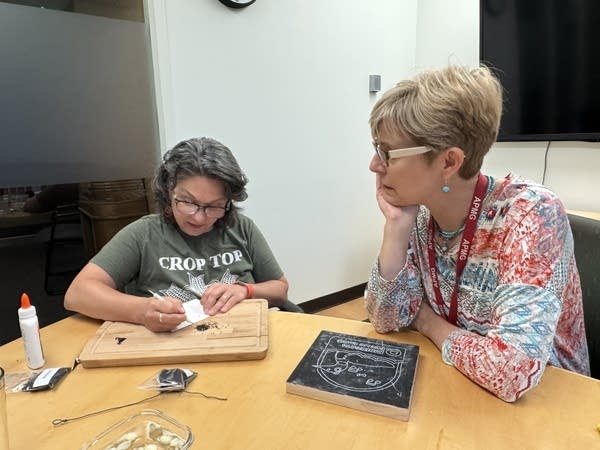
As Cathy got the hang of it, Moe described some advanced-level techniques, like toasting amaranth to get more color choices, which helps with depicting skin tones. You can also cut wild rice into pieces and carve soaked hominy.
But you can go too far.
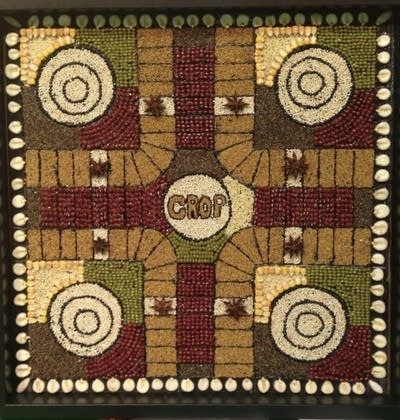
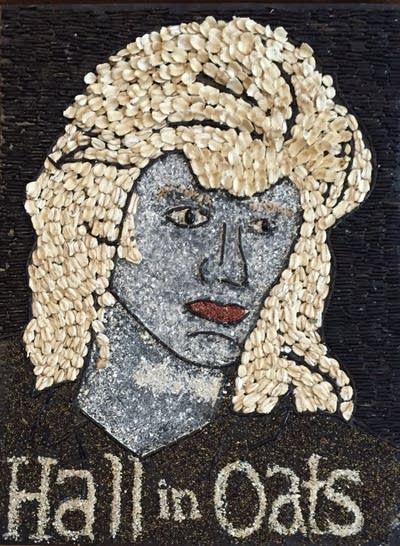
In a past quest to depict Hall & Oates entirely in oats, Moe learned that pulverizing crops in a blender will lead to judges docking points. Your chosen crops must also be grown in Minnesota to qualify. That means no star anise and orange peels.
Finding the craft easier than expected, Cathy saw where it could also be a little addicting. Herding seeds forces you to slow down and focus.
Moe’s final tip:
“Number one, you can do this,” she told Cathy. “Just keep going, and just have fun.”
Correction (Aug. 22, 2025): An earlier version of this story incorrectly stated where the lesson took place. It occurred at MPR headquarters in St. Paul. The story has been updated.


 English (US) ·