
ARTICLE AD BOX
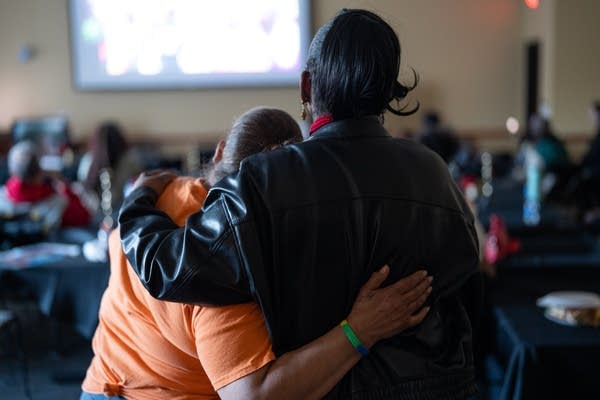
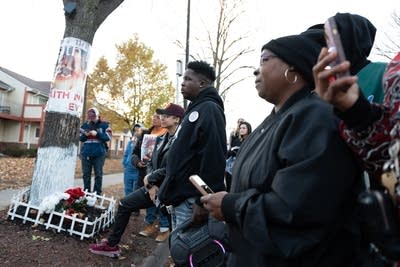
Dozens gathered in north Minneapolis on Saturday to mark 10 years since the police killing of 24-year-old Jamar Clark.
Clark died on Nov. 16, 2015, a day after Minneapolis police shot him in the head outside a birthday party.
Ten years later, loved ones are still grappling with his death.
“It’s always, to me, is like yesterday,” said Clark’s mother Irma Burns. “The pain never goes away.”
Clark’s family — including his grandmother, aunts, uncles, siblings and numerous small nieces and nephews — joined activists and other community members at the University of Minnesota Urban Research and Outreach Engagement Center on Plymouth Avenue, just blocks from where the shooting took place.
They remembered Clark as he lived. Burns said her son once literally gave the shoes off his feet to someone shoeless in snow. He learned to roller blade at age three and would describe himself as a “mama’s boy.” The youngest of 10 siblings, he liked to make others laugh. He enjoyed the family’s frequent, large gatherings and particularly loved his sister’s mac and cheese.
The signature colors of the Chicago Bulls — Clark’s favorite basketball team — adorned the space, appearing on welcoming balloons, decorative roses and guests’ attire.
Burns said people continuing to remember Clark has offered some solace over the years. So has knowing that Clark’s death helped contribute to more lasting change around police reform.
His killing sparked major protests in 2015 and laid the groundwork for Minneapolis to become the epicenter of a movement for Black lives following the 2020 murder of George Floyd.
“That’s a big sacrifice,” said Burns in an interview with All Things Considered host Clay Masters.
The circumstances of Clark’s killing are disputed. No video of the shooting exists. At the time, police said Clark confronted paramedics treating a woman and grabbed an officer’s gun. Eyewitnesses maintain Clark was not resisting officers, with some claiming he was handcuffed when officers shot him.
Then-Hennepin County Attorney Mike Freeman declined to press charges against the officers, alleging there was no evidence Clark was handcuffed and that Clark’s DNA was found on the gun of one of the officers. The Justice Department concluded there was insufficient evidence to prove beyond a reasonable doubt that the officers willfully violated Clark’s civil rights.
Ten years later, the former head of Minneapolis’s 4th Precinct questions how officers came to kill Clark.
“What is the truth? What happened there? Why was he shot? You have two officers right there. That doesn’t mean some guy can’t take out two officers, but you have the two people there. How and why do you get shot?,” said Michael Friestleben in an interview with MPR News broadcast Friday.
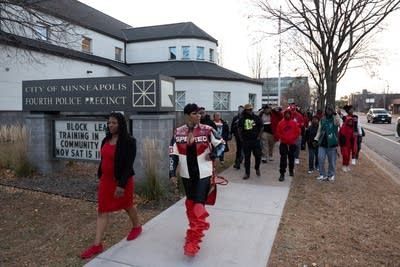

Saturday, a volunteer effort called The Reinvestigation Workgroup said it is working to clear Clark’s name and get police accountability for his death.
The group, which co-hosted the event, reports having investigated over 20 cases of police violence in Minnesota and says it has helped win major settlements for the families of victims. Volunteer investigators began reviewing the evidence around Clark’s death over a year ago to prepare for this weekend.
They laid out their initial findings in a presentation. A reenactment of how they believe police came to shoot Clark drew strong reactions from attendees. One woman ran out in tears.
The aim is to have Minnesota Attorney General Keith Ellison review Clark’s case and consider criminal charges against the involved officers, according to volunteer investigator Emma Pederson. Until then, the group continues its work.
“We're in a pretty strong position for the statements that we made today, but we’re still trying to reach out to some witnesses,” said Pederson.
She said the group plans to lobby Minnesota lawmakers to pass a law allowing victims’ families to pursue civil rights lawsuits against police on a state level.
In addition to speaking out, Clark’s relatives have created different organizations to support others since his death: Project Jamar Saving Me, Brothers for Justice and Impacted Siblings Take Action.
“That's my brother’s legacy. That's how we’re going to continue to fight,” said Eddie Sutton, brother to Clark.
To conclude the event, family members unveiled a permanent memorial bench at the site where Clark was shot.
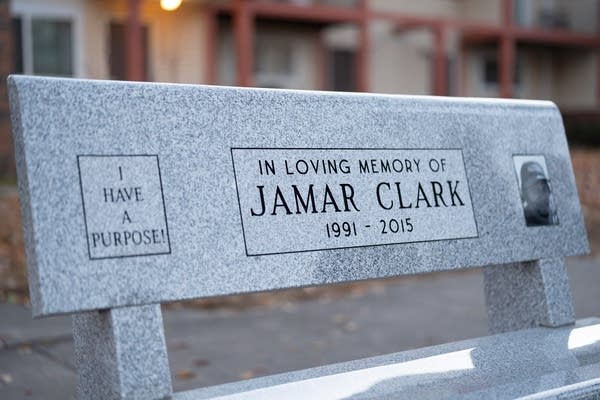
The bench is emblazoned with an excerpt from Clark’s reported last social media post: “I have a purpose!”
“This was definitely a challenge, to get a memorial bench for him right next to his tree, right next to the tree, where we view, and go and just remember him,” said his sister Tiffany Burns in a recent interview with MPR News. “Sometimes I just go over there, just to be silent and to feel his presence.”
“I’m overwhelmed with emotions right now because it has been 10 years, and this is just a small token of something we can share with community when it comes to my brother’s life and remembering him. And I know he would want that.”


 English (US) ·