
ARTICLE AD BOX
“None of us are done with Aug. 27,” Brittany Haeg told a room of parents last week.
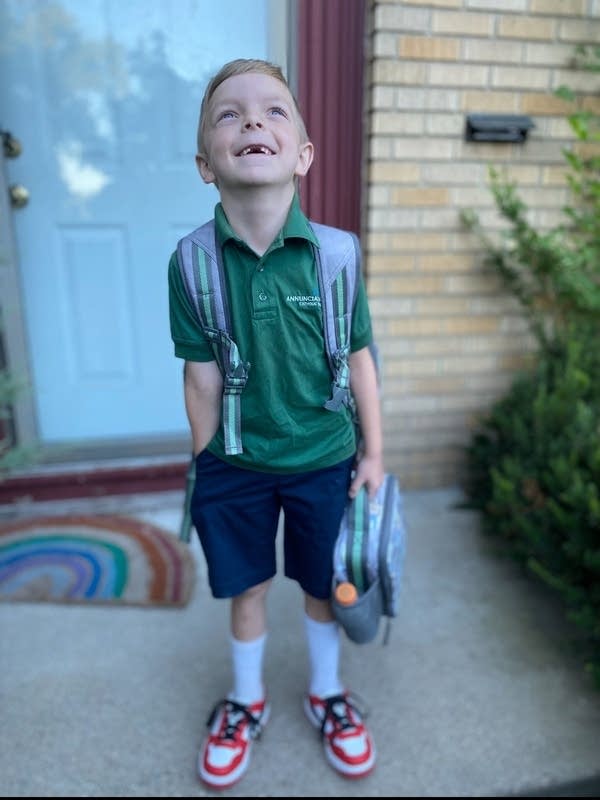
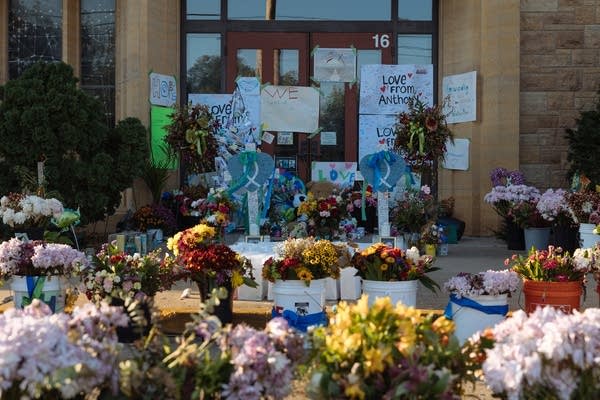
They had gathered at a south Minneapolis business, where they now meet regularly since a mass shooting rocked their community three months ago Thursday. A shooter killed two children and injured 28 other people during Mass at Annunciation Catholic Church and School that day.
The parents of Annunciation students formed a coalition to push for change after the tragedy. About 60 people take part, according to an organizer.
Ahead of Thanksgiving, Haeg — a former social studies educator — led the coalition’s first in-person training on having difficult conversations around gun violence.
“This is, on one hand, a deeply divisive issue,” Haeg told MPR News. “On the other hand ... I’ve never found someone who doesn’t believe that children should be safe at school.”
Haeg has three children at Annunciation school. Her first-grader David was injured during the shooting and spent a week in a pediatric ICU, she said.
The coalition does not have any specific policy recommendations yet. Members hope to start with dialogue as groundwork for bridging divides.
“The reasons things like what happened on Aug. 27 happened are complex and varied, and the best solutions are going to come from honest, open conversation between all members of our communities,” said Haeg.
Families brace for holidays, inquiries
“We are now going into this holiday season, and there, at least I can speak personally, there’s some anxiety,” said Joe Eiden.
Eiden has three children at Annunciation. His wife is also a kindergarten teacher there.
He said it’s already been a challenge figuring out how to field well-intentioned questions from the general public. He feels obligated to have the “right” answer and is unsure how much or little to share, or if he even wants to.
He said there’s an added pressure knowing he’ll be encountering loved ones who may not have seen him since the shooting.
“This is a deeply personal experience,” he said. “So many of us have stories that have not been shared and maybe will never be shared, right? And so we have to be comfortable with what is shared, with our friends, with our family, with the broader communities.”
Eiden said it’s been helpful with the training to realize other Annunciation parents both share his apprehension and are a resource for each other.
He also appreciated the training’s emphasis on listening to people they may disagree with.
“I think too often there’s this — either we want to loudly state our opinion about something, or we completely avoid the conversation altogether. What we want to do is encourage people to be open, listen, be humble. You know, have some humility, to understand someone else's perspective, to maybe, perhaps, possibly you might be wrong about something,” said Eiden.
Kristen Neville co-leads the coalition alongside Haeg. She said a week after the shooting, she attended an event where people had “some very interesting comments” on what they believed led to the shooting.
She anticipates having similar conversations at her family’s Thanksgiving and had considered skipping but said Haeg’s training helped her feel equipped.
“We are focusing on hope and being able to kind of channel whatever is our own fear as well as our frustrations into forward momentum,” said Neville.
The training included prompts to get parents to think through their experiences, values and what they’re willing to share. Parents paired off to recollect what the morning of Aug. 27 was like for them.
Haeg also reminded parents they don’t always have to engage in a hard conversation.
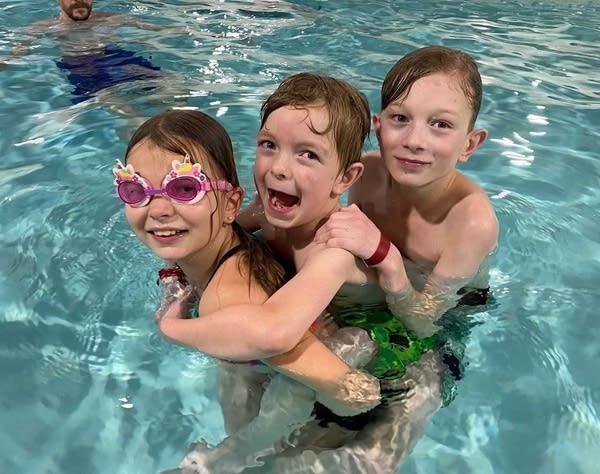
“My family is stepping back this holiday, and we are going to go play in a pool, and we are not going to think about doctors or physical recovery at all,” said Haeg with a smile.
Advice about interacting with people who are grieving or have gone through a tragedy
At the training, Annunciation parents talked about the challenges of interacting with folks outside their bubble. They said exchanges can be overwhelming, inappropriate or otherwise fraught as they also work through the day-to-day of life — and parenting — after tragedy.
Yet they know people want to support and their hope is to share their stories to drive change.
Some advice from Haeg, Eiden and Neville:
It’s OK to be at a loss for words.
“There shouldn’t be words,” said one parent at the training last week.
Haeg suggests reflecting back what was offered to you. For example, if someone says, “It’s been really hard.” One response can simply be: “I imagine it has. Do you want to share more about that?”
Give people space to share if they want to, but also know how to end the conversation.
“Having ways to let them out of the conversation gracefully, I think is really important as well,” said Haeg.
She said it’s a lot of pressure to be grieving and navigating an emotional conversation while also figuring out how to end a conversation. Other parents talked about often feeling responsible for others’ feelings or reactions to their answers, and feeling obligated to leave folks on a good note.
Some parting language could be, “I’m here if you want to talk” or “I appreciate you sharing that.”
Don’t compare your experiences with theirs.
“There’s no comparison,” said Eiden, who said he understands people are trying to empathize and relate, but it’s not helpful. He said people have compared sudden deaths, unexpected life events and births to what Annunciation families experienced with a mass shooting.
Don’t ask or prompt for a silver lining.
“It puts us in a really hard spot, especially if it is a bad day. Some days there are great things happening and I want to share those. And some days are just hard,” said Haeg. “The idea of coming up with a ‘but also, it’s great!’ is really a lot of pressure.”
“This is a hopeful community,” said Eiden. “We see these kids are hopeful. These kids are inspiring. And, we lost two children in our community and this is deeply horrific.”
Understand the triggers.
“Every day is a little bit different, and sometimes it's like hour by hour,” said Neville.
“It’s interesting how there’s a lot of triggers that are still unknown, right? There’s some of the ones that are more natural, like loud sounds or something that might be backfiring, or whatever it might be. But like, sometimes it's the most random thing that ends up sort of being a trigger and kind of puts you into a different type of, like, emotional state.”
You don’t need to be the “fixer.”
“Instead you can be more so, like, the steady state to be like, ‘I’m here for you,’” said Neville. She said people can just try to be aware of what triggers people have and support them through those.


 English (US) ·