
ARTICLE AD BOX
The proposed sale of a public utility in northeast Minnesota to a private equity firm has ignited a fierce debate over how to pay for the transition to carbon-free electricity, while also scrambling traditional alliances among clean energy groups and state departments.
Allete, the parent company of Duluth-based Minnesota Power, has agreed to sell the utility for $6.2 billion to Global Infrastructure Partners — a subsidiary of the private equity firm BlackRock, which is the largest asset manager in the world. The Canada Pension Plan Investment Board would purchase a minority stake in the utility.
The Minnesota Public Utilities Commission, which regulates the state’s investor-owned utilities, is scheduled to take up the matter at a hearing later this month. It’s poised to decide on the issue–which has attracted national attention–at its meeting on Oct. 3.
From the beginning, Minnesota Power has argued the sale is needed to provide the utility with enough capital to comply with state’s law requiring 100 percent of its electricity to be generated by carbon-free sources, such as wind and solar, by 2040.
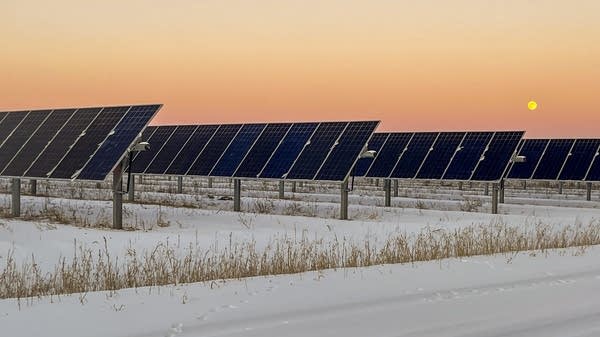
The company has come a long way in its transition to renewable energy. Twenty years ago, the utility produced almost all its electricity from coal. Now it generates more than half its power from carbon-free sources.
Just in the past year, state regulators have approved the utility’s plans to spend nearly $3 billion on solar projects and transmission lines. But billions of dollars in additional financing are needed over the next several years to build additional infrastructure, said Jennifer Cady, vice president of regulatory affairs for Minnesota Power.
“Allete needs to raise more capital in the next five years than we have in the past 75 as a publicly traded company,” Cady said.
Some clean energy groups support the acquisition to finance the utility’s green energy transition. So do labor unions, whose members would build and work on the infrastructure projects.
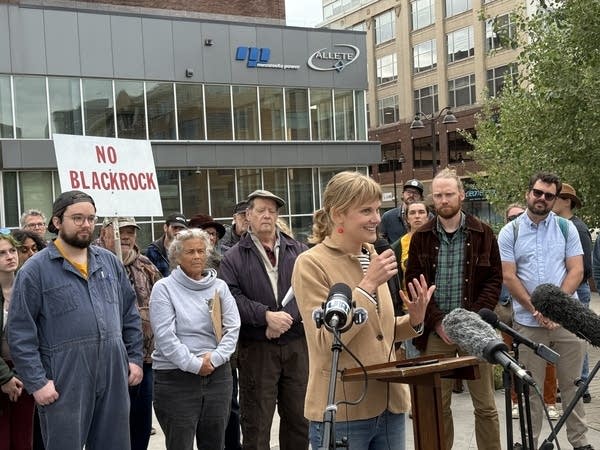
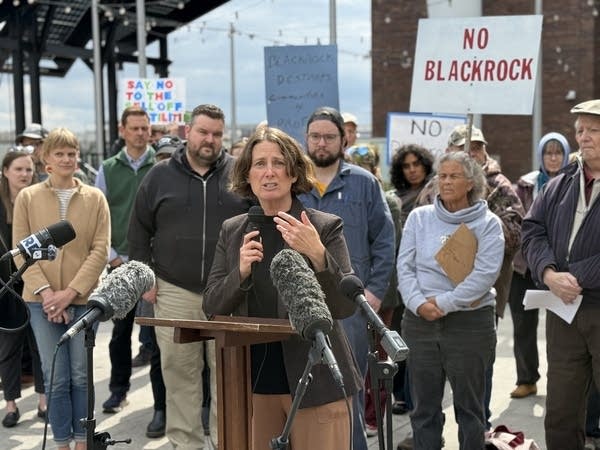
But a coalition of other environmental groups and consumer advocacy organizations vehemently oppose the deal, arguing it’s not in the public interest.
“I’m here with you all today to push back against this story that we have been told by Minnesota Power and their potential buyers that they need to be scooped up by BlackRock in order to achieve a carbon free energy future,” said Jenna Yeakle of the Sierra Club’s Beyond Coal campaign at a rally last week in front of Minnesota Power’s downtown Duluth headquarters.
Capital for clean energy
Supporters of the acquisition say Minnesota Power faces unique challenges in raising the immense amounts of capital it needs to fund its transition to clean energy sources.
It’s the eighth-smallest investor-owned utility in the country. It’s also unusually dependent on a handful of large industrial customers for the majority of its revenue, including Northern Minnesota’s paper mills and taconite mines, businesses that are notoriously cyclical. In fact, right now one of the mines is temporarily closed, while another is partially idled.
“Investors who invest in utilities generally do so because they're safe investments. They’re stable,” explained Cady. “Given our size, given our inherent risk, it makes it a little bit harder for us to compete for that capital in the public market.”
Business and residential customers eventually pay for the cost of infrastructure upgrades through their electric rates. But those bills are paid in small increments over long periods of time, usually decades. Utilities first need investors to provide upfront capital to build massive infrastructure projects, such as wind turbines, solar farms and electric transmission lines.

Allete believes private investors offer the best path forward, because of the scale of the coming energy transition, combined with the utility’s size and unique risk.
“This new partnership with a pension fund and infrastructure fund gives us the stability and the longer term partnership to help us navigate these coming years,” said Cady.
But opponents are skeptical. They say there’s no guarantee that BlackRock will invest in clean energy infrastructure if the deal is approved.
“So this really is a sort of a hope and a prayer and ‘just trust us’ situation where there are executives who have made this handshake deal, and we just have to hope that they will actually follow through,” said DFL State Sen. Jen McEwen of Duluth, who spoke at the recent rally.
Critics also argue Allete’s assertions contradict recent financial filings, in which the utility projected it would be able to meet its capital needs in the public market.
An administrative law judge who heard testimony on the case echoed those concerns. In a report recommending that regulators reject the deal, Judge Megan McKenzie said Allete failed to prove “that there is a significant risk that the public markets will be unable to meet its probable capital needs.”
McKenzie said the utility didn’t demonstrate it needs the acquisition to comply with the state’s Carbon Free Standard.
Minnesota Power called the report “one-sided.” Even some clean energy advocacy organizations and business groups disagreed. They argue the risk of not raising the capital needed to build transmission lines and other infrastructure outweighs the risk of private equity ownership.
“I totally understand why there's suspicion about private equity being involved in all those things,” acknowledged Allen Gleckner, executive lead for policy and programs at Fresh Energy, a clean energy advocacy nonprofit.
But regardless of who owns it, Gleckner says Minnesota Power will continue to be regulated by Minnesota’s Public Utilities Commission.
“It’s a very unique business model that really does not lend itself well to the kind of traditional horrors of private equity that come to mind,” Gleckner said.
Higher electricity rates?
The worries of most consumer and environmental groups that oppose the deal boil down to concerns over the economic model of private equity, which they say prioritizes quick investment gains over the long-term public interest of serving Minnesota Power customers.
“This acquisition is about maximizing short-term profit,” said Hudson Kingston, legal director for the environmental group CURE. He and others believe if the acquisition is approved, electric rates would likely increase.
“The new owners intend to double the normal profit that a utility would normally be able to put out yearly and recoup a huge amount of money to make up for a $1.5 billion premium they're paying for this company,” Kingston said.
They’re also concerned about a loss of transparency, because privately held companies, which Minnesota Power would become, aren’t required to submit the same financial disclosures as publicly-traded companies.

Kevin Pranis, marketing manager for LiUNA of Minnesota and North Dakota, which represents construction laborers who build many energy projects, said his union has had good and bad experiences with both kinds of companies. But under both circumstances, he emphasized the state public utilities commission sets the rules.
“We didn’t see any change between one set of investors in the stock market who are looking to maximize their returns and a different set of investors operating under that same legal framework, also trying to generate returns for their investors,” Pranis said.
The Minnesota Department of Commerce, which initially opposed the acquisition, reached a settlement agreement with Allete and its potential buyers that calls for a one-year freeze on electricity rates, as well as some guaranteed investment into clean energy technologies.
The department, an agency within the administration of Democratic Gov. Tim Walz, now backs the deal. But the office of Minnesota Attorney General Keith Ellison, a fellow Democrat, opposes the acquisition, arguing it holds risks both for ratepayers and the transition to green energy.
Regardless of how the Public Utilities Commission decides, the case could have implications nationwide.
Soaring electricity demand to power data centers has sparked private equity interest in utilities around the country.
“A lot of people are watching this. It will be a precedent-setting decision,” said Brian Edstrom, senior regulatory advocate with the Citizens Utility Board of Minnesota, which opposes the proposed sale of Minnesota Power.
“I think there is some reason for concern about whether it’s fair and makes sense to have a regulated utility that provides an essential service like electricity to be owned by these large institutional investors.”


 English (US) ·