
ARTICLE AD BOX
Minnesota’s two licensed testing facilities for cannabis and hemp say the state’s recreational cannabis market is poised to boom in early 2026.
According to leaders at Legend Technical Services and ChRi Laboratories, both based in St. Paul, it’s an exciting time for the industry. But the two labs are also certain they’ll be swamped with demand for cannabis and hemp testing if more testers don’t come online.
Starting Jan. 1, all hemp-derived products must be tested by a state-approved lab — which means a deluge from Minnesota’s hemp industry at the top of 2026. More uncertain, but likely between January and March, is when the two labs say they’ll be hit with a demand for cannabis testing.
They expect more recreational cannabis will be grown by then, and they’ll be testing all types of cannabis from flower and pre-rolls to concentrates and edibles.
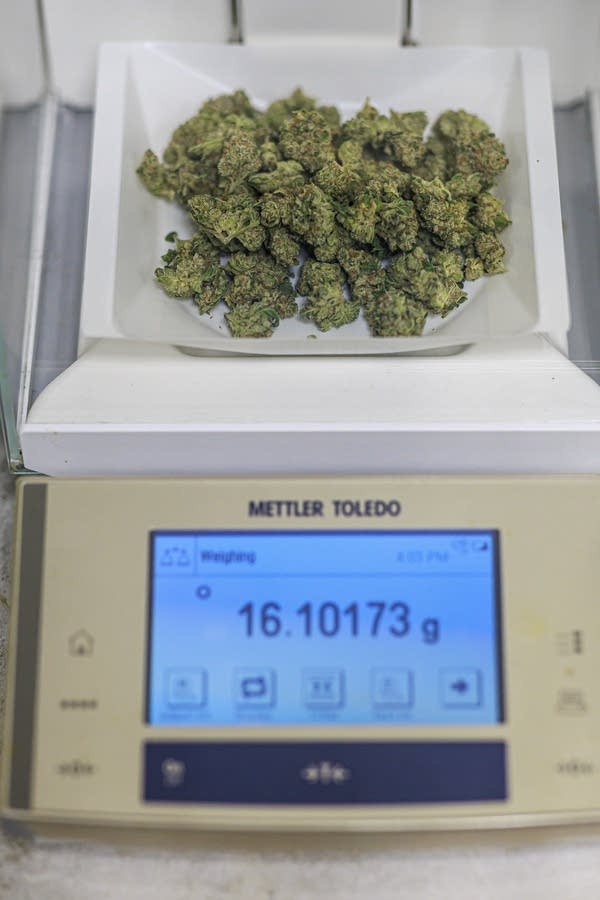
“I highly anticipate that manufactured products like gummies and vape cartridges will be starting to come through in the next month or so, with raw plant material then the actual smokeable buds following sometime thereafter — potentially by the end of the year, but likely in the first quarter of 2026,” said Taylor Schertler, who oversees hemp and cannabis testing programs at Legend.
Brad Larmie, chief growth officer of ChRi Laboratories, has the same guess.
“Now that we're going through the harvest towards the end of this year, we will see a pretty big spike in a realization point for the state,” he said.
Testing labs work to comply with new recreational cannabis regulations
As of Thursday, Legend and ChRi are the only testing facilities licensed by Minnesota’s Office of Cannabis Management. Both got licensed last month and 10 others are pre-approved for a testing license.
For the past few months, the two labs have been getting their testing procedures aligned with standards for recreational cannabis. Schertler says the standards are stricter compared to testing medical cannabis, which includes adding more security cameras and testing methods for pesticides and residual solvents.
“It’s been exceptionally busy,” he said. “Not necessarily from the lens of the sample load, but with a lot of the policy and procedural changes."
OCM says all testing standards for adult-use, medical and hemp are now the same. Standards for recreational cannabis are more robust than they were for the medical program previously, but all products will have the same standards moving forward.
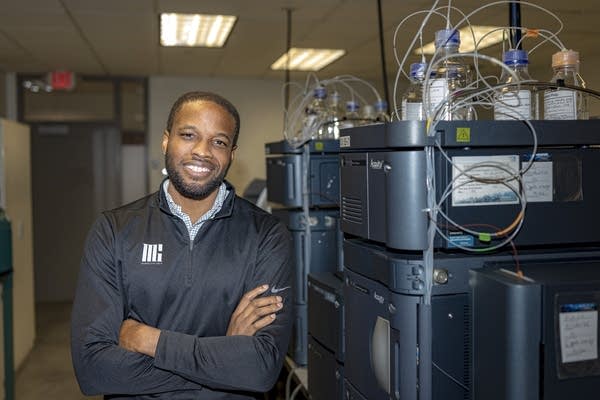
Legend had to re-evaluate nearly all of its established testing practices. Schertler says the lab was the first to develop testing methods for cannabis when Minnesota legalized medical use in 2015 and has done medical cannabis testing since.
Legend, which was founded in 1991, also tests medical devices and industrial hygiene.
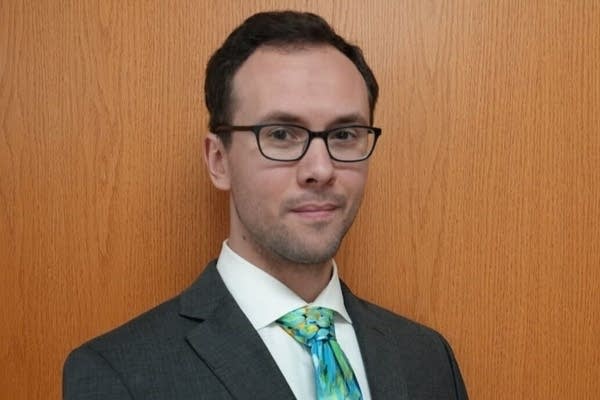
“There were a considerable number of differences between the medical rules and statutes and those in the recreational rules. And so we had to re-evaluate, almost from the ground up, almost every single policy and procedure and analytical method,” said Schertler.
At ChRi Laboratories, Larmie says the company has been developing its own internal processes for meeting demand in the next few months. On top of that, the phone has been ringing nonstop.
“We're getting probably somewhere between 20 to 30 calls every day of people just inquiring about trying to learn more about the industry or send over their products for testing. And so we're trying to balance out our ability to be able to help with all of that,” he said.
Testing backlogs in 2026 will delay turnaround times, now ranging from one to two weeks
According to Larmie, ChRi’s average turnaround for completing testing is five to seven days.
At Legend, Schertler says turnaround ranges from a week to two weeks depending on the product. Packaged vape cartridges are quicker to test because a panel, or set of tests, has to be submitted at the start of the manufacturing process.
Then another test has to be done as a final packaged product.
“In an easier panel, a finished product in its final packaged form, when the distillate had already been tested that was used to make the product – that could probably get turned around in a week to a week and a half,” he said.
Flower is a more expensive test that could be in the ballpark of two weeks. Dried cannabis flower is good for six months to one year, according to Healthline.
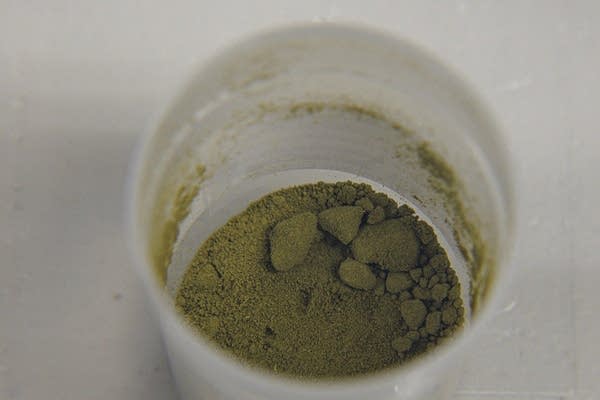
Turnaround time also depends on other factors like the product failing a test, calibration issues with instruments or staff calling in sick.
According to Schertler, about 20 percent of cannabis flower and manufactured cannabis products fail testing at Legend. The rate of failed tests depends on the type of product.
“Gummies are a little trickier to dial in your potency than perhaps a high-THC vape. Different clients have different average pass rates. If there is a well established indoor facility for cultivating cannabis, versus a rather new business or a new startup,” said Schertler.
Products can fail testing if they don’t meet requirements set by the state, such as higher-than-allowed levels of heavy metals like arsenic or lead, or potency not matching what is advertised. Often, a failed sample can be either scrapped or reformulated.
Every week, Legend is completing testing for 100 to 150 cannabis and hemp products. The maximum is 300 a week, but could jump to 500 when the lab gets new instruments installed and smooths out internal workflow.
“It is my biggest concern with the health and prosperity of the overall industry is there is going to be a backlog in the supply chain from testing labs, because both of these mass industry shifts are happening at the same time, and testing labs are smack dab in the middle of it,” he said.
Both Larmie and Schertler say balancing demand for the whole market – from big companies to the small businesses – is going to be a challenge.
Larger operations may send a larger number of samples over to ChRi or Legend regularly, whereas smaller operations might only send over one or two. Or, conversely, large operations might want to only send their popular products, while small businesses might want to produce 12 to 15 strains that each need to be tested.
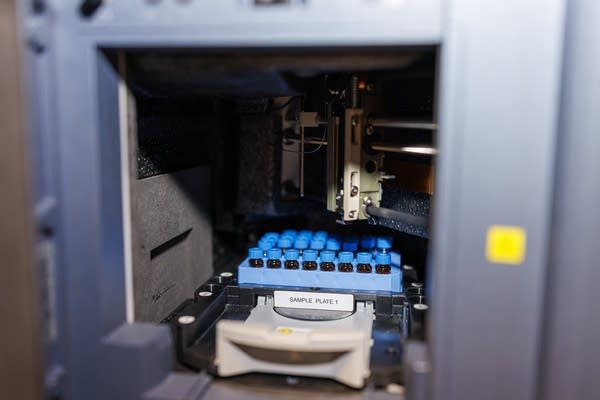
“The challenge is when you have such high demand and there are people that are sending the ones and twosies, some of our machines have to run specific amounts of time. For example, some machines have to run for 48 hours. And so when you get a onesie, twosie that tries to get in the middle of that, you kind of just have to push it a couple days until you have your next capacity or your next opening,” said Larmie.
Both labs are either planning to work with tribal nations or already testing their cannabis products.
Dispensary owners also worry about the potential delay in cannabis products getting to their shops. Sarabear Kelly-Modlin operates Lucky Strains dispensary in New Brighton and hasn’t been able to find cannabis to sell.
But even if she did, she says there aren’t enough manufacturers, testers and transporters to deliver products to shelves.
“It’s the manufacturing part of it and the testing part of it,” said Kelly-Modlin. “We don’t know how long it’s going to take them to test products, get it ready, get it sent off to manufacturing. We’re going into uncharted territories through the whole thing.”
According to OCM director Eric Taubel, the ramp up of supply into the start of 2026 will actually time out well with the switch to in-state testing for hemp.
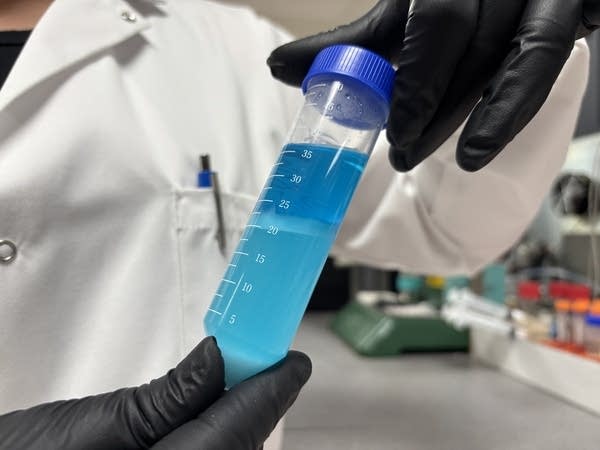
“As we start to see multiple cultivation facilities get licensed, it’s 90 to 120 days until they probably have products. And so there’ll be some additional capacity right now at the start of the market, as we’re waiting for cannabis cultivation to get online, that can be backfilled with the hemp products,” he said.
He says he’s “cautiously optimistic” about testing capacity growing and meeting demand. Taubel is confident at least four of the preapproved applicants for a testing license will launch their businesses by next spring.
“If you wait to get concerned about lab capacity, it’s too late,” he said. “So we have, from the moment this office opened, been thoughtful and concerned about lab capacity. It’s why in 2025, last session, the governor's cannabis policy included a waiver for new labs that aren't yet ISO or [International Organization for Standardization] accredited to begin testing cannabis subject to their application for ISO accreditation. We've also engaged in direct outreach to applicants and potential applicants, to talk about our standards, talk about what testing looks like in the state and how it's going to work.”
Schertler advises all cannabis manufacturers and cultivators find a testing lab pronto.
“This whole process is new for a lot of people. Just to avoid being pressed up against an uncomfortable timetable. Start the process early of securing not only testing labs, but reputable companies that can serve every critical aspect of the supply chain, transport, labeling, distribution, retail, what have you,” he said.
Minnesota cannabis agency alleviates compliancy pressures on hemp industry
The hemp industry is now rushing to meet an Oct. 31 application deadline for an OCM license and many have raised concerns about not having enough time to get their operations aligned with new state mandates, like testing products in Minnesota and complying with stricter packaging standards.
According to OCM, there are over 5,500 registered hemp businesses operating in the state.
“There are, I believe, thousands of hemp product manufacturers in the state of Minnesota that are going to have to make a hard shift with their workflow and their business model to going from out-of-state labs to having everything tested internally,” said Schertler.
OCM issued updated guidance on Oct. 10, giving hemp manufacturers and wholesalers more time to get final approvals from the agency. All hemp businesses have been working on a tight deadline of Jan. 1 to get their businesses licensed and compliant with stricter state laws, or they have to cease operations.
The cannabis agency said it will issue licenses on a rolling basis for retailers and wait to issue licenses for hemp manufacturers and wholesalers until Dec. 31. Taubel says it’s intended to give additional time for manufacturers to make products consistent with current standards and use out-of-state testing.
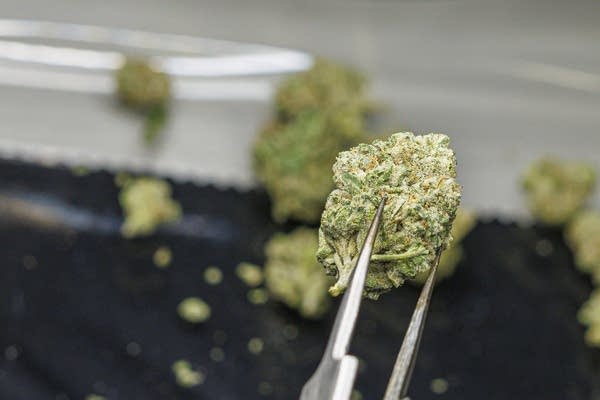
OCM is also allowing manufacturers and wholesalers in good standing with the agency to continue producing THC drinks and edibles until their license application is approved or denied.
Hemp-derived products tested before an issued license can still be sold in 2026, unless the products expire or run out. But OCM says at minimum, manufacturers should update packaging of existing products that aligns with some of the new rules like including a universal THC symbol and a standard warning label.
When asked if requiring in-state testing for hemp is good for the market, Larmie said yes.
“This just amplifies the demand and further shocks the supply,” he said. “Is it good for the market? Yes. Is it good for the industry? Probably, because Minnesota has always had a very strong reputation around healthcare and medicine, and so it’s good to keep things more local and to boost the economy of Minnesota.”
Both Legend and ChRi have future plans to expand capacity, but say they’ll be stretched. Larmie hopes more testing labs get approved soon.
“I would love for more people to get into the space,” he said. “The more people we get into the space, the more we get to collaborate. The more there gets to be more innovation.”
Correction (Oct. 24, 2025:) A previous version of this story misstated the title of Brad Larmie. The above story has been updated.




 English (US) ·