
ARTICLE AD BOX
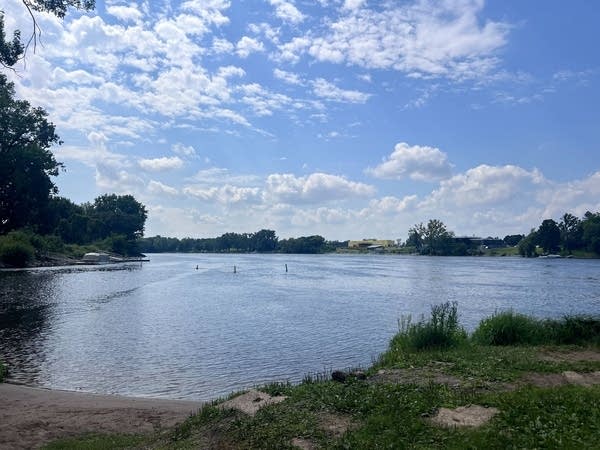
After four days and nearly 109 miles of traveling by foot, a group of “water walkers” approached the farthest shoreline at Peninsula Point Park in Anoka. They followed behind a bucket of water, carried by several women throughout the journey, and a person holding an eagle staff.
The water walk began over two decades ago as a response to water pollution. The group of women who started the walk included a founding member of the water protectors movement, Josephine Mandamin. Women are said to be life givers in Ojibwe culture and are responsible for the care of water.
Sharon Day, a member of the Bois Forte Band of Chippewa, now leads the walks.
“What would happen if all of the women of the world said, ‘No more. I will not allow you to pollute our waterways anymore,'" Day said while remembering a moment that first inspired her journey into water protection.
Walkers of all ages followed the path of the Rum River, or Watpa waḳaŋ in the Dakota language, meaning “mystic river.” The walk began at Mille Lacs Lake in Vineland and ended at Peninsula Point Park, where the river converges with the Mississippi River.
The walks are extended ceremonies where “every step is a prayer” for water, typically lasting several days to weeks.
“A lot of [pollution] comes from agriculture, from mining and industry,” Day said. “All of these things and then all of our waters move south into other tributaries of the Mississippi.”
Nicole Christian is a descendant of the Keweenaw Bay Indian Community. She participated in the walk from start to finish and says the water walks mean everything to her – from the connections she makes with fellow walkers to raising awareness of pollution.
“I think of the water as my family, and anytime my family is sick or needs me, you know, I'm there,” Christian said.
Molly Clyne is the watershed organizer and forestry coordinator with the Mille Lacs Soil and Water Conservation District. The organization oversees the Rum River watershed, which meanders through 10 counties, including Mille Lacs, Sherburne and Anoka.
She says the river has seen water quality issues with excess phosphorus and nitrates, both of which come from runoff sediment in fertilizer and pesticides. However, the Rum River has seen a decline in pollutants over the last two decades.
The water quality of the Rum River affects the Mississippi River, which Clyne says supplies a significant amount of drinking water to the Twin Cities.
“Having the Rum as healthy as possible is super important for millions of people's drinking water,” Clyne said. The organization has a landscape stewardship plan that tackles issues such as pollutants in the watershed.
Day emphasizes the importance of involving youth in conversations regarding the environment and passing down ceremonial knowledge.
“When we bring our children to ceremonies, they learn these ways. And instead of playing other kinds of games, you know, they play ceremony. And they’re doing these things, and that's beautiful. This is the way our culture lives on,” Day said.
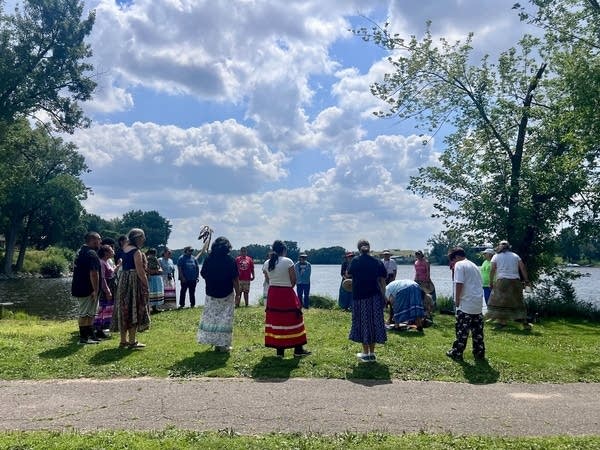
Several youths walked alongside the group and participated in the closing ceremony after the bucket of water had been poured into the confluence of the two rivers. Participants then offered tobacco to the waterway with song and prayer.
Janet Sanchez, a member of the Leech Lake Band of Ojibwe, says she has been participating in the water walk since she was a teenager.
“To me, water is life. It's a life force. We need it to survive, and without clean water, there would be like no earth. And so, we have to respect it,” Sanchez said. “It's a living being. It's a spirit, and it takes care of us, as long as we take care of the water.”
She says she wants to lead water walks in the future, a goal that was inspired by the Lake Superior water walk two years ago, which spanned more than 30 days.
“It was just really impactful on me, because [Day] said, she won't be here forever, and so we got to know what we're doing. We got to learn how to carry that on,” Sanchez said.
Imala Grant, a descendant of the Omaha Tribe of Nebraska and Standing Rock Sioux Tribe, participated in the water walk for the first time this year. While walking, the 13-year-old says she was praying for her family.
“Water is life, and water can do great things for us,” she said.
There are bigger plans for next year’s water walk. Day says the walk will begin in September along the Gulf Coast in Florida and will end at Lake Itasca in north-central Minnesota. The walk is expected to take more than a month to complete.
Chandra Colvin covers Native American communities in Minnesota for MPR News via Report for America, a national service program that places journalists into local newsrooms to report on undercovered issues and communities.


 English (US) ·