
ARTICLE AD BOX
Child care deserts throughout greater Minnesota are at a crisis level. According to the Center for Rural Policy and Development, as the state’s population continues to grow, the problem is only getting worse. Although pockets of rural Minnesota are the hardest hit, the Twin Cities area also struggles.
Marnie Werner, the vice president of research at the rural policy center, said licensing for child care providers breaks down into two types. There are centers, which operate out of some type of facility, and then there is in-home or family licensed day care.
She said when she began researching child care about 10 years ago, the child care capacity in the Twin Cities was broken down between about 75 percent centers and 25 percent family-run operations. But in rural Minnesota it was the opposite with about 70 percent family-run care and 30 percent center-based care.
“If you're trying to open a center in a rural area where, on average, the incomes are lower anyways, it's a tough row to hoe for family child care,” she said. “
Werner said in the Twin Cities, the capacity is there but parents grapple with affordability, and in greater Minnesota it’s the opposite. While it’s more affordable, there are fewer options.
Family day cares struggle with expenses like cleaning products and insurance. And as baby boomers retire, no one is replacing them, which Werner said is leading to provider shortage.
Regardless of the reasons for challenges in getting child care, Werner said the issue doesn’t just affect people with children.
“It raises the expenses for businesses. It makes it harder for them to expand. That affects property taxes and just the amount of money circulating in a local economy,” she said.
And she noted that someone who can’t work because they lack child care might be more likely to receive some sort of financial support from the state, leading taxpayers to shoulder some of the burden.
Pods emerge as a solution in Fergus Falls
In Fergus Falls, which has a population of approximately 14,000, there’s a shortage of about 400 child care spots. And that’s led PioneerCare — an assisted living facility — to try something new.
Amid a nursing shortage during the COVID-19 pandemic, PioneerCare closed its memory care unit. Then it opened a day care in the remaining empty space for employee child care. It’s called PioneerKids.
Within walking distance from the main facility, it provides care to 14 kids Monday through Friday, 6 a.m. to 4 p.m., with room for additional kids to be dropped off as needed.
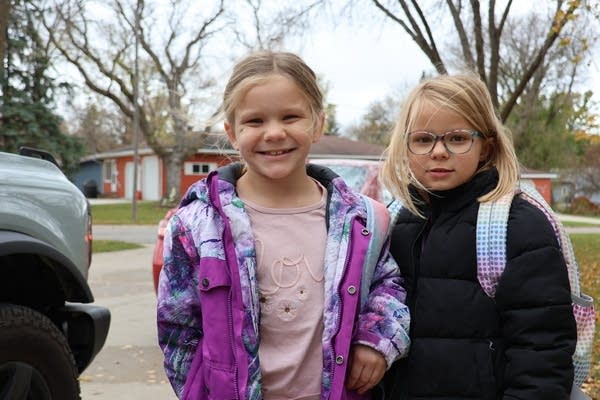
And what makes the day care’s layout so alluring is its resemblance to a regular home. The living room has a TV and couches and the fridge is even decorated with kids’ artwork suspended by magnets.
With over 29 years of experience working in child care Lisa Votaw is the day care’s manager.
“We call this Lisa's home because it is my home,” she said. “We have it set up as a home-based setting.”
Votaw said many years ago she was on a different career path but after the birth of her daughter, Votaw opened her own family day care and realized she had found her calling.
“It keeps me young. I just look forward to work every day. It's just every day is different,” she said. “I love what I do. And there's not many people who can say that it's genuinely a passion for my job.”
The model worked so well that community leaders reached out to PioneerCare to help facilitate a child care expansion for the broader community, partnering with local government and area nonprofits for a community-based solution.
Expanding the pod model
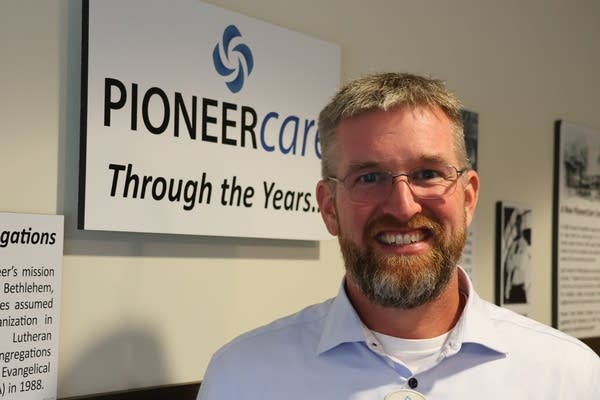
PioneerCare’s CEO Nathan Johnson said that entails using land owned by the organization to build a small cluster of child care pods resembling duplexes on it.
“We have a site, we have a builder, we have a proven plan, we have building plans, but we're seeking to build six independent child care pods that we will lease to independent child care providers who will basically run their own child care business from these pods,” he said.
Johnson said each child care provider can care for approximately somewhere between 10 and 14 children, depending upon how they choose to license their pod.
Jamie Rethwisch works at PioneerCare and has two young children who attend the day care. She likes the idea of an expansion, because she said she knows the troubles some families face when accessing child care.
“I've talked to multiple people that maybe can't work full time hours or aren't able to go back into the workforce because their day care closes at 2 o'clock in the afternoon, and their job can't facilitate that,” she said. “Or they're required to work every weekend, and they don't have day care. So, there is a lot of barriers to that."
Katie Ganoe is the child care project manager for the City of Fergus Falls and Otter Tail County. She said the adaptability of the end product may just be the shot in the arm the community needs to garner more providers.
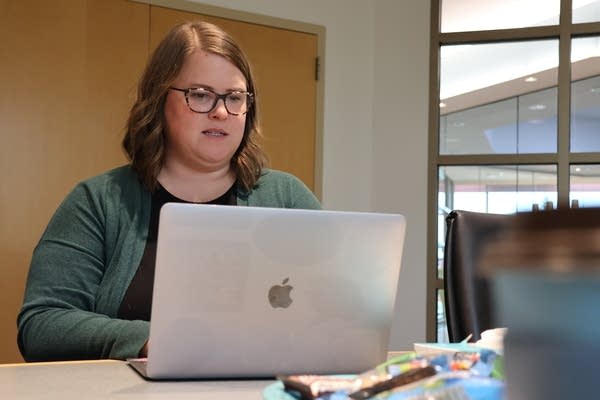
“They'll be able to run their program just like they would in their home, which is really great. I think that can often be a barrier for people,” she said. “Either they don't own their home and so they're not able to provide care, or their home just isn't set up in a way to accommodate it, or they just don't want the wear and tear. You know, kids are hard on staff.”
Ganoe said this will be a nice opportunity for people to become child care providers who otherwise wouldn’t.
The project involves a partnership with Habitat for Humanity and should cost about $1.4 million dollars. Construction is set to begin this spring.




 English (US) ·