
ARTICLE AD BOX
Amid the Trump administration’s immigration crackdown in the Twin Cities, federal agents have threatened to arrest onlookers, following through on that threat at least once.
Social media is also full of videos of civilian watchdogs blowing whistles and honking car horns to alert others as agents attempt to stop or detain people they believe to be illegal immigrants.
One of them is Lucia Webb, who was boxed in and confronted by Immigration and Customs Enforcement agents after following them in her car last week.
To share more about Minnesotans’ rights while observing immigration actions and ICE agents, Erika Zurawski, co-founder of the Minnesota Immigrant Rights Action Committee and paralegal, joined Cathy Wurzer on Morning Edition Thursday.
ICE has not responded to MPR News requests for comment.
Correction (Dec. 11, 2025): An earlier version of this story misspelled Erika Zurawski’s last name.
The following conversation has been lightly edited for clarity. Listen to the interview by clicking the player button above.
What kind of information should immigration action observers document?
What we have been telling people that we want them to focus on for documenting is to try to get as much information about the person being taken and the situation and how they were taken. So we need to try to get a name, a date of birth and a country of birth or citizenship. Those three very important things are actually what help us figure out where they go in the ICE system.
On top of that, we want to get a contact number for a family member or a friend. We’ve been hearing a lot of reports about extremely abusive interactions with agents and coercion — getting people to try to sign deportation orders. We need to be able to track and locate the family members who will first hear from the people who get detained, so we can remind them not to give in to ICE coercion.
What should an observer or wrongfully detained citizen do if they’re taken by ICE?
More than anything, keep yourself safe. In the instance of an arrest, don’t resist, don’t fight. Those are the kinds of things that could get you hurt. If you are a U.S. citizen observer and you are detained by ICE, ICE has no authority over you. ICE agents, under the law, are allowed to temporarily detain someone until they’re able to verify their immigration status. But just remember that you have the right to document and observe ICE officers. They can be recorded. If you do get arrested, confirm that you are a U.S. citizen and say nothing else. Call a lawyer, call the National Lawyers Guild hotline, and we will figure out how to get you out.
I’m wondering about a ‘don't.’ Specifically, there’s worry about people following cars with tinted windows. Is that something you do not want to do?
People are really on edge right now, and it’s very nerve-wracking and it’s very scary. We get a lot of reports about cars with tinted windows. Regular people drive these cars. Following cars with tinted windows around is technically stalking someone. Being on alert or concerned about every single car with a tinted window and following them around is not helpful.
Journalists who’ve covered some of the recent actions say that bystanders have been yelling at agents, ‘Where's the warrant?’ Is that helpful?
I want people to really understand that a warrant is not needed for an arrest by any law enforcement agency, including ICE, in a public space or in an open space. So when somebody is taken from their car or on the side of the street, people screaming, “Where is your warrant?” is just unhelpful, and it doesn’t get us the information that we need. None of these videos should be shared on social media; they should be shared with MIRAC or immigrant rights organizations that can track and follow up with the people being detained.
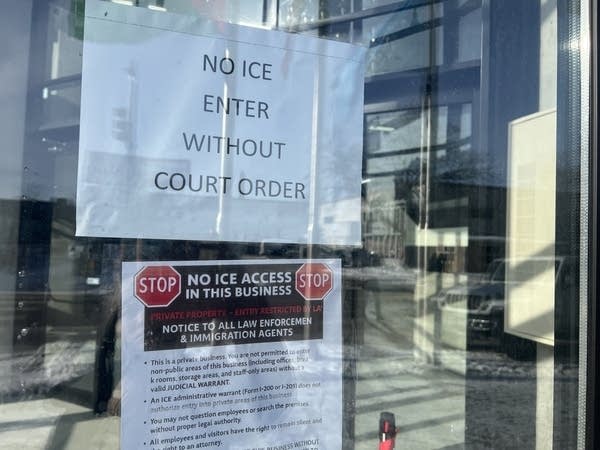
ICE agents or any type of law enforcement are not allowed to enter a private space without permission unless they have a judicially signed warrant. But this is just if they’re trying to enter someone’s home, or they’re trying to enter your business, and it applies in that situation. Focus on getting the information on the person who was detained, and focus on getting contact information for their family members so we can follow up and get more information later.


 English (US) ·