
ARTICLE AD BOX

In every corner of Minnesota, there are good stories waiting to be told of places that make our state great and people who, in Walt Whitman’s words, “contribute a verse” each day. That's the theme of our series “Wander & Wonder: Exploring Minnesota’s unexpected places.”
It’s a sweltering July morning as Nathan Kesti sets off on his second trek of the day through the streets and alleys of downtown Duluth. Behind a storefront, Kesti spots an older man named Ed who’s been in and out of a shelter for the past couple years. He’s recovering from an infected leg.
“How’s it going, Ed?” asks Kesti as he pulls a granola bar and some transit passes from his backpack. "Do you need some Neosporin or anything like that? Have you already had breakfast this morning?”
Ed replies that he’s sore but needs to keep moving because he’s on his way to an appointment. Kesti arranges to meet Ed again that afternoon to give him a small first aid kit.
As they say goodbye the men exchange a quick fist bump. Kesti says it’s a simple gesture that recognizes Ed’s humanity.
“Just treating them like part of our community. So many folks kind of get treated like they don't exist, or like they're a leper,” he said.
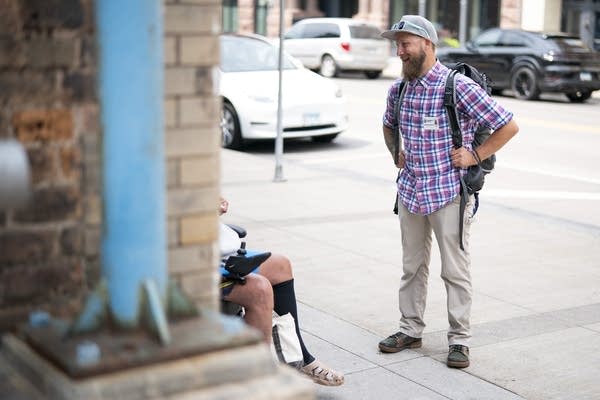
Since Kesti started working as a street outreach worker for the organization Downtown Duluth nearly three years ago, he has logged nearly 29,000 of these one-on-one contacts with people in the city who don’t have a home.
Some are long, sit-down conversations. Many are quick check-ins, like the conversation with Ed. But even those brief encounters are critical, Kesti said, because they often lay the groundwork for later breakthroughs.
He recalls one person, addicted to methamphetamine, whom he made a point to visit every day.
"And finally, the stars aligned, and it was time to say, ‘enough is enough’ for that individual. And you know, it just was one of those morning check-ins. Kind of rattling the tent a little bit, and saying, ‘Hey, you awake in there?’ And they're like, ‘Hey, Nate. And that was it."
The man was ready to go into treatment.
Kesti’s days start as early as 6 a.m. He walks 10-12 miles most days, through downpours and blizzards, heat waves and cold snaps. He recently climbed 91 flights of stairs in a single day — almost as many stairs as in the Empire State Building.
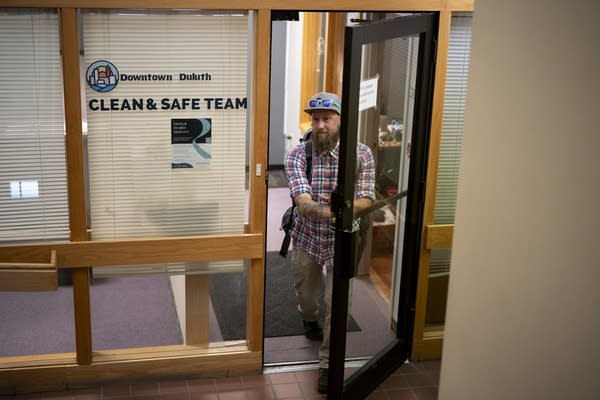
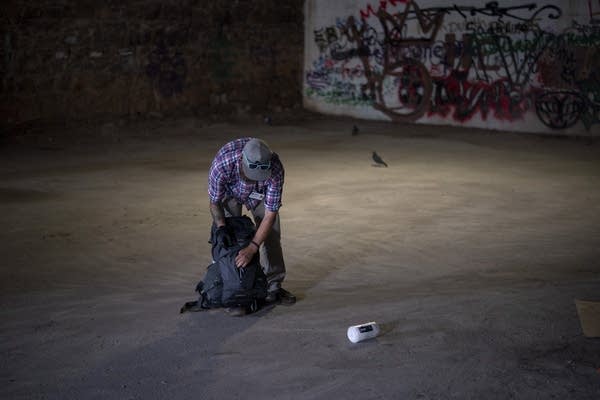
He carries a backpack full of water bottles in the summer and a thermos of coffee in the winter. He sends texts on weekends reminding people to take their medications. He even fosters dogs for people who are admitted into treatment or crisis centers.
His goal is to help everyone he encounters get into housing or treatment, two paths he considers “the first steps” in getting them off the streets.
As he continues walking through downtown, Kesti sees four people on a staircase leading to the Canal Park tourism district along Lake Superior.
Two men sit talking. “Sweet Home Alabama” plays on a portable radio. A woman lies on a nearby step, partly covered under a blanket. A third man is sprawled across another step, his eyes closed.
Kesti offers them water and granola bars. One man asks for a cigarette and Kesti pulls out a pack. He isn’t a smoker. He carries cigarettes as an incentive and “a tool for de-escalation.” Besides, he doesn’t want people to smoke butts they pick up off the ground. “I believe they deserve dignity,” he said.
Before he moves on, Kesti has a request for the group.
"Any chance you guys could share the stairs with other folks as well?” he asks. They assure him they’ll let pedestrians pass.
Later, he explains the group often sits on those exact steps because it’s where they lost a close friend last year, someone who was on the cusp of getting into treatment.
“So that place is kind of sacred, you know. It’s a memorial,” he said.
A resource for businesses
Kesti works on behalf of two groups of people in downtown Duluth: the unhoused population that’s often grappling with substance abuse and mental health issues, and the business owners who sometimes deal with issues arising from that population.
The street outreach position was created three years ago with federal grant funding during the COVID-19 pandemic, at a time when downtowns everywhere were dealing with a spike in homelessness and addiction issues.
Downtown Duluth president Kristi Stokes said Kesti has been an invaluable resource for the business community to call.
“Because there are instances where they just don't know what to do otherwise if someone is camped out in their entryway, or if they see someone with a mental health issue on the streets that might be disturbing their customers,” she said.
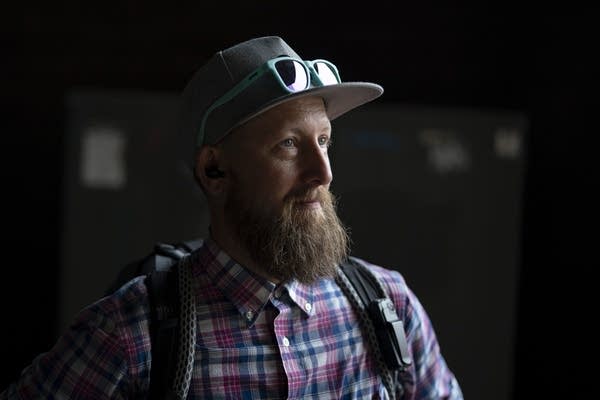
The initial grant that funded Kesti’s position is expiring. But Stokes said Downtown Duluth has committed to keeping it because “it’s really making a difference in the downtown community.”
The city is kicking in funding along with private foundations and downtown businesses, including Security Jewelers, which recently donated $3,500 toward paying for Kesti’s position.
General manager Rob Thomas said over the past few years, people have urinated and used drugs outside their store. They’ve dealt with littering and people being disruptive. He said it can make customers feel uncomfortable and unsafe. Sometimes he still walks customers to their cars.
And while the situation has improved this year, he said last year he relied on Kesti frequently. “He was super responsive. He’s been phenomenal,” Thomas said. “He's developed those relationships, and he can come in and just take care of it.”
Frustrations and success stories
As he looped back to his downtown office, sweat pooling on his face, Kesti ducked under an elevated parking lot near the Duluth Depot.
A tarp hangs from the concrete ceiling. “Anybody home?” he asks. Muffled voices reply.
The couple inside got out of treatment about a month ago. Kesti hands them granola bars and tells them he’ll be back later with bottled water.

As he walks away, Kesti explains that they have access to sober housing.
“But they’re choosing to be out here because then they can use,” he says, a testament to how powerful addiction can be to opioids and methamphetamine.
There’s a desperate need for more wrap-around services in Duluth and other Minnesota communities where people can access mental health and drug and alcohol treatment, and receive the support they need to stay clean, said Kesti.
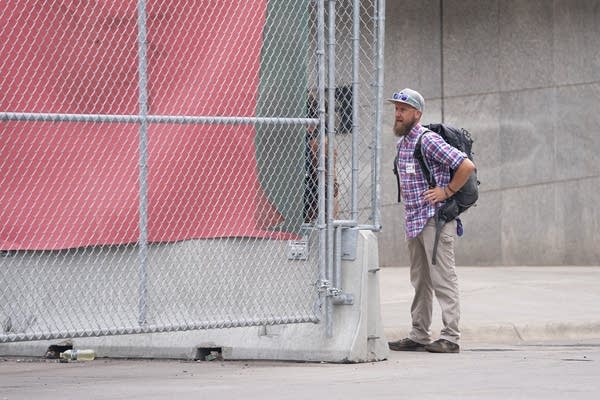
Without those extra resources, he says his job is to “just keep checking on them, keep encouraging them,” make sure they’re safe, and then hopefully be there for them again when they’re ready to return to treatment.
In nearly three years, Kesti has helped more than 150 individuals access treatment and stable housing. It’s those success stories that keep him motivated.
"The ones where maybe you see somebody almost every day for six, seven months, and then finally they're like, ‘Yeah, let's try to get into housing, or let's try to get into treatment,’” he said.
“And then maybe you don't see them again for another six, seven months, and then they come up and they tap you on the shoulder. And not only are they clean from substances, but they just [look] like a completely different person. And they just say, ‘Thank you.’ That's the million dollar reward.”


 English (US) ·