
ARTICLE AD BOX
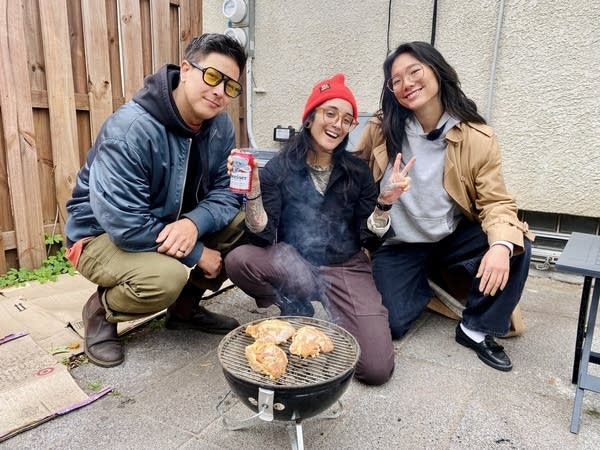
While holding a can of Budweiser and tending to chicken thighs on a backyard grill, Natalia Mendez talks about their grandfather.
“This is like a smell of my childhood,” Mendez says.
Mendez occasionally pours some beer on the chicken, making it sizzle and smoke, tempering the flames caused by fat dripping on coals.
“My grandpa, when he taught my dad this recipe, said it has to be Budweiser,” Mendez says.
Mendez muses that perhaps their grandfather preferred it because it was a rice beer, instead of wheat, and maybe that gave the chicken a unique flavor.
“For a while, they were calling it ‘Budweiser America,’” Mendez continues. “It's interesting to think about my family's legacy to America and what that looks and felt like for them, because my grandpa was an immigrant and a civil rights activist.”
‘Chefs that don't get their flowers’
Artists Diana Albrecht and Ryan Stopera join Mendez at their south Minneapolis home as they cook their grandfather’s “Drunk Chicken.” It’s one of 12 recipes featured in Albrecht and Stopera’s new cookbook, “Back of House: Recipes from the Caretakers of Our Communities.”
“Back of House” is different from the typical cookbook.
There are recipes, yes, but Albrecht and Stopera also filled the book with the stories, portraits and documentary photos of the Minnesota people and communities behind the food, from steamed fish and apple stew to tongbaechu kimchi and mulawah flat bread.
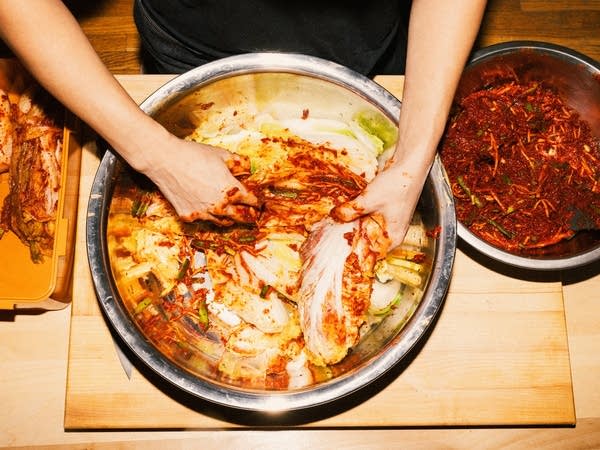
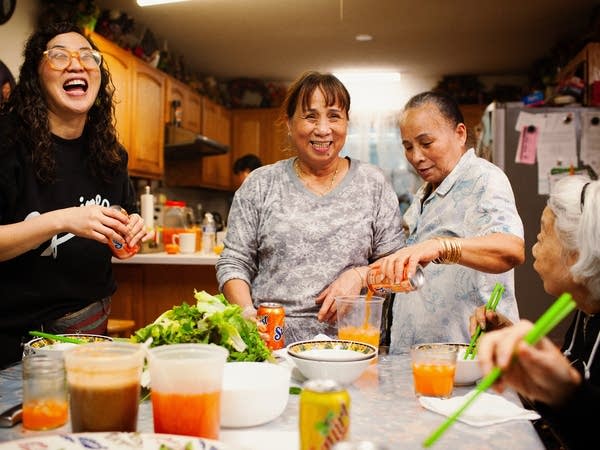
The chefs featured, who range from at-home to working chefs, are from the diasporas of Mexico, South Korea, Armenia, Ghana, China and beyond.
The book “celebrates a lot of chefs that don't get their flowers, that aren't as visible as celebrity chefs, and that feels really special right now,” Stopera says.
Many of them "are grandmas and aunties that literally supported the backbone of their family for generations based off the food that they made,” Albrecht says.
Albrecht and Stopera began working on the book with the help of a Waterers grant a few years ago, before Albecht relocated from Minneapolis to Los Angeles. The inspiration came partly from Albrecht’s explorations into her own heritage.
“I am a Korean adoptee,” she says. “I grew up not knowing anything about Korean culture, and so for me, food was a really easy way in to learn about Korean culture.”
Albrecht wanted to expand on her experience — to learn more about food and identity — and took the idea for a book to Stopera, who was running the former cafe at the Northeast Minneapolis arts organization Public Functionary.
“Running a cafe for three years just deepened my appreciation for chefs and folks who feed their community,” Stopera says. “It was just an easy response to Diana like, ‘Let's do it.’”
Together they photographed and interviewed the chefs at home with their families and friends, and Albrecht designed the book cover to cover.
Turning memory into record
Albrecht says she discovered that so many of the recipes have been passed down orally.
“It’s all up in their head, and it’s never been archived, it’s never been written down,” she says. “Oral tradition is very important, but I think in this time, everything gets lost on the internet or lost in our beautiful, beautiful brains, and to have something that is tangible, written down, to preserve, to cherish — I'm learning the value and importance of that.”
Stopera says the process of creating the book became a lesson in understanding community.
“I've been thinking a lot about third spaces and the need for them, and just the need to gather in person,” he says. ”To spend nearly two years having really beautiful conversations with people about ancestry and culture and history, it made me more present and reminded me that the village can take care of each other.”
Mendez knew they wanted to participate to help highlight how immigrant communities have shaped American food.
“Especially right now in America, this project specifically feels really, really important, because people who look like me, people who look like us, are being pulled over and legally allowed to be racially profiled, being taken away,” Mendez says.
“A lot of these people, especially the people that my grandpa was working with, himself included, were people who just wanted a job and they wanted more opportunities and a place to have kids and let them not have to labor in the fields.”
'Drunk Chicken' for community
Mendez’s grandfather, Salvador Sanchez Sr. was born in Northern Mexico and, as a young adult, moved to Milwaukee for work.
There, Sanchez co-founded the Latin American Union for Civil Rights, one of the first migrant farm worker labor unions in Wisconsin, and organized marches and protests for the Obreros Unidos (United Workers) movement.
He died in 2024, while the book was in process.
“Drunk Chicken” calls for marinating bone-in skin-on chicken thighs in a mixture of chopped white onion, Adobo seasoning, soy sauce, and, as the book states, “Budweiser [no substitutes].”
The book also advises, “Like a lot of cultures based in oral traditions, this is a passed-down recipe with no specific amount of each ingredient. Measure with your heart.”
Mendez says it became the family’s Sunday after-church staple, but their grandfather originally created “Drunk Chicken” to feed his community.

“This is a legacy recipe, because it's something that was developed because you can feed a lot of people with not a lot of ingredients, quite honestly, for not a lot of money at these camps for laborers,” Sanchez says.
Stopera pulls some of the new cookbooks out of a box, fresh off the printer. It’s the first time Mendez and Albrecht have seen them. They tear up.
“The idea that people could be making his recipe feels so good because it's continuing that legacy of him, like feeding people, working hard and providing for their community,” Mendez says. “That's what this was all about.”
Albrecht and Stopera host a release celebration for “Back of House” Nov. 8 at Bar Brava in Minneapolis. There will be a book signing at Public Functionary on Nov. 14.


 English (US) ·