
ARTICLE AD BOX
The grounds surrounding Andrea Setsvold’s bee yard are what you would imagine to be a pollinator’s paradise.
Tire tracks lead through grass to a field of native plants like Dutch clover, sweet clover and birdsfoot trefoil, basswood trees, dandelions and goldenrod.
Between three apiaries, Setsvold has 12 hives of Russian honeybees.
Just a quarter mile from her house, five of those hives sit hoisted up on cement blocks to allow for airflow.
“The bees, they’re finicky little insects. I’ve noticed in previous bee yards where I didn’t do weed control, the weeds will rub up against the hives, and then they’re more aggressive,” Setsvold said as she surveyed the perimeter of her fenced-off bee yard. Gravel lines the ground under the hives as a barrier against any overgrowth from the surrounding prairie.
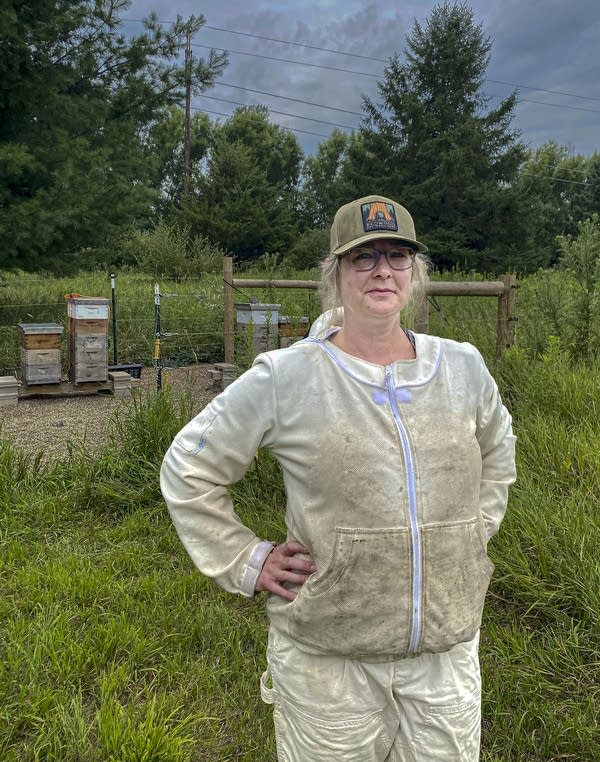
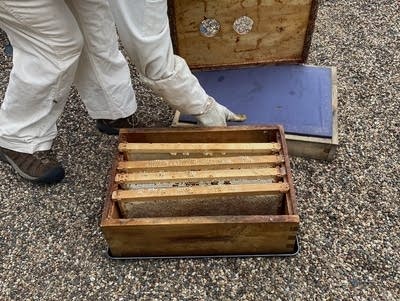
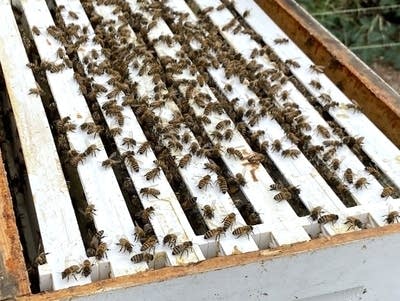
Her beehives look like big wooden boxes stacked on top of one another. They stand as tall as Setsvold’s chest. She gently removes the lid to reveal frames that rest on ridges on the sides of the box.
Beekeeping is messy, Setsvold says.
With her face, arms, abdomen and hands covered in a canvas jacket, she removes a frame to point out the honey she’ll harvest for the fair.
Bees go buzzing from hive to flower, barely noticing Setsvold checking in on them.
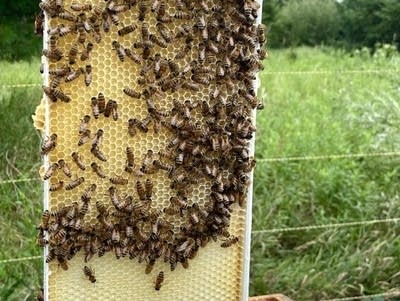
“Here you can see how all of those cells are open. But if you look closely, you can see, like a little sheen, a shine, that's actually nectar inside,” she said.
There’s no doubt — they’re busy at work. In this frame, they have not begun to cap it off. Bees store honey and then go through a process of “capping” which controls moisture. The capping is very similar to beeswax.
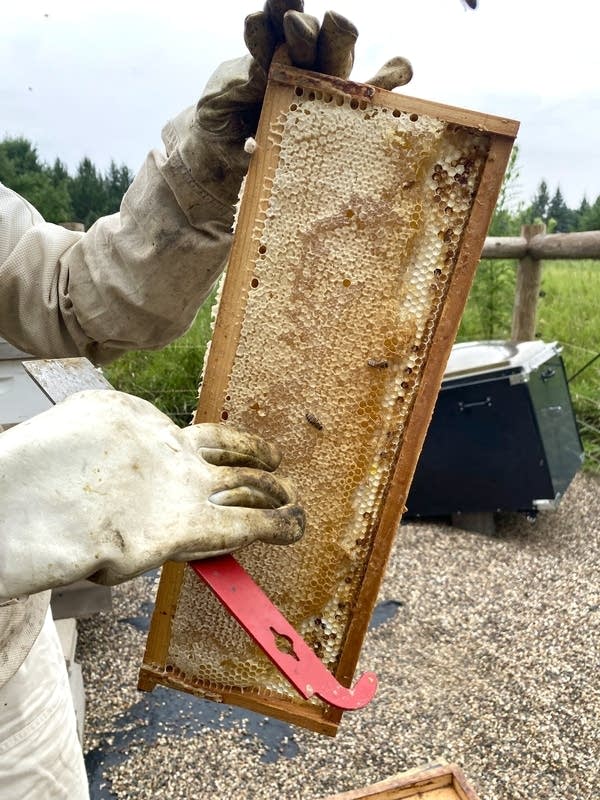
“They’re the ones who are collecting the nectar, and then they air it out, their little wings will start flapping, and then it dries it out to a lower moisture content, and then they cap it,” Setsvold described.
Setsvold is also busy alongside her bees. She has been beekeeping since 2016.
“It started off with just like a curiosity, but then I realized, for one, it’s just so peaceful. You’re not distracted out here. I can just focus. I'm surrounded by nature. I love being in nature,” Setsvold said.
Her love for the hobby began when a friend and her decided to attend a class. While they no longer pursue beekeeping, Setsvold was hooked.
“Every year, I just learned something new,” she said.
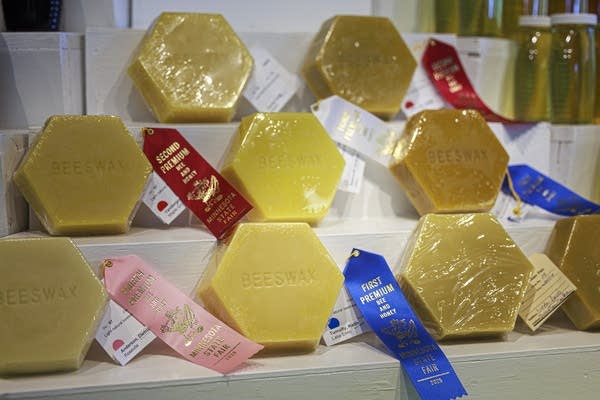
Eventually, she decided to enter honey in the Minnesota State Fair. She loves the fair and the opportunity to submit her hobby into a competition just grew her love for it. The first year she entered, she placed second for her white honey.
“I always laugh, because as an adult, who would ever think a ribbon would bring you so much joy? But it really does. It really does,” Setsvold said.
She's been submitting for five years now and has started to submit other colors of honey and beeswax.
The difference in color of honey is a secret into the lives of bees. Based on how light or dark the honey may be, it suggests what the bees were foraging on when they got the nectar.
“Your light honey is going to be earlier, and as things come into bloom, your honey gets darker. So your yellows and your purples produce a darker color than your dandelion and clover,” she said.
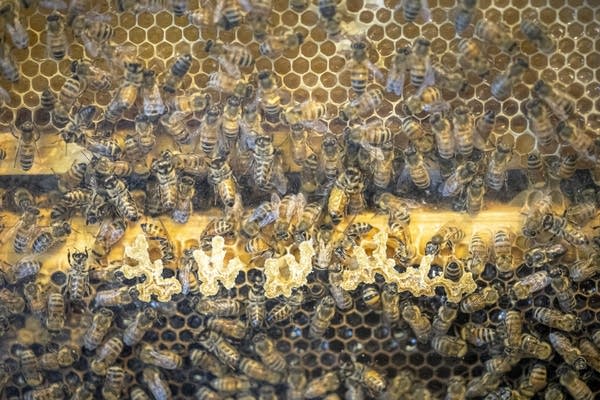
All plants from the grounds surrounding the hives — an important perk to the honey she sells at Mae’s Market.
“A lot of people say to buy honey local because they’re foraging off of all of the trees and plants that create the pollen that a lot of people associate with allergies,” she said. “The idea is that you’re putting those local pollens in your body, so then when they are in bloom, your allergies are not going to be as severe.”
The taste also differs, growing thicker as it gets darker in color.
The lighter the honey, the milder the taste. “It’s extremely sweet,” Setsvold said about white honey.
She describes light amber to be the “classic” honey that someone could get in the store: “It has more of a bite to it.”
Buckwheat honey, something Setsvold is harvesting for the first time, has a much stronger taste. “It’s almost like the thickness of molasses. It’s a very dark, thick, strong tasting honey,” she said.
For Setsvold, the process starts in April. Once it is warm enough, she checks to see how they've done throughout the winter. If she opens the hive while conditions are still too cold, it can break their cluster, and they could freeze. Bees can tolerate as cool as 50 degrees Fahrenheit.
Setsvold collects honey twice over the course of a summer. Once, for the fair, and the second time, after the bees have finished up the season.
“Once the plants start to not be in bloom, there's not pollen, and that's an indicator that we're going into winter,” Setvold said. “That’s what’s fascinating about bees. They just know how to do it based off of what's happening in the environment.”
Russian Honeybees need about 12 pounds of honey in a hive to survive the winter, but she prefers to leave up to 20 pounds.
Honey at the fair is judged on a number of categories related to their appearance, taste and quality. Doing well requires high attention to detail, but it has never deterred Setsvold. She describes herself as a “putzer.”
“This hobby is perfect for me,” she said. “I’m just able to putz and fine tune.”
In fact, in order to get out the bubbles that can form as you fill a honey jar and can take away from a competitor’s score, she sits and moves each one out with a toothpick.
“One of my mentors is like, ‘save up all your binge watching for when you’re getting ready for the State Fair.’ Because you will just go through series after series after series of having something on in the background while you're fiddling with this,” Setsvold said.
This year, she placed first in dark beeswax and also placed fourth for her light honey.
To see her work and the work of other beekeepers, visit the Agriculture-Horticulture building at the Minnesota State Fair.


 English (US) ·