
ARTICLE AD BOX
It’s quiet outside a split-level house in Burnsville, a suburb of Minneapolis. Days before, U.S. Immigration and Customs Enforcement agents surprised a couple returning home from the grocery store.
Sofia Alvarado, whose husband owns the house, captured the ICE operation on their Ring video.
In the video, ICE agents detain a man in the driveway while a woman, the man’s wife, runs into the house. The two are parents of a 7-year-old child.
The video shows the ICE agents outside just before they enter the house on Dec. 6.
A young woman inside the house watched in horror as three others — her husband, a roommate, and the mother of the 7-year-old — were also detained by ICE Agents. It was then she said that ICE agents separated the mother and child. She asked that her name be withheld for safety reasons.
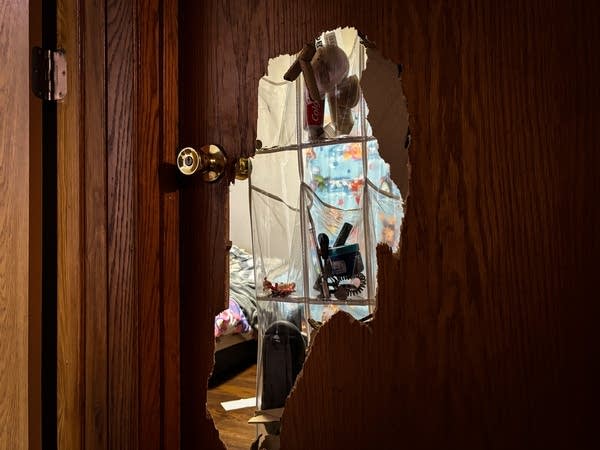
“When they had her under arrest, they asked her if she had someone to leave the child with, and she told them no, only with me,” the woman, speaking through a translator, said.
The young woman says that ICE agents asked the mother of the 7-year-old if she had anyone who could watch her child. The mother said no, but she identified the young woman as the only caretaker.
The separation of the parents from their 7-year-old is one of the consequences of the escalation of ICE operations in the Twin Cities, as the Trump Administration has sent dozens more immigration officers to Minneapolis.
Community members and legal advocates have been working to help parents understand how Minnesota law might help them make arrangements for their children if they are separated.
Ana Acosta is a visiting professor at the University of Minnesota Law School. She and others have been working to educate parents on what’s called a Delegation of Parental Authority, or a DOPA. It’s a document that gives a caregiver temporary legal and physical custody of a child and the ability to make decisions.
“If you need to take the child to the doctor, or if there's an issue where you need to talk to somebody at the child's school. The DOPA form does give you permission to do those things in place of a parent,” Acosta said.
Acosta says that the increased presence of ICE in the community has presented challenges for parents.
“The big challenge right now is that part of the process that you have to go through for safety planning may require you to leave your house, so that presents a danger to very vulnerable households that may need this assistance,” Acosta said.

Danny Hernandez owns Colonial Foods, a chain of grocery stores in the Twin Cities that specializes in Latin American foods.
He says his market’s in-store sales dropped by more than 80 percent last week. Hernandez said he’s committed to delivering food to immigrant households. He stays connected with customers by phone and over social media. His phone buzzes with orders. He’s been delivering groceries for 12 or 13 hours a day for the past week and a half.
He was asked by a civic leader to help get the word out about the DOPA forms. He started helping parents in early 2025.
“That’s the best way to help a kid, in case their parents are not available. So, we begin doing this paperwork. So far, I sign up over 2,500 kids myself,” Hernandez said.
Hernandez says he’s also helped connect parents with a notary who can finalize the paperwork.
Back in Burnsville, the young woman has been caring for the 7-year-old, her two children and herself.
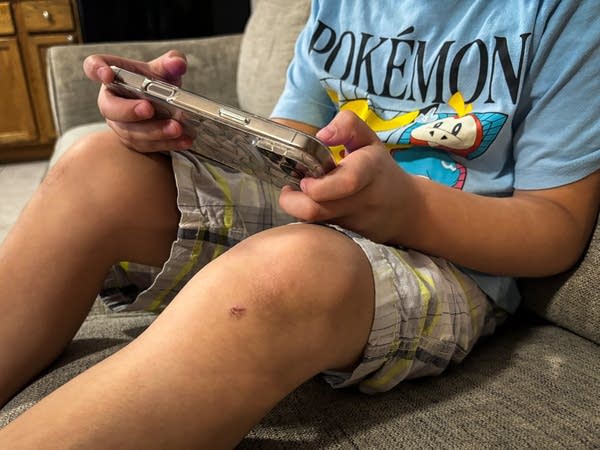
She says the 7-year-old is coping without his parents — the parents have called once or twice a day to talk with him. She says the events were “traumatizing,” but she and all three children are recovering.
On Wednesday, she received calls from the school and a church offering to help with food for her family and diapers for her toddler.


 English (US) ·