
ARTICLE AD BOX
More automated vehicles are hitting the road in Minnesota as the robotaxi company Waymo continues its testing in Minneapolis. But for now, they still have drivers behind the wheel.
That’s partly because it’s a legal gray area. Minnesota law assumes that there’s a driver in the car — someone who can take responsibility for a crash. There aren’t specific regulations for autonomous vehicles.
Legislators and industry leaders say that could change soon.
Kyle Shelton is the director of the University of Minnesota’s Center for Transportation Studies. He said Waymo’s arrival adds a sense of urgency to establishing regulations.
“We’re all playing catchup to a certain extent,” Shelton said. "If this is here, how do we need to prepare for that?”
The state has been anticipating the rollout of automated vehicles for several years. Gov. Tim Walz assembled the Connected and Automated Vehicle Advisory Council in 2019, tasked with making policy recommendations on autonomous vehicles. The group of transportation industry leaders and government officials — including Shelton — has been researching other states’ policies and working on a framework for Minnesota.
Several state legislators say they’ve also been setting up meetings with Waymo ahead of the next legislative session, which begins in February.
Rep. Brad Tabke, a DFLer from Shakopee, co-chairs the Minnesota House’s transportation committee.
“The No. 1 thing to me as we discuss automated vehicles is that they are safe for folks that are using them, but as well for pedestrians and for bikes and other folks,” Table said.
That includes seeing evidence that the cars can navigate Minnesota’s snowy roads — something Waymo says it’s tested in Michigan and upstate New York, and is now doing in Minneapolis.
Legislators will likely discuss what those safety thresholds are, and who should be responsible for making sure they’re met.
At a meeting of the advisory council earlier this month, members said they planned to recommend that Minnesota sticks to federal regulations, which typically cover vehicle safety. They also suggested a state permitting process that autonomous vehicle operators would need to complete.
Rep. Jon Koznick of Lakeville, the Republican co-chair of the House transportation committee, said he’s encouraged by the safety data he’s seen so far. Waymo reports its cars get in crashes less often than those with human drivers.
“There are safety considerations and such that we will definitely take a look at, but I think it’s important to not stifle or discourage the innovation or the investment in Minnesota,” Koznick said.
Besides safety, legislators said they’ll consider a range of other issues, like ensuring the camera-mounted cars are following data security policy. The advisory council also plans to recommend policies ensuring automated vehicles are prepared to stop for police and emergency services.
Lawmakers also expect to hear from Uber and Lyft drivers, who have raised opposition to driverless vehicles.
DFL state Sen. Scott Dibble of Minneapolis said he wants to consider the potential impact to those drivers if demand for rideshare goes down as automated taxis become available.
“We can’t simply roll out the red carpet for a large corporation that wants to make gigantic profits and just close our eyes to the fact that people are making their livelihoods in a particular way,” Dibble said.
Industry leaders say they want to get rules on the books and that the current lack of regulation could be slowing down the rollout of autonomous vehicles.
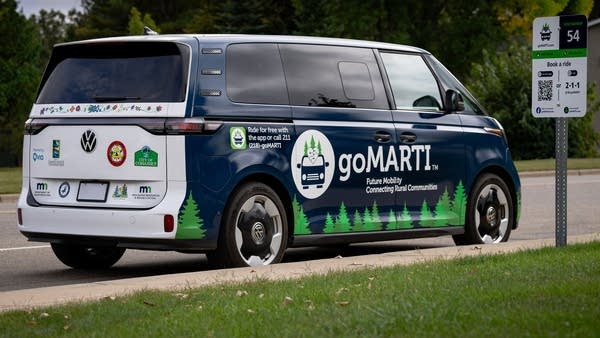
Tammy Meehan Russell is president of The PLUM Catalyst, a company behind goMARTI, an automated vehicle service in Grand Rapids. Like Waymo’s testing in Minneapolis, goMARTI’s self-driving vehicles still have a person in the driver’s seat.
She said the transit service helps people who can’t drive get where they’re going and has added jobs in the area — and she wants to see a path to operating the cars without a driver.
“The companies don’t want to invest in coming for testing if they don’t see a path to being able to get to deployment,” Meehan Russell said. “I think it will really help introduce some of these new technologies, some of these new jobs for the state, if we can have that clear policy framework.”
The state advisory committee aims to have a set of recommendations ready before the legislative session starts in February, when they expect lawmakers to introduce regulations.


 English (US) ·