
ARTICLE AD BOX
Minnesota’s hemp-derived cannabinoid industry is ready to challenge a federal ban passed on Wednesday.
The ban caps hemp products like beverages and edibles to 0.4 milligrams of THC per container. It was signed into law by President Donald Trump as part of a deal to reopen the federal government.
“People are mad that this is how it played out,” said Omar Ansari, owner of Minneapolis-based Surly Brewing. “Like, ‘Wait a second, they snuck this into a funding bill?’ That’s crazy.”
Ansari’s company produces hemp-derived THC drinks that contain a range of 3 to 10 milligrams of THC per can and are sold in several states. The new federal standard of 0.4 milligrams is drastically lower than Minnesota’s standard of 5 milligrams per serving.
“This is terrifying for us in the industry because if it doesn’t change, there will be a lot of breweries that close,” he said.
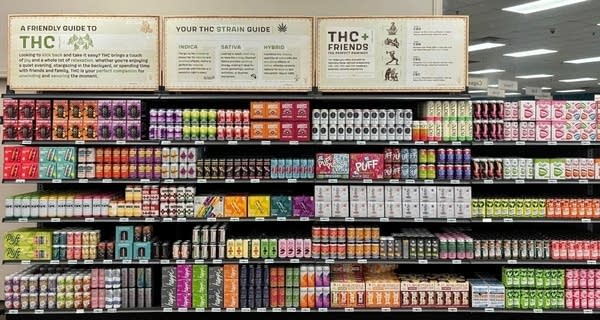
Minnesota’s legal hemp industry has been around since 2022 and is considered one of the most successful in the country. The Minnesota Office of Cannabis Management says the state’s businesses — including breweries — paved the way for the hemp-derived THC beverage market, and the state established a regulatory framework for the industry.
“We are disappointed to see the federal government make such significant changes in the federal framework. Instead, we believe that a system that allows Minnesota’s approach … is the best way to ensure the products that Minnesotans are seeking are available and safe,” said Josh Collins, an OCM spokesperson.
OCM says it will work with hemp businesses, cannabis industry participants, the Minnesota Legislature and other state agencies to address the impact of the ban.
As for liquor store owners like Jon Halper of Top Ten Liquors, the federal ban means he could see a 15 percent drop in sales. He said the hemp news comes as alcohol sales are already down at his 15 Twin Cities stores.
“The industry is already in a state of modest decline, which most people think is going to continue or modestly accelerate,” he said. “So the hemp-based THC that we sell has largely allowed us to replace the shrinking in our business.”

For local hemp-derived THC producer Granny’s Edibles, the crackdown on hemp has stunted plans to expand business into other states. Owner Thomas Thorpe said he just signed a contract to distribute his products in Tennessee and is hoping to also sell edibles and beverages in Florida.
“As a small, bootstrapped company with no investors other than just building this with my friends and family, I know that a lot of those conversations have shifted in both energy and dynamics,” he said.
The potential to take his $1 million business and turn it into a $10 million business that could create 100 more jobs this year seems “very doubtful,” Thorpe said.
But for many parts of the hemp industry, it’s business as usual. There’s still another year until hemp-derived cannabinoid products are deemed illegal, which means the ban could be overturned before then.
The hemp crackdown was led by U.S. Sen. Mitch McConnell, a Kentucky Republican, to close a loophole in the 2018 Farm Bill. That bill legalized hemp and gave rise to the hemp-derived THC drinks and edibles now seen in liquor stores, gas stations and breweries.
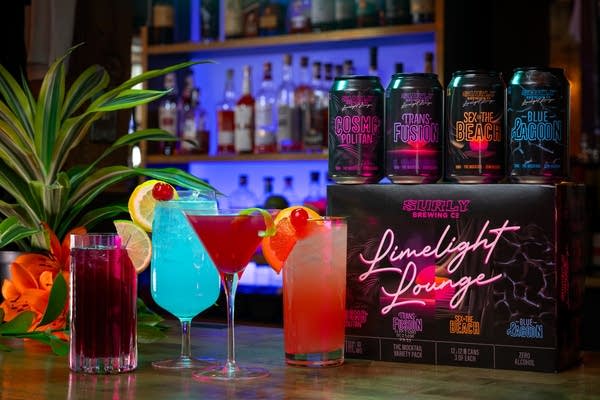
Ansari of Surly Brewing is optimistic the law can get changed between now and November 2026. He said there’s “a lot of energy” around that effort.
In the meantime, hemp businesses are encouraging Minnesotans to keep buying their products.
“People need to understand it’s not gone today,” Halper said. “It still exists, and it’s really important that they continue to support the industry.”


 English (US) ·