
ARTICLE AD BOX
Veterans from all over the country are headed home after spending a long weekend in a friendly competition for paralyzed people known as the National Veterans Wheelchair Games.
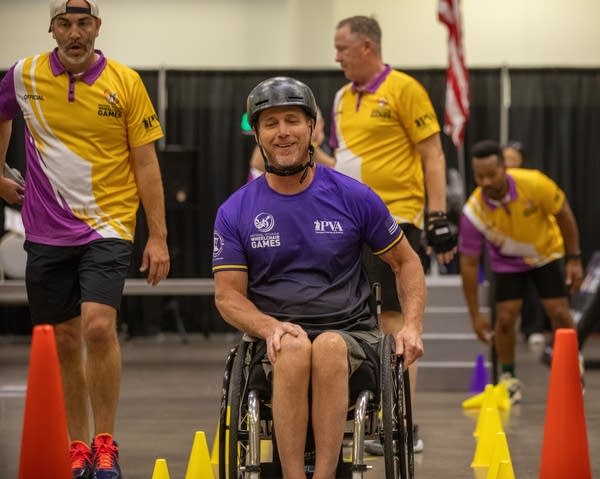
Axes smacked against wooden targets, basketballs bounced around and wheelchairs swerved through an obstacle course at the Minneapolis Convention Center. Among the final competitions on Tuesday, the slalom super G, was an energy-packed race that tested the participants’ endurance.
Ken Brookins, 52, of Osceola, Wis., one of the competitors at the slalom super G event, appeared calm and focused. His precision and strength were tested at every turn. Three officials surrounded Brookins, their hands an inch away in case he needed help.
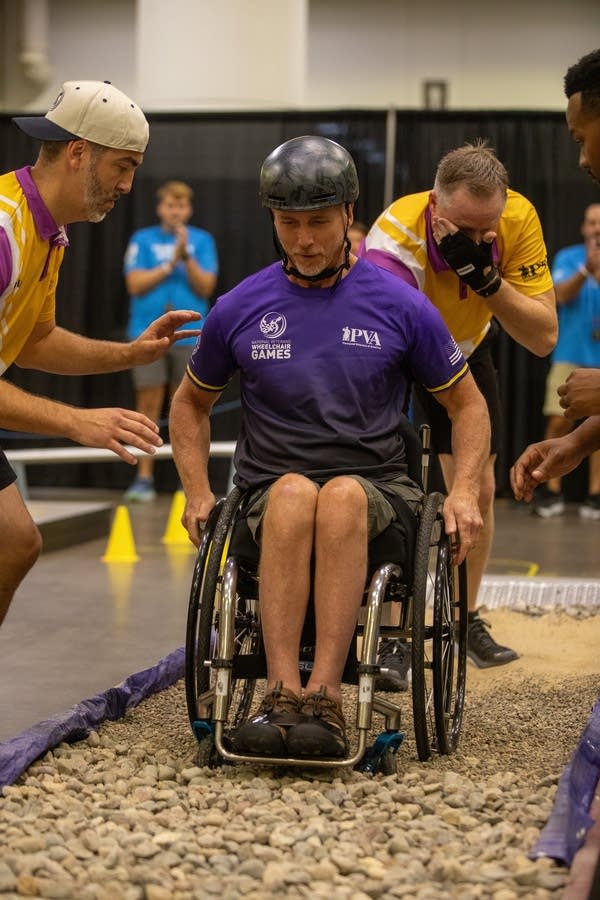
Brookins served in the Navy from 1992 to 1996. He was stationed in Florida, and South Carolina. When Brookins was 35 years old, he suffered an accident while trimming trees at his brother’s home.
“What other option do you have,” Brookins said when asked how he keeps going. “Try to keep a positive attitude, and once you get through the first year, two, three, then things just normalize, and you just accept what happened.”
On the obstacle course in Minneapolis, people with similar injuries and experiences backed him up and supporters loudly encouraged him at every step.
“You just go to take a breath in and go for it,” Brookins said.
He finished the race in 4 minutes and 37 seconds. He smiled as he crossed the finish line. Other participants and friends embraced him.
As the races continued, one voice was prominent amid the shouting.
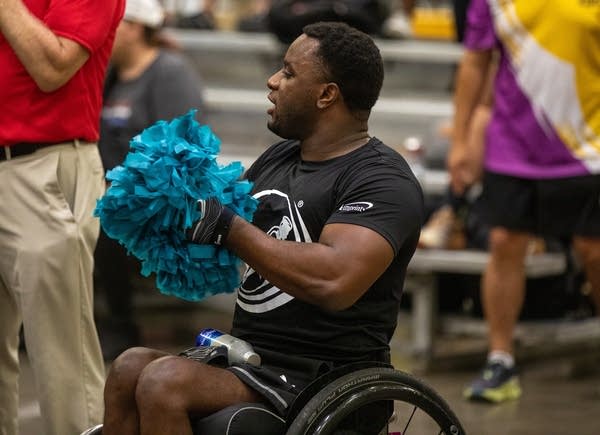
“Push, push, push. You’re almost there,” urged Darnell Calahan, the winner of the slalom super G division. Calahan was on the front row; he smacked blue paper pom-poms as other athletes made their way through the course.
“It’s kind of our own, little bond between each other. We know what we’ve been through, and what we’re going through every day,” Brookins said.
Jen Purser works for the Paralyzed Veterans of America and is the co-director of the Wheelchair Games. Purser said the people of Minnesota made organizing the event much easier.
“I don’t think anybody told us ‘no,’ Purser said. “Even putting the flags on the streets so our veterans feel welcomed. They came out in droves with the volunteers.”
Purser described the games as a “family homecoming,” seeing some old friendships, as well as making new ones, even as the host cities change each year.
Dave Tostenrude works with Purser at the PVA, where he started as an adaptive sports specialist. Tostenrude said competition is another way to inspire paralyzed veterans to be more active. And for the games, the athletes “worked incredibly tirelessly.”
He said around 2,000 volunteers came from around the Twin Cities to help, “which we haven’t seen in a long time.” He credited the Minneapolis VA Hospital and other local veterans organizations.
“To see them come together and really celebrate the veterans’ experiences that we’re seeing in that family and that gathering — that’s how I feel besides some exhaustion,” Tostenrude said.


 English (US) ·