
ARTICLE AD BOX
Minnesota has applied for a share of $50 billion in federal funding for rural health care that was approved by Congress as part of President Trump’s One Big Beautiful Bill Act.
The Minnesota Department of Health applied for $1 billion dollars over five years. Its 62-page application lays out detailed plans for the funds, including fellowships aimed at getting more medical students training and working in rural areas, adding more telehealth opportunities and providing more preventative care screenings in local venues, such as schools, pharmacies and tribal clinics.
The fund, known as the Rural Health Transformation Program, was added to Trump’s One Big Beautiful Bill Act to appease some Congressional Republicans concerned about how the law’s massive health care funding cuts could disproportionally affect rural hospitals and health care providers.
The law includes nearly $1 trillion in Medicaid spending cuts over 10 years and changes Medicaid’s eligibility requirements while eliminating some subsidies and tax credits for health insurance premiums under plans offered through the Affordable Care Act.
The Minnesota Hospital Association estimates that the state could lose $2.4 billion in federal health care funding in the first year alone, fiscal year 2028. The MHA also finds that 140,000 Minnesotans on Medicaid could lose their healthcare coverage while another 60,000 Minnesotans will likely drop their ACA health insurance because of the rising costs.
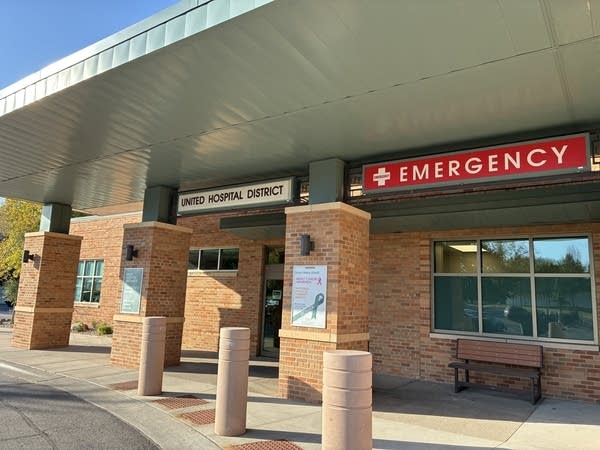
Kim Tjaden, a family physician in St. Cloud, said the new rural health care funding is not enough to offset those steep cuts. She’s particularly concerned that her many rural patients will forgo preventative health care or even health insurance altogether.
“Folks won't come in for office visits,” Tjaden said. “If I don't even know that I have high blood pressure, I never go in and see a doctor. And my first visit is in the ER with a stroke. Whereas if I could have had health maintenance visits and all of those things and had that managed, it would have been a much less expensive and devastating disease.”
About 30 percent of Minnesotans live in rural areas of the state, where the health care system has been severely strained in recent years.
There’s a shortage of physicians, nurses and other medical professionals, and the number of rural medical clinics and hospitals closing is on the rise. The MDH wrote in its application for the Rural Health Transformation Program funding that 34 out of Minnesota’s 95 rural hospitals are financially distressed, which means they’ve had four or more years of negative operating margins in the past eight years. Just this year, Mayo Clinic Health System announced it was closing six rural clinics in southeast Minnesota.
According to the application, Minnesota’s rural residents on average must travel 64 minutes for medical-surgical care, whereas people in the state’s urban areas travel just 19 minutes on average for care.
Tjaden said that means just seeing a provider can already be difficult for rural Minnesotans.
“Can folks get to their appointments?” Tjaden said. “Can folks communicate with their providers? Do they have Wi-Fi? Can they do telehealth from their homes if they're snowed in? Or do they have transportation, which is a huge thing?”
The state’s application outlines goals to bring more care as close to home as possible by increasingly making use of telehealth options, remote monitoring and mobile units that can deliver healthcare to schools, community centers and other locations.
One particular focus in the grant application was childbirth services. Many hospitals have been closing labor and delivery units for years, especially in rural areas.
Earlier this month, Allina announced it was closing its birth center in Faribault. According to an MPR analysis of new data from the University of Minnesota’s Rural Health Research Center, 700,000 Minnesotans, or 12 percent of the state’s population, live in counties with no hospital-based obstetrics services.
To rectify this, the state has proposed piloting a Family Medicine Obstetrics Fellowship with the University of Minnesota. The health department would also use some of the funding to support existing programs, including one at Community Memorial Hospital in Cloquet that offers high fidelity simulation training for rural providers looking to build obstetrics skills.
Diana Rydrych, the health policy director for MDH, said the department was very intentional about offering suggestions that would build upon existing programs because officials are aware the Trump administration’s grant is just one-time funding.
“We tried to think about what we can do with this grant that allows us to make as much progress as possible,” Rydrych said. “(We wanted to) identify things where we could start quickly, and help our partners, and help hospitals hit the ground running and just start doing their work right away.”

Out of the $50 billion in federal Rural Health Transformation Program funding, half will be distributed equally between all 50 states. The other half of the funding is supposed to be doled out by the Centers for Medicare & Medicaid Services, or CMS, based on need.
Carrie Henning-Smith, co-director of the University of Minnesota’s Rural Health Research Center, said every state applied for the same $1 billion dollar grant. She said Minnesota should get more than $1 billion, because it has many more rural residents than smaller states such as Rhode Island and Wyoming, which should get less money. But the whole grant making process is unclear.
"It depends on the way that CMS is considering ‘need’,” Henning-Smith said. “It depends on the way that we're defining ‘rural’. Some of it, I think, is still fairly opaque."
Henning-Smith said it’s frustrating because rural health care desperately needs more funding, but this new rural health care program won’t come close to making up for the huge health care funding cuts in the president’s tax and spending law.
"We're looking at nearly a trillion dollars in Medicaid cuts across the country, and this fund is only $50 billion dollars,” said Henning-Smith. “Now, $50 billion is a lot of money, but that's not enough to make up the difference in Medicaid cuts for Minnesota or for any other state in the country."
And Henning-Smith said the new funding all seems politically calculated. She said that the Trump administration added in the promise of rural health funding to get Alaska Sen. Lisa Murkowski on board when they were trying to garner enough votes to pass the “One Big Beautiful Bill.”
“Were it on its own and not included as part of this bill that also slashed Medicaid, it would be exciting,” Henning-Smith said. “This is me being really cynical, but maybe it's an appropriate time to be cynical — I just worry that this is this shiny thing that's meant to distract us from the other cuts.”
The Minnesota Department of Health said it won’t find out how much funding it will receive, if any at all, until the end of the year.


 English (US) ·