
ARTICLE AD BOX
Quinci Schmidt is co-owner of a dairy farm in the town of Corcoran, which her grandfather bought in 1958.
“He hopped in his pickup one day and bought the farm with 20 cows and a horse,” Schmidt said. “We kind of have grown our farm from there.”
When Schmidt was growing up, the family had about 50 cows. The herd expanded as she and her siblings eventually took over the business. They now milk 120 cows.
Schmidt said one doesn’t go into dairy to make money — it’s the lifestyle that one loves. But she and her family still needed to pay the bills; and, in recent years, that was getting harder.
“Dairy isn't always a consistent form of income,” Schmidt said. “The prices are pretty low. They've been very low for a while. And it's not always the same check you see coming in every month. It's not a consistent check.”
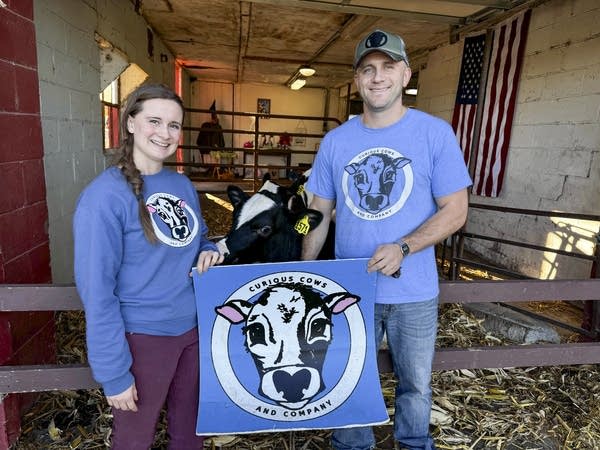
Last year, while reading a dairy newspaper, the family came across a business idea from a farmer in New York. What if they turned their calf nursery into a cow cuddling business?
“I thought the idea was a great way for people to meet the cows and meet us,” Schmidt said.
Thus, Curious Cows and Company was born. For $25, anyone can spend thirty minutes with their calves, brushing their coats and feeding them hay.
Schmidt’s brother, Caleb Sherber, said the calves’ slow-beating hearts are soothing.
“When people get up close to them, it’ll kind of sync your heartbeat, cause it’s so slow,” he said.
It’s a business of joy that was born during a time of duress.
Price pressures
Dairy producers usually want to sell their milk at around $20 per hundred pounds to turn a profit.
But over the last year, fluctuating dairy prices have generally hovered around $16 to $18 per hundredweight.
“I don't know that there's a dairy in the country that could make money with today's costs at that level,” said Lucas Sjostrom, executive director of the Minnesota Milk Producers Association.
Sjostrom said there’s currently record production for specific kinds of dairy components: “the fat and protein — what makes our cheese, what makes our butter, what makes our yogurt.”
But people tend to consume many of these dairy products when they eat out, according to Christopher Wolf, an agricultural economist at Cornell University. And inflation, he said, is making Americans eat out less.
“Inflation is still being kind of stubborn, and everything that's happening right now doesn't look like it's going to do much for curbing inflation,” Wolf said.
As a result, dairy supply exceeds demand, a dynamic which pushes down prices.
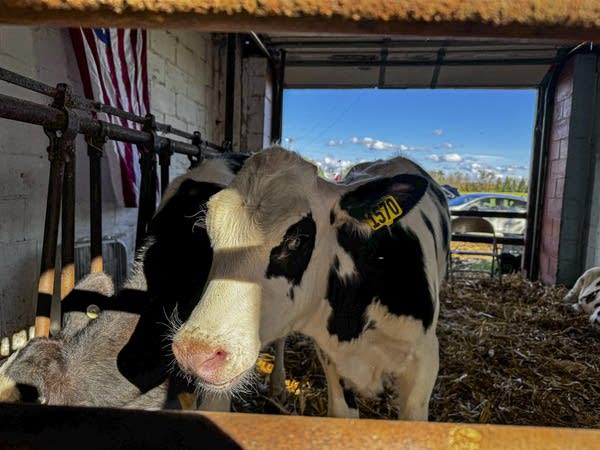
Sjostrom from Minnesota Milk said he tends to get a lot of phone calls in times like these, when dairy prices are low. They’re calls from farmers looking for alternative ways to generate revenue.
“Interest is growing, and the other side of that is farmers, generally speaking, getting larger,” Sjostrom said. “Because if you need to spread out less income over the same amount of cattle and property, you need more revenue.”
He’s no stranger to the concept. Sjostrom and his wife opened Redhead Creamery, an award-winning artisan cheese business, 10 years ago.
“We just saw an opportunity, and her parents supported us to find another way, rather than just the growth of cows, which would have been fine too,” Sjostrom said. “But we thought this was something we could capture.”
Farm ambassadors
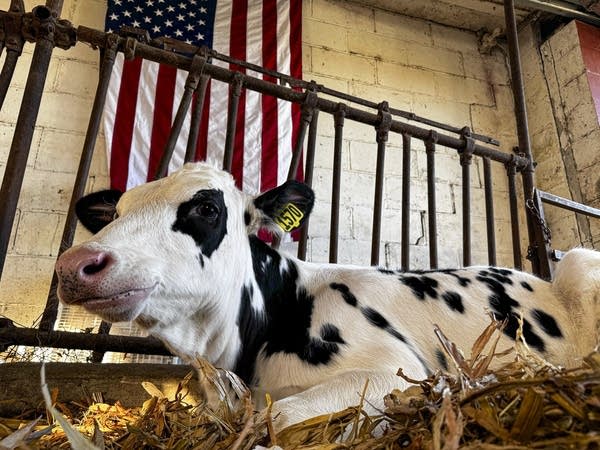
Three calves were nestled in straw in a corner of a dairy nursery in Curious Cows and Company. They were resting from an intense play session with visitors.
Schmidt said inviting those visitors in not only allowed the family to generate revenue amid volatile prices. It also created an opportunity to help people learn where their food comes from.
“You know, be able to have that experience of, ‘What is going on in a dairy farm?’” Schmidt said. “‘What are the cows like there?’”
A few years ago, she said, everyone would’ve been connected to farming by a relative, friend or acquaintance. But as time passed, a gap has grown between the farmer and the consumer.
“We really want to be able to open up our doors to people to come meet cows,” Schmidt said. To meet their farmer, see who we are as farmers and as a farming family, and how our cows live every day.”
Dairy prices still give Schmidt’s family a pit in their stomach. But they say that with their new and growing side business, there’s still a place for them in the dairy industry.
Correction (Nov. 6, 2025): An earlier version of this story incorrectly identified how the family heard of the New York farmer. Additionally, the story has been updated to clarify what the cows were eating.




 English (US) ·