
ARTICLE AD BOX
State leaders are raising awareness about the continued need for food aid, despite the federal shutdown ending earlier this month.
The 43-day shutdown — the longest ever in U.S. history — delayed food assistance and created confusion for millions of Americans who rely on the Supplemental Nutrition Assistance Program, or SNAP.
About 440,000 Minnesotans receive around $73 million in SNAP benefits every month, according to state data.
With the federal government reopened, Minnesota officials said there will not be any disruptions to SNAP benefits in December. People can continue applying for benefits, too.
Still, officials warn the hunger crisis is not over.
“The shutdown really impacted people’s food stability and we are still recovering, even though the shutdown is over,” said Tikki Brown, commissioner of the Minnesota Department of Children, Youth, and Families.
Brown spoke at press conference on Saturday at Second Harvest Heartland, where state leaders spent the morning volunteering and packing food.
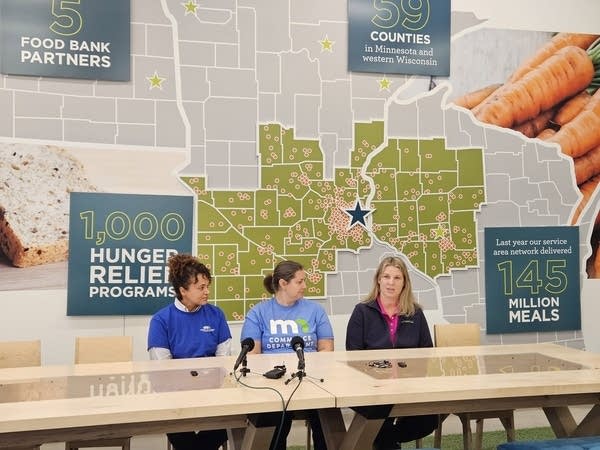
Grace Arnold, commissioner of the Minnesota Department of Commerce, said the shutdown has delayed Minnesota’s allotment of a heating assistance program — about $100 million — that helps people keep their homes warm.
“If there are people who had applied and were relying on that to cut into their energy bills, that money has to come from somewhere,” said Arnold. “So whether that means you go to a food shelf instead of buying groceries, or you put something on your credit card where you wouldn’t normally have, these are all impacts that add up over time.”
Food shelves report struggling to meet the demand for assistance as more people turn to them for help.
Federal policy changes went into effect on Nov. 1 that limit eligibility to SNAP, according to Brown. Further changes will be implemented in the future.
Brown said ultimately nearly half of Minnesota’s SNAP recipients will either see a reduction in benefits or some change to their benefit status.
The bill ending the shutdown this November funds the government until Jan. 30 and funds SNAP through September 2026, according to NPR.
Brown said food aid leaders are preparing for a possible shutdown in the future, though they hope it doesn’t come to that again.
“The uncertainty that folks felt during the shutdown and the impact it had on community members, impact it had on our partners, is severe and significant,” she said.



 English (US) ·