
ARTICLE AD BOX
Minnesota is treading water a bit when it comes to the state’s finances: A fresh budget outlook shows a fiscal cushion for now but a deep hole forming later.
State finance officials released the estimates Thursday in a new economic forecast. The topline figures show a surplus in the current budget of almost $2.5 billion but a shortfall that could approach $3 billion by 2029.
The precarious nature could force a standpat session even as the Legislature faces pressure to provide help to people needing nutrition or health care services, homeowners dealing with big property tax spikes or communities coping with cost strains of their own.
“We're going to happen to have some acknowledgements that the federal government's not going to help us. The chaos is going to continue,” DFL Gov. Tim Walz said in response to the report. “We need to budget to protect Minnesotans.”
Republican House Speaker Lisa Demuth, who is challenging Walz in next year’s race for governor, said the projected deficit and what might have contributed to it are what matter most.
“We have both a spending problem and a fraud problem,” Demuth said, “and we will be addressing it when we return to session on Feb. 17.”
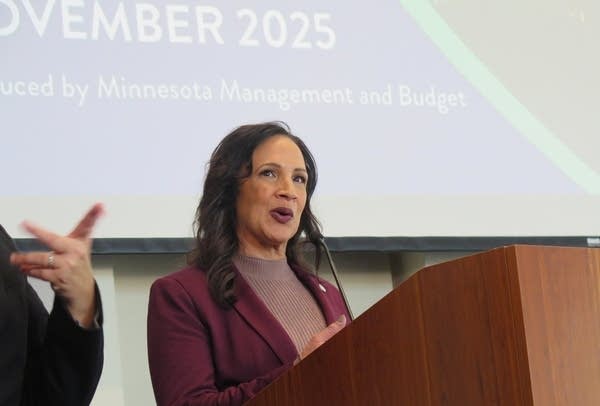
The full report from the Department of Minnesota Management and Budget strikes a note of caution about what could lie ahead. It says policies tied to trade tariffs, immigration crackdowns and major federal tax and spending shifts could all loom large.
“There will certainly be difficult decisions ahead as policymakers assess their priorities,” said Minnesota Management and Budget Commissioner Erin Campbell.
The forecast provides both short- and long-term looks at Minnesota’s finances, driven by decisions made here and by national economic conditions state leaders have less control over.
Minnesota is taking in more money than it had anticipated in earlier fiscal assessments, but its costs are rising too. Public health care programs for the disabled and elderly are coming in with higher expenses and enrollments.
More people are tapping into property tax relief programs, too. That trend might get exacerbated in 2026 as cities, counties and other local taxing jurisdictions impose some of their highest levies in years.
Fraud is on the minds of many officials and the public after a string of high-profile schemes led to the pilfering of hundreds of millions of dollars from state-managed programs. Although many of the fraud cases involve federally funded programs, the state has oversight over where the money went.
Republicans accuse Walz of being too lax in that oversight.
“What we've seen is just a lack of concern, a lack of effort for trying to stop that fraud,” said state Sen. Eric Pratt, the top Republican on the Senate Finance Committee. “This administration hasn't stopped anything. It’s all come from the U.S. attorney.”
Walz disputes that.
“We've acknowledged that this is serious, needs to stop. It is stopping,” he said. “People continue to go to prison.”
Walz said he’s put a pause on some spending that has been flagged as suspicious and is awaiting the results of an independent audit of at-risk social service programs due early next year.
A closely divided Minnesota Legislature had already taken some steps to contain spending and put a dent in what in February was shaping up as a nearly $6 billion shortfall through mid-2029. The two-year budget enacted this summer trimmed that potential deficit.
But the other spending challenges as well as slower economic growth and stagnant employment sector figures fed into the projected shortfall for 2028-29, pegged at $2.96 billion.
The latest two-year budget calls for state spending of about $66.8 billion, higher if inflation is included. That was a dip from the budget that preceded it.
The economic forecast surveys both anticipated revenue and spending obligations to determine if the numbers balance out. There typically is a mismatch.
When there is more money than needed to pay the bills, it can lead to tax cuts or augmented spending on priority programs. When there is less money, it can force spending cuts, accounting shifts, tax increases or use of the rainy day reserves to patch the anticipated hole.
But with the House likely to be tied and Democrats in a Senate majority by a single seat, the likelihood of making any big-sweep changes is dim.
Minnesota’s budget reserve is at an all-time high at more than $3.77 billion, which includes money in a cash-flow account that is akin to a checking account. By law, a portion of any surplus shown in the late-fall forecast gets directed automatically into the reserve account.
Lawmakers are reluctant to tap into those rainy day funds unless there is an unforeseen emergency and no better options.
Because of the federal government shutdown, state economists didn't have all of the usual data at their disposal, such as recent employment and inflation figures.
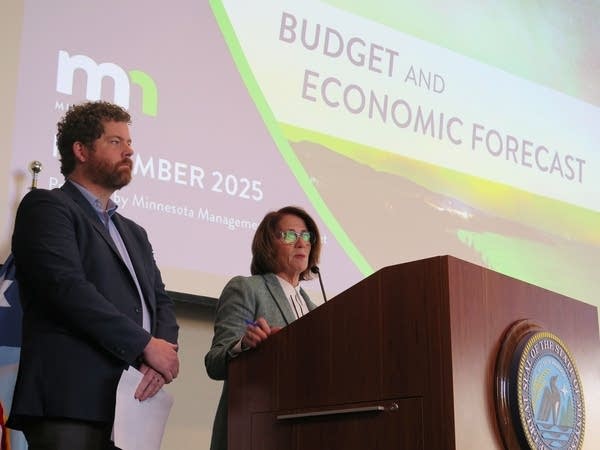
State leaders say rising health care costs and federal policy changes to social service programs also play a factor.
DFL Senate Majority Leader Erin Murphy said Minnesota lawmakers are probably on their own to get its budget back into order for the long term.
“We cannot replace every dollar that is being taken from Minnesota and sent to the federal government and restore our programs,” she said. “We need help from the federal government, and I don't know that we're going to get it.”


 English (US) ·