
ARTICLE AD BOX
In every corner of Minnesota, there are good stories waiting to be told of places that make our state great and people who in Walt Whitman’s words “contribute a verse” each day. That's the theme of our series “Wander & Wonder: Exploring Minnesota’s unexpected places.”
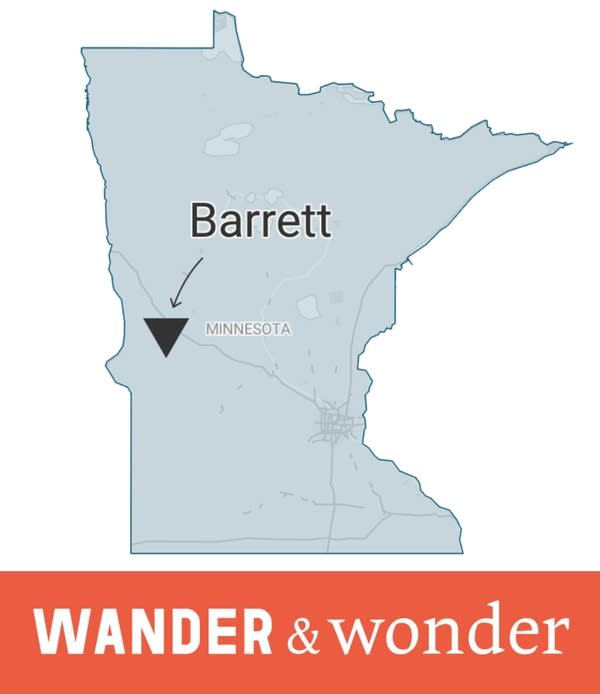
Steve Ellis’ journey from college student to nationally known bee advocate began in 1978 when he came to Minnesota to work a summer job on a bee farm. It changed his life. He fell in love with the work, and “also fell for the beekeeper’s daughter,” he says laughing.
Nearly 50 years later, Ellis is a recognized expert in the business of bees. He’s seen success and failure over the years, and he remains as passionate as ever about the need to keep bees healthy.
But as he nears retirement, Ellis is increasingly worried about the future. He lost 40 percent of his hives last summer, something he said was unheard of in the past.

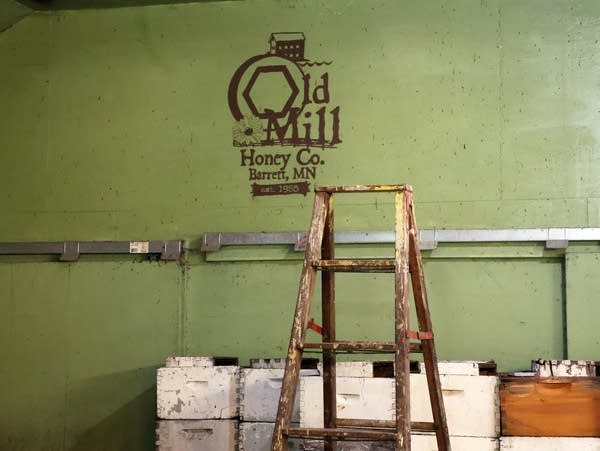
"Last year was the worst year in recorded history for bee mortality in the United States, and it has been getting progressively worse," he said during a recent visit to his Old Mill Honey Co. farm near Barrett in Grant County.
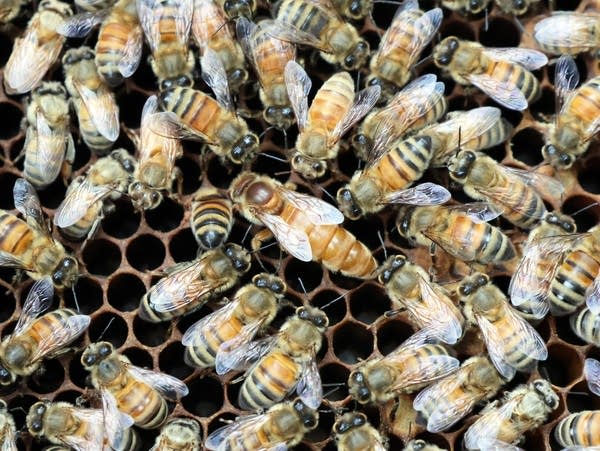
Scientists point to pathogens, pests, loss of habitat and pesticides as reasons for perennial bee die-offs.
Ellis is convinced the widely used agricultural pesticides known as neonicotinoids are the root cause. Now 70, he’s winding down his commercial operation but says he won’t leave the fight over pesticide use and bee health.
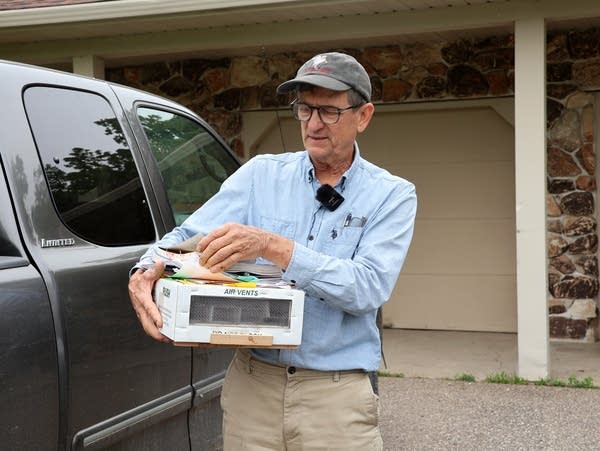
“I have a lot invested mentally into this subject,” Ellis said. “I've been working at it for 30 years. It's hard to leave that behind when you see it's still getting worse.”
The bee business was very different when Ellis took over Old Mill Honey in 1994. Minnesota beekeepers could rely on honey production to generate income. By the late 90s, though, Ellis was vexed by the die-off of his colonies.
He said it took him two years to figure out what was happening. He concluded that his bees were dying from insecticide sprayed on trees being grown in central Minnesota for alternative energy and paper production.
He and another beekeeper sued the paper company and the Minnesota Department of Natural Resources in a case that went to the Minnesota Supreme Court.
"They changed their practices because of it, but it taught me that you can't just ask for the change and that the system wasn't going to just protect us,” he said. “We had to step up and protect ourselves."
‘David and Goliath situation’
Neonicotinoids are systemic insecticides, traveling through the plant, killing insects that feed on the plant. Numerous studies have shown effects on domestic and wild bees that use pollen and nectar from the plants.
It’s a huge issue. The United States Department of Agriculture estimates more than one-third of the world’s food crops depend on bees and other pollinators. An executive order by Gov. Tim Walz in 2019 called on Minnesota agencies to do more to promote pollinator health and reduce the use of pesticides that threaten them.
MPR News interviewed Ellis in 2013 as he dealt with a mass die-off of his bees that he believed was triggered by a local farmer using insecticide on his crops nearby.
In the decades since the introduction of neonicotinoids, he’s been on a mission to change pesticide policy use in the U.S. He’s president of the Pollinator Stewardship Council, a national nonprofit. He’s served on the National Honey Bee Advisory Board as well as the Governor's Committee on Pollinator Protection in Minnesota.
"Through that engagement, we're understanding that we're very much a David and Goliath situation here," he said. “We're fighting against huge money and huge political influence, and that's not a fair fight, and we know it.”
Ellis joined that first lawsuit to protect his business but said he realized along the way the issue was bigger than dollars and cents. "When you get involved in a moral issue, you can't just walk away from it like you can walk away from a business."
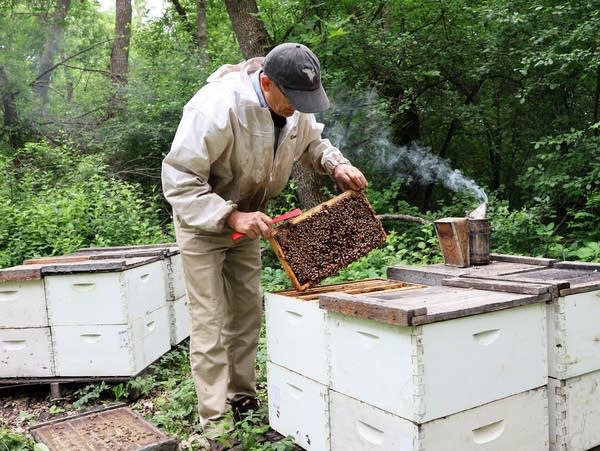
Scientists believe bee die-off is caused by a combination of pesticides, disease and poor nutrition. Some in the industry think Ellis is too single-minded in his focus on pesticides.
But Mark Sundberg, a fourth-generation beekeeper near Fergus Falls, Minn., and president of the Minnesota Honey Producers Association, said Ellis plays an important role in the industry.
“A lot of us are kind of afraid to speak up in a lot of ways because we're so dependent on the farm community for where we place our bees. So we’ve got to be real careful about how we approach the pesticide issue,” said Sundberg.
“He’s willing to pay the price,” added Sundberg, who spoke as an independent beekeeper, not in his role as MHPA president.
‘Bigger than just a job’
Sundberg said while he might not always agree with Ellis on tactics, most beekeepers agree pesticides are a problem. Sundberg hopes Ellis will continue his advocacy after he retires from beekeeping.
“I marvel at how much time he puts into it,” he said. “We need the Steve Ellises of the world just to keep the chemical companies on their toes.”

Ellis is cautiously optimistic that U.S. Health and Human Services Secretary Robert F. Kennedy Jr. might help his cause. He acknowledged Kennedy is “controversial for a lot of different reasons,” but he’s pleased Kennedy shares his belief that farm chemicals are overused.
In any case, Ellis won’t stop fighting. For him, beekeeping has always been more than a business.
“It's like you're part of something bigger than just a job,” he said. “It’s about producing honey but also being a part of food production by raising the bees that pollinate crops,” he said.
“You're connected to pollination. You're connected with food production. You're connected with a family operation that often goes back two or three or four generations. It's like a culture.”


 English (US) ·