
ARTICLE AD BOX
Alison and Luke Skansgaard looked on as their son, Anders, tinkered with video game parts in their living room beside their glowing Christmas tree on a recent evening. Their friendly dog, Hudson, lay just beside them.
Anders will soon have a new playmate — a sibling due in February. The 9-year-old is eager to teach his sibling how to play hockey and do math. In the shorter-term, he’s eager to have more time at home with his parents as they take leave to bond with their new baby.
When Anders was born, Alison took 10 weeks of largely unpaid time off. She works for a local small business. Luke was back at his agriculture industry job after one week.
This time around, they’ll turn to a new state program that will provide up to 12 weeks each for the bonding time, which is more than their employers provided.
“It really helps kind of take the pressure off financially for me to be able to stay home longer,” Alison Skansgaard said, noting it’ll provide peace of mind compared to the experience after her son’s birth.
“I would have tough days as you do with a newborn sometimes, and I would call (Luke) and he's working, so there's really not much he can do,” she said.
Luke Skansgaard agreed that returning to work so quickly was draining.
“Just being at work and not being able to help, but still, like, the emotion — you’re relied upon for emotional support, but I had no other option at the time, right?” he said. “You have to keep your job.”
Come January, the couple, along with about three-quarters of Minnesota workers, will see more generous benefits than they have right now.

Within the last week, the state agency managing the program began a public awareness campaign to ensure people know about the new paid family and medical leave program — around the birth or adoption of a child, the deployment of a military member in the household, the recovery after a surgery or more. The theme is that “paid leave makes it possible.”
Even before it goes live, the Skansgaards said they’ve noticed some tension around the new program. Older workers didn’t get the extended leave when they had children or faced illnesses, and some anticipate never using it despite paying the payroll tax to fund it.
Some business groups sought to block the legislation creating the program. They said having employees take significant time off could put more work on themselves or others.
“Imagine what the quality of life will look like if your favorite mom-and-pop shops are forced to close their businesses,” National Federation of Independent Business Minnesota State Director Jon Boesche said recently. “A one-size-fits-all mandate is not going to increase the quality of life in Minnesota. If anything, it’ll hurt small businesses throughout the state.”
What employees and employers need to know about the new paid family and medical leaveThe Skansgaards have heard similar critiques, but they disagree. They said returning to work too soon after their child’s work would make them exhausted and distracted. They said it’s a comfort knowing that their positions will be guaranteed to be there when they return from leave.
“Just having that safety net, knowing that you have your job there when you're done,” Alison Skansgaard said. “Because I don't want to necessarily quit working to stay home for years. I would like to go back to work. And it's nice not having to worry about interviewing for a totally new job if I want to go back.”
The Skansgaards aren’t the only ones preparing to take bonding leave in 2026.
Angela Mendez-Vanegas welcomed her third child in October. She received 12 weeks of paid time off through the University of St. Thomas. She said having 12 more weeks of paid leave next year — even if it’s only partial pay — will help the family bond and navigate child care.
Under the paid family and medical leave program, she and her husband — along with all parents who welcome babies in 2025 — can access state benefits, too. The leave has to be completed by the child’s first birthday.
“We've been literally piecing together their child care between my mom and my husband's mom and my time off,” Mendez-Vanegas said, noting there will probably still be gaps to fill. “We were going to piece it together like we did before. But having the extra time now really helps because it takes a lot of stress out of everybody.”
Minnesota’s paid family and medical leave program kicks off in 2026. Here’s what to knowStephanie Goodwin and her spouse welcomed a new baby over the summer. She took 12 weeks of partially-paid time off through her employer in Minneapolis. She hopes to take additional bonding time through the state program next year.
Goodwin experienced an unplanned cesarean section in her first pregnancy. She said having paid time to physically recover and spend time with a child is crucial. For that first child, she benefitted from the paid family leave program in Washington state.
“With unplanned C-sections, you can't drive a car. It's dangerous to slam on the brakes for your healing,” Goodwin said. “By the time the 12 weeks (of leave) was done, I was feeling at least physically, more able to participate in my regular rhythms of life.”
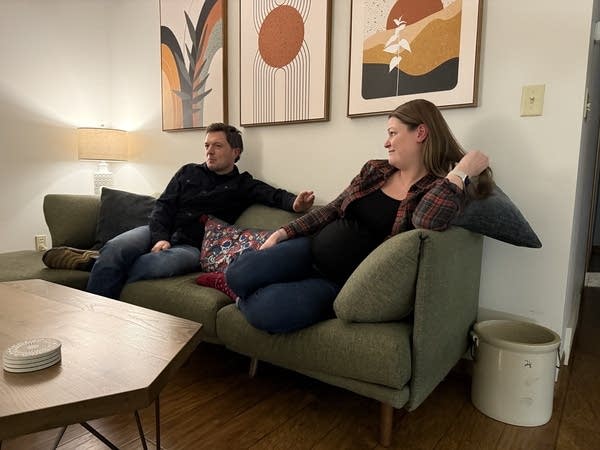
The program also affords time off for longer-term medical issues for themselves or loved ones if they’re sick, hurt or recovering from safety issues. Luke Skansgaard had hoped it would be a resource for his family, too. His mother recently passed away from cancer shortly after a terminal diagnosis.
Luke tapped into leave protections under federal law and pulled PTO hours to cover his salary while he cared for his mother at their home. But if he had stopped serving as a main caregiver, his outage could have been unpaid. For many, that poses a daunting decision between being there and being paid.
“That is just an added stress that a person being a caregiver for someone with a terminal illness does not need,” he said. “You don’t need the added stress of not receiving a paycheck.”
In a matter of weeks, Luke and Alison Skansgaard will get a jolt of stress, but one they welcome: Adjusting to a newborn’s needs and schedule while keeping 9-year-old Anders content.




 English (US) ·