
ARTICLE AD BOX
Greg Lien’s hope to open a cannabis business in Silver Bay, Minn., is dead in the water.
Since Minnesota legalized recreational cannabis in 2023, he’s done his due diligence in getting pre-approval from the state’s cannabis agency for a microbusiness license. He’s spent hundreds of hours on his license application — from preparing a 150-page business plan to submitting a commercial leasing agreement and more for his manufacturing and cultivation facility.
“I slogged through it myself, and it was accepted without revisions,” he said.
He never thought his biggest obstacle would be his local government.
“It’s got to be frustrating for any business that explores a new venture, invests all kinds of time and money into it and then the city drags their feet and then nixes it at the last minute,” said Lien.
The City of Silver Bay, a town of 1,800 residents, adopted an ordinance on Jan. 21 that states the city “will not issue a registration or license to any retail cannabis business, temporary cannabis event or other cannabis business.”

When Lien sent in certification for zoning, Silver Bay cited that code.
“The city denied my zoning request, stating that cultivation and manufacturing cannabis that I propose is specifically prohibited by the city code,” said Lien.
He’s a fourth-generation farmer who grew up near Alexandria. Lien owns Endless Summer Farms in Silver Bay, where he’s grown strawberries and vegetables for the past seven years. His farm qualifies him to be a social-equity license holder for a cannabis business.
Lien is the exact type of Minnesotan legislators had hoped would jumpstart the state’s new adult-use cannabis market. His plans are to close his produce business and transition into growing cannabis full-time at the same location.
The finish line is in sight. All that’s left now is clearing zoning compliance with Silver Bay and completing site inspections to secure his license. In fact, he says he could start growing cannabis tomorrow if he had everything completed.
But Lien is at odds with the city’s prohibitive cannabis ordinance.
The ordinance also says “a city within a county is not obligated to register a cannabis business” and left that obligation for one cannabis retailer to “City of Two Harbors, Lake County, Minnesota,” which intends to register one dispensary.
The timing — a rejection after he’s spent over a year jumping through hoops to do the license application — is “frustrating,” Lien said.
State cannabis office can’t force cities, counties to comply
Minnesota’s Office of Cannabis Management (OCM) says the law is clear that local governments cannot prohibit the establishment or operation of a licensed cannabis business. Municipalities can limit the number of retail locations for certain types of licenses to the statutory requirement of one registration per 12,500 residents, and “enact reasonable restrictions on a business’s location and hours of operation.”
In addition to Silver Bay not wanting retail cannabis and instead punting it to Two Harbors or Lake County, the city also appears to be overstepping its authority by blocking all cannabis businesses — not just dispensaries. Lien’s business is not a dispensary.

“There is no statutory authority for a local unit of government to require a registration for a non-retail cannabis business,” said Jim Walker, OCM’s public information officer.
But the state cannabis agency says it cannot compel a local government to action, even if it’s not in compliance with Minnesota law. Paul Armentano, deputy director of a national cannabis advocacy group called NORML, said he’s seen similar situations in other states where cannabis agencies are limited in their authority.
“They are a regulatory agency, and regulatory agencies generally aren’t law enforcement,” he said. “Perfect example is the U.S. Food and Drug Administration. They identify, with some regularity, companies that are violating the federal laws and in those cases, they generally send out warning letters and other threats. But they don’t have the power to come in, bring in a SWAT team and shut operations down.”
Last week, OCM executive director Eric Taubel told MPR News he was not concerned about cities and counties blocking cannabis businesses.
“We haven’t really seen a lot of issues similar to what happened in Albert Lea popping up elsewhere. And so I think that you know, for the most part, it’s going pretty smoothly,” he said.
Albert Lea’s city council recently held contentious discussions about lack of local control over recreational cannabis and frustration with OCM’s background checks, and even rejected a licensee from opening a business. But they later approved two cannabis dispensaries, whereas other municipalities are prohibiting them outright.
Taubel also said he reminds applicants to have grace with local governments who are trying to get up to speed with the new cannabis landscape.
“Just like the state and just like them, the local units of government are doing this for the first time as well, and so they’re trying to make decisions that are best for their communities,” he said.

Municipalities can’t opt out of recreational cannabis
Lien is not the only prospective cannabis business owner running into issues with local governments. Carol Moss practices cannabis law at Hellmuth & Johnson, an Edina law firm, and said she’s run into city and county officials who don’t want cannabis in their communities.
Some are frustrated that they can’t opt out of recreational cannabis. Minnesota currently stands out as a state that does not offer an opt-out option for local governments.
The majority of states that have operated recreational cannabis industries for years, like California and Colorado, allow for municipalities to opt out. But Moss, who helped craft Minnesota’s cannabis legalization laws years ago, said legislators did not want to do that here.
“What we have seen in other states is that when you allow locations to opt out, it doesn’t get rid of the cannabis in those spaces,” she said. “It gets rid of the safe, tested, regulated cannabis and becomes hot pockets for the black market.”
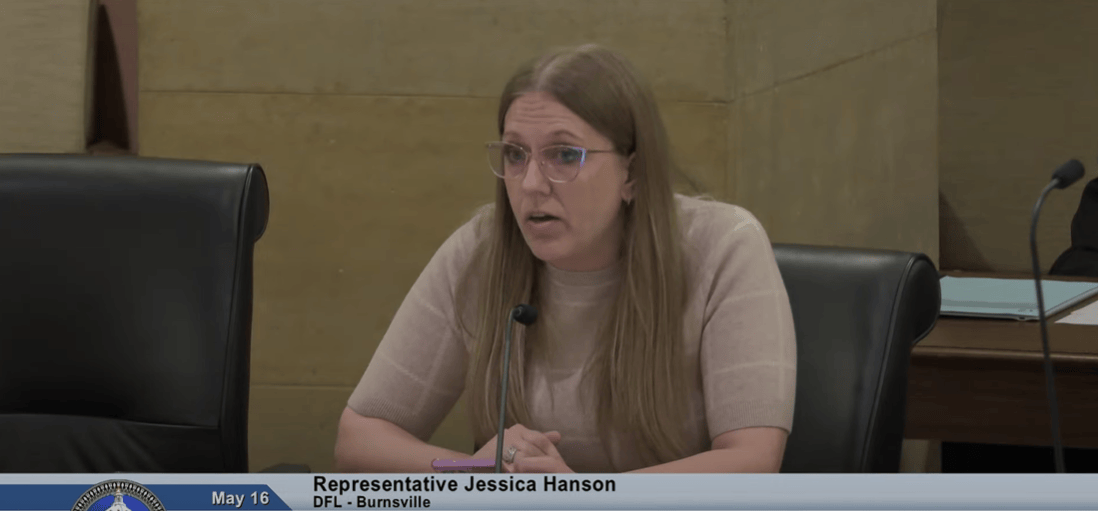
Now, there are several pre-approved applicants, including social-equity applicants, who are facing significant barriers with their local governments. In a Senate conference committee meeting in May, state Rep. Jessica Hanson, DFL-Burnsville, who coauthored the bill that legalized recreational cannabis, said cooperation with local governments is critical to launching Minnesota’s adult-use cannabis market on time.
“Applicants right now have been calling us in droves, telling us that there are significant barriers that are being presented at the local level with the local retail registrations, and this is happening in some of our largest cities and counties, which can, in effect, create a patchwork of prohibition across the state that was never intended by our state laws,” she said.
She also criticized cities and counties for not being prepared to take on two core responsibilities: approval of zoning for a new industry and creation of a retail registration process.
“They are purposely overreaching, or they’re flat out exhibiting prejudice against our industry. And too many, I’ve heard personally, all but bragging about how they are finding a way to outwit the state and to find their ways around the law,” said Hanson.
Hanson declined a MPR News request for an interview. A spokesperson for Hanson said she plans to introduce bipartisan legislation next year addressing local governments and their restrictions on cannabis businesses.
About 20 municipalities codify cannabis restrictions in conflict with state law
Moss and her clients are seeing barriers with local governments, which are creating zoning rules that are impossible to comply with or adding more restrictions.
“There are definitely cities that are taking wide liberty in the interpretation of the statute and are pushing the limits on what restrictions they can put out for cannabis business, maybe with the unwritten goal of discouraging these businesses from coming into their town or into their county,” she said.
So far, her legal team has tracked about 20 localities that have enacted cannabis ordinances conflicting with state law.
For example, Minnesota has a ceiling for buffer zones local governments can enforce for cannabis businesses — municipalities can prohibit a cannabis operation within 1,000 feet of a school, or 500 feet of a day care, residential treatment facility, or an attraction within a public park regularly used by minors, including a playground or athletic field.
“We’ve seen cities where they would want buffers from residential areas — that’s not allowed in the statute,” said Moss. “We've seen a city that allowed really weird hours, like 7 a.m. to like 4 p.m.”
Becker and Blue Earth counties have already established additional buffers around churches and residential homes. Otter Tail County has interpreted the 1,000-foot buffer from schools to include colleges.
“Sometimes we have seen cities where they require 40 acres for an outdoor grow, which is limited to one acre. That’s a huge burden for a small cultivator to find 40 acres to put one acre of canopy,” Moss said.

For cultivators in the City of Cottage Grove, indoor operations have to operate on at least 20 acres of land and outdoor operations must be at least 40 acres. It’s a loophole because the state set a limit on how big cultivation facilities can be, but did not outline the minimum amount of land facilities must operate on.
It appears Cottage Grove’s acreage requirements would apply to all types of cultivator licenses. For a microbusiness — which is allowed up to 5,000 square feet of plant canopy indoors and one-half acre outdoors — the city is requiring it to operate on about 174 times more land indoors than needed, and 80 times more land outdoors.
And in Sauk Rapids, the city council issued a temporary moratorium on its cannabis industry in late July after approving two cannabis businesses. According to St. Cloud Live, Sauk Rapids Mayor Jason Ellering said the moratorium will allow the city to do more research and avoid being a “hotbed for cannabis production.”
“I’m very concerned about that, because there was already a moratorium allowed under the statute that expired on January 1, 2025, so I don’t see the legal basis for any new moratorium,” said Moss.
She’s worried that will set a precedent for other cities to follow, which could be devastating especially since the cannabis industry is new and not generating income yet.
Local government vs. cannabis business: Who loses? Minnesotan mom-and-pop business owners
After Silver Bay denied Lien’s zoning compliance certification, he attempted to appeal the decision. The appeal was also denied.
“I conferred with our City Attorney and there is no appeal,” wrote city administrator Lana Fralich in a Feb. 7 email that Lien shared with MPR News. “This is an ordinance approved via Council and your request does not comply with the ordinance.”
City attorney Timothy Costley followed up in another email.
“To clarify, we are not giving you legal advice. You have my conclusion and opinion given to the City. If you have questions about or dispute my conclusion, you should contact an attorney,” he said.
Lien explored the possibility of suing the city. He filed a civil lawsuit, arguing the city is acting in defiance of state law, and wanted to represent himself in district court. But he found out businesses must be represented by a lawyer in district court, which he can’t afford.
“I’ve come to realize that I’m dead in the water because I don’t have the resources to fight this,” Lien said.
Fralich declined MPR News’ request for comment, citing pending litigation. Silver Bay sought the League of Minnesota Cities, an association representing over 800 cities in the state, for legal counsel on Lien’s complaint.
In response to a request for comment, the League said it can’t speak to one community’s actions but said local authority on land use and zoning is an important tool for cities to guide development of cannabis businesses, and the League will support local governments by providing general guidance and resources.
Taubel was not available to comment in time for publication.
Because OCM has its hands tied with its authority over localities, taking a municipality to court is currently Lien’s only option. These roadblocks disadvantage social-equity applicants like Lien and small businesses that have the microbusiness license.
“That’s the kicker because cities know that the OCM is not regulating them, and that a lawsuit is the only way to take care of it,” said Jared Schroeder, director of cannabis consulting at Meta Realty.
The Minnetonka-based real estate firm has over 50 clients, including Lien, and is helping cannabis businesses secure a location, finance it and build it out. He’s been on the ground in several cities across the state working on compliance with local governments, all of which have different laws on cannabis zoning.
“Most people don’t have the money to spend for a lawsuit plus the time lost. I mean, we’re talking $35,000-plus to sue them, plus a year to 18 months of time that you’re going to lose in the market,” he said.
That wasn’t the intended outcome for small business owners looking to get into Minnesota’s new cannabis industry. Moss, who serves on OCM’s Cannabis Advisory Council, said one of the goals of the legislation was to create a craft industry “for Minnesotans, by Minnesotans.”
That led to the creation of the microbusiness license. Microbusinesses have the ability to manufacture and cultivate cannabis in small operations and sell at one location. OCM did not cap the amount of microbusinesses allowed in the state the way it did for larger operations.
As of Monday evening, OCM has issued 16 microbusiness licenses.
“The microbusinesses are the ones that have been head of the line in trying to locate property,” she said. “They’re not the large, out-of-state businesses who prefer the licenses that were capped. They’re mostly Minnesotans. They’re small mom-and-pop shops. And so when you have these additional barriers to try to find a location, it’s really hard for these small businesses to overcome that.”
Moss said it’s only a matter of time until one of the licensed cannabis businesses sues a municipality. In other states, it’s common to see litigation drag on for years in the beginning stages of cannabis laws.
“Litigation is prevalent when it comes to issues regarding the rollout of marijuana distribution. We've seen this particularly when it comes to medical marijuana in a handful of states,” said Armentano, deputy director of NORML.


 English (US) ·