
ARTICLE AD BOX
Artist and scholar Jessica Lopez Lyman has been thinking about the term “placemaking.”
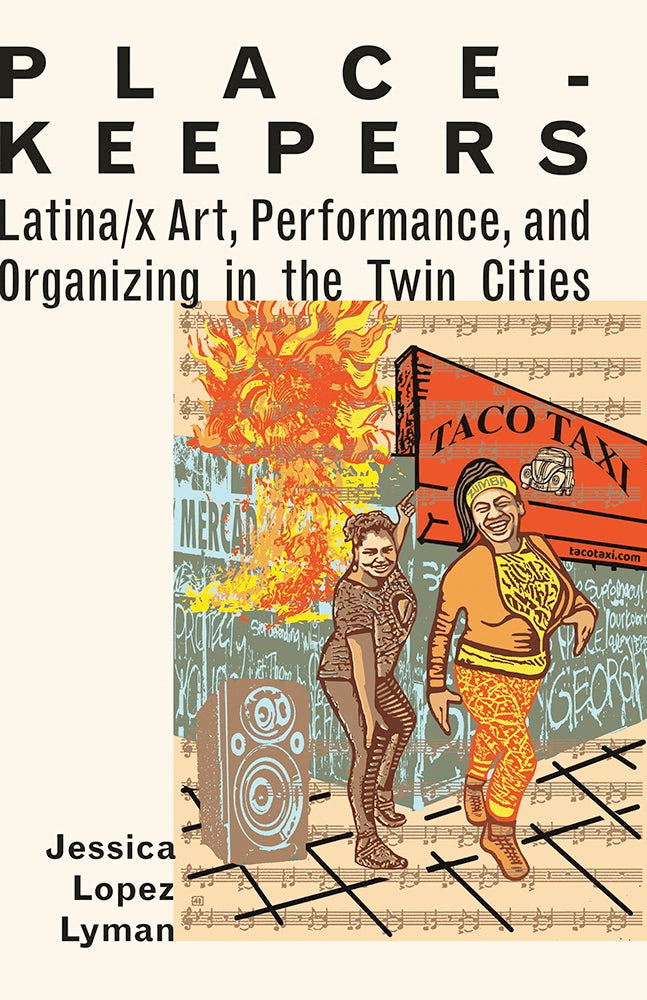
She prefers the term “place-keeping,” which is at the heart of her new book “Place-Keepers: Latina/x Art, Performance, and Organizing in the Twin Cities,” published by the University of Minnesota Press.
“Placemaking” is often used in city revitalization efforts, urban planning proposals and gentrification pushes to cultivate a sense of cultural meaning around a place or space.
In her role as an artist with a mobile screen printing service, she’s often called upon to help “place-make” by nonprofits or different civic entities. But the term, she says, is a bit backwards.
“Placemaking really perpetuates a settler colonial idea that there's nothing there, so we have to go make something,” Lopez Lyman says.
Mapping a decade of resistance
Lopez Lyman, who is an assistant professor in the Department of Chicano and Latino Studies at the University of Minnesota, worked on the “Place-Keepers” book for 10 years.
From 2013 to 2023, she documented the arts activism of performance artist and state representative María Isa Pérez-Vega, poet Lorena Duarte, artist and curator Maria Cristina Tavera, muralist Olivia Levins Holden, singer-songwriter Lady Midnight and many more.
“What I see in these artists and the movements that they're part of is that they are place-keepers,” Lopez Lyman says.
She explains that being a place-keeper means valuing everything that forms a community’s identity: its traditions, culture, language, food, clothing, family ties and the homes people live in.
“We have to hold that as something that is valuable and important, and we have to maintain that space is kept for ourselves, our local residents and for the future children and young people that will be, one day, leaders,” she says.
Lopez Lyman says that, following her training as a Chicana feminist ethnographer, she immersed herself in the worlds of these Latina/x artists.
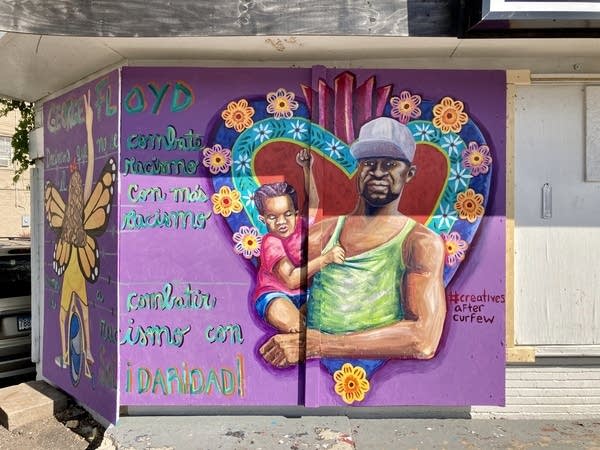
Through the book, she maps out what she calls their movidas, or moves or strategy, to counter injustice, from police brutality in Minneapolis to the fight against the Enbridge Line 3 pipeline in northern Minnesota.
Beauty and resilience
She hopes that the book can inspire arts activism today.
“For generations, people have found survival maps and a way to move when the systems in place have really tried to smother their existence,” she says.
She says there is beauty in resilience, in storytelling, and in the everyday life of the community, even amid crises such as people being kidnapped or disappeared by the federal government.
“There are a lot of community members that are fighting, and this is a story of a decade worth of different types of fights and struggles in the Twin Cities,” she says.
The book ends with a coda about the proposed Minnesota Latino Museum in St. Paul. Lopez Lyman, María Isa Pérez-Vega and many others have been lobbying, organizing and fundraising for the space for years.
“What's very important about the artists in this book is that they oftentimes are invisible in the mainstream art scene, including the national Latinx art scene, and that's because the Midwest is a region that continues to be ignored and erased,” Lopez Lyman says.
“I think that this is a very important work that makes an intervention in that erasure,” she says
There will be a book launch and art exhibition for “Place-Keepers: Latina/x Art, Performance, and Organizing in the Twin Cities,” 5:30 p.m. Friday at El Colegio High School in Minneapolis.


 English (US) ·