
ARTICLE AD BOX
On a recent morning, Alaina Keesee, 32, of Mapleton, was playing with her 20-month-old daughter Sabine Keesee on a new playset at Tiny Roots Child Care. Its doors will be opening this week.
Keesee said finding affordable child care that’s close by is a struggle, which she learned when shopping around during her pregnancy.
“We called everywhere,” she said. “We called in-home [providers]. We called centers. Everything. Could not find anything until she was born, and luckily enough, we found a place called PALS. Unfortunately, they closed down.”
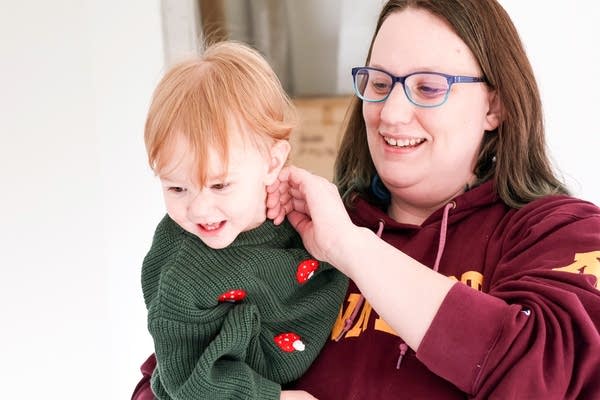
Blue Earth County is experiencing a shortage of over 300 child care slots. It forces parents to travel farther away for their child care needs as they need to be able to work and drives families to move away from smaller communities. Keesee currently has to travel 18 miles from Mapleton to Mankato for day care.
But when she heard about Tiny Roots opening in town — only a short walk a few blocks from her house — Keesee immediately reached out to get a spot.
“We’re hoping that she can come here and go to daycare and grow here, and so she can also grow in the community,” Keesee said. “And we're hoping once she comes here, then she'll be able to transition into the school in Maple River and already have friends, because they'll probably all be from here.”
Tiny Roots is a residential one bedroom and one bathroom house that’s designed for in-home child care. It features smart home lights, sound systems and security cameras. Jeff Andrews, CEO of the consulting firm Business of Child Care, was an advisor on the project and said the house is rented out to a child care provider who the Economic Development Authority hired.
Currently, the cities of Sleepy Eye and Long Prairie are also exploring the child care house model.

Andrews said there’s a shift in how small communities are finding specific solutions to help fit the needs of their own towns. They’re also realizing that investing in providers helps their towns grow and keeps child care providers in business.
“Those communities are starting to frame it as an investment, no different than the roads, the power lines, the buildings, everything that makes our community,” he said. “What they are realizing is the opportunity to create the space for somebody who desires to [provide child care] and otherwise might be on the sidelines.”
According to the Minnesota Department of Children, Youth and Families, more than 4,000 licensed in-home child care providers called it quits over the last decade, which created a crisis for families needing affordable child care options.
Compared to pod models that usually incorporate renovated spaces inside of community centers or buildings, the residential structure is specifically built for child care. Tiny Roots cost just under $300,000—a fraction of the several million dollars a traditional child care center could cost.
The Mapleton Economic Development Authority owns the one-bedroom and bathroom house. Jack Wheeler, a community and development specialist of Community and Economic Development Associates , a nonprofit based in Chatfield, Minn., said the child care house model offers the city more flexibility than the pod model.
And, Wheeler said the property value stays with the house if the provider decides to end services.
“If it doesn’t work, and if there’s some unforeseen circumstance where we don’t need this child care provider anymore, we can sell it as a one bedroom house,” Wheeler said. “And that is something that is a really big appeal to the community—to be able to be flexible with our city infrastructure and adapt depending on the community’s needs.”
‘A home away from home’
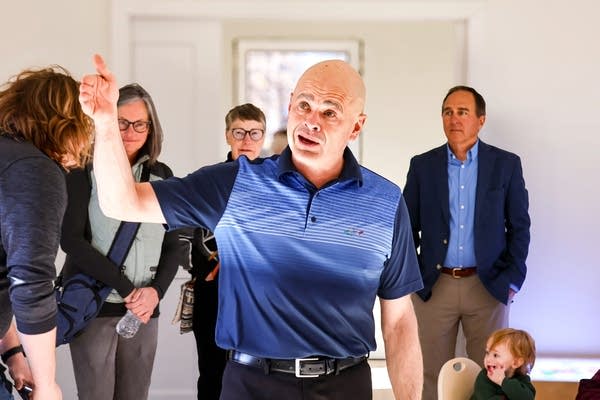
During the ribbon cutting ceremony last month, Mapleton Mayor Jeff Annis said this project wasn’t easy. But, he said the goal is to help the community grow and invest in it—especially by investing in child care services.
“The child care house wasn't a cakewalk; it’s been a long process,” Annis said. “It starts with Tiny Roots, but you have big dreams, and here is where those big dreams will start.”
The child care house’s model is what drew 26-year-old child care provider Brooke Garvey, who lives just outside of Pemberton, Minn. She’s the first licensed provider for Tiny Roots, and will be able to take in up to ten kids from six weeks old to preschool aged children.
Garvey says she always wanted to open her own in-home business, but her farmhouse would cost more to renovate and get it up to code. That, she said, wasn’t an option. But now she’s able to because of the child care house model.
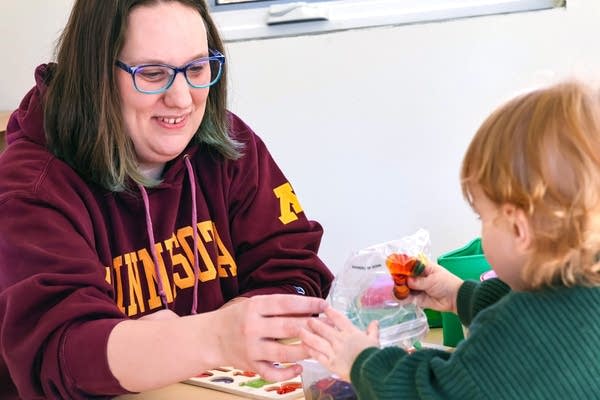
“It’s a home away from home, with the way that it's built, set up like a home,” Garvey said. “I just feel like this environment is very important for kids. I have seen firsthand how kids tend to thrive more in a place where they feel like it's home. So the flexibility of offering it within the neighborhood, within the community, right next to the school, [and] being local, I think is just a great thing.”
And Alaina Keesee says she’s excited to try and send her daughter Sabine to Tiny Roots during her formative years—close to her home.
“I think she likes it already,” Keesee said. “She’s having a whole bunch of fun, and I know she can make a whole bunch of friends here.”


 English (US) ·