
ARTICLE AD BOX
Minnesota is a state rich in minerals. Northern Minnesota is well-known for more than a century of iron ore mining — and more recently, high-profile proposals to mine for copper, nickel and precious metals, have stirred controversy near the Boundary Waters and elsewhere.
Now, there’s a renewed effort to extract another precious metal that is in high demand — manganese, which is deep underground in the Brainerd Lakes area. But that mining push, too, is being met with resistance.
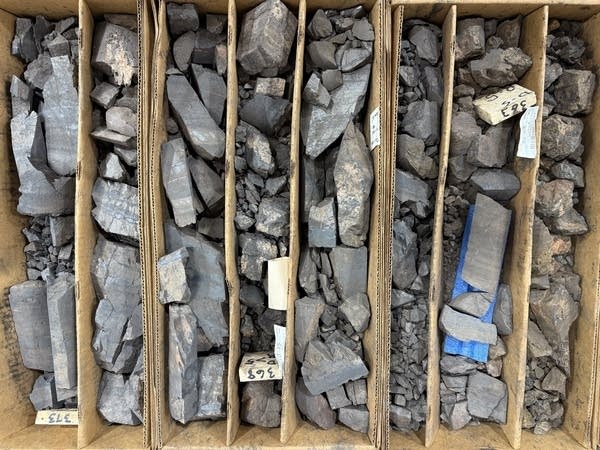
On the outskirts of the tiny town of Emily, a company called North Star Manganese has drilled more than two dozen holes, hundreds of feet below the surface. Geologists have spent the past five years studying the rock and mapping the mineral deposit deep underground.
The results, they say, are incredibly promising. The deposit, the company claims, is the highest-grade deposit of manganese in North America. It’s a critical resource nowadays, as the metal is increasingly needed to make batteries for everything from electric bikes, boats, buses and cars, to vacuums, leaf blowers and power tools. And right now, there is no other active manganese mine operating anywhere in the U.S.
A preliminary assessment the company released in August lays out the possibility for an underground mine that would operate for more than 20 years, and could employ up to 100 workers.
North Star Manganese says the data gathered thus far points to the possibility of a successful mining operation that could add needed jobs and economic development to the region.
"I describe it as we have graduated from kindergarten in the sense that we have now collected enough information to absolutely justify the fact that we have a project worth spending more money to collect more data on, versus just a hope and a prayer,” said North Star founder Rick Sandri.
But the prospect of a mine less than two miles from downtown Emily, in an area surrounded by clear lakes and quiet cabins, has many local residents alarmed.
“It scares the bejeebers out of me,” Mark Rossi told the Emily City Council at a meeting last month. Rossi lives on Ruth Lake, located just across the road from the potential mine site.
“It's a beautiful spot, and I want to make sure that it maintains its pristine nature. We love the town. We don't want it to change.”
Long history
Minnesota’s Cuyuna Range east of Brainerd, which was mined for iron ore until the early 1980s, is home to one of the largest undeveloped manganese deposits in North America.
For decades manganese was mined along with the iron. It was valued for its use in hardening steel during World War I and II. There was even a town in the area named for the precious metal, but Manganese, in Crow Wing County, has long been abandoned..
U.S. Steel developed plans to dig an open pit to mine the iron ore and manganese in and around Emily in the 1950s, but then declined to pursue it. The company instead moved to the northeast to develop taconite mines on the Mesabi Iron Range.
Crow Wing Power, a Brainerd-based electric cooperative, acquired the project about 15 years ago. A subsidiary spent more than $20 million on a novel technique to shoot water under high pressure into the earth to break up the manganese, and then pump it to the surface.
But the effort was a high-profile failure, and soured many residents on the prospects of a mining venture in their backyard.
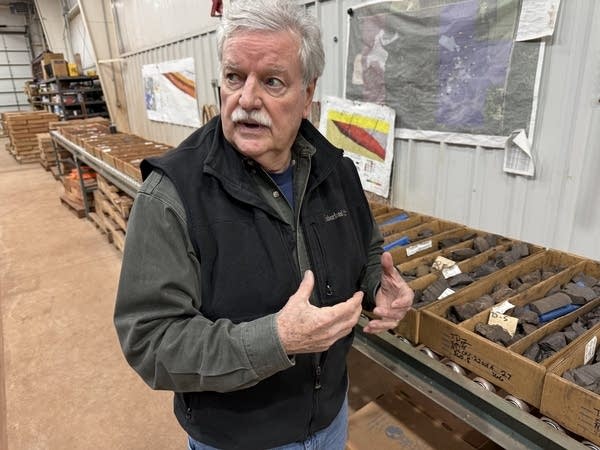
Rick Sandri formed North Star Manganese in 2020 to explore establishing a more traditional mine. He’s set up shop in the old processing plant built by Crow Wing Power.
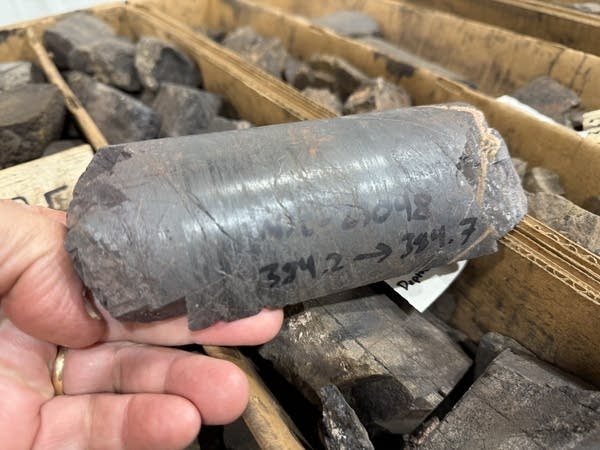
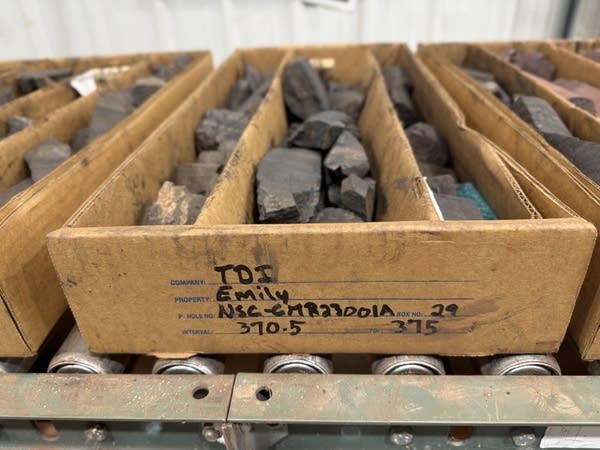
Inside the facility, geologists have laid out boxes of what they call drill core – cylindrical tubes of rock pulled from hundreds of feet underground.
Drill core from copper-nickel exploration in Minnesota sparkles with silver and gold flecks. This core, rich in manganese, is jet black in color.
"Some of these intercepts that we had here were in excess of 48 percent elemental manganese by weight,” said Gabe Sweet, a mining consultant with Stillwater-based Big Rock Exploration that North Star hired to help study the deposit.
“It doesn't get much higher grade than that."
The company has spent more than $10 million studying the rock and mapping out the mineral deposit.
Sandri believes there’s enough material there to mine 400,000 tons of ore annually for more than two decades. As an underground mine, he says it would have a smaller surface level footprint – about the size of a Costco with a parking lot.
"It’s big enough to have a positive impact on the local community, but not so big that it will overwhelm the community,” said Brian Savage, CEO of Electric Metals, North Star’s parent company.
The ore mined in Emily would be trucked to a chemical plant for processing. Savage said they’re looking at several possible sites, both in and out-of-state. The total investment would be north of $600 million.
Savage is bullish because there currently aren’t any manganese mines operating in the U.S. And the metal is a critical component in many lithium-ion batteries, which are increasingly sought after as more and more industries move away from fossil fuel sources and the economy is increasingly electrified.
"It's not just electric cars, but it's buses, trucks, trains, planes, power tools, everything,” said Savage. “And that's going to take a lot of batteries."
Water worries
Emily does not have a history of mining. This is cabin country, with a recreation-based economy centered around the dozens of lakes that pockmark the region.
“This economy survives on water,” said Dan Brennan, an Emily city council member who also co-founded the Emily Mine Information Group in 2021 to help address residents' concerns about a possible manganese mine.
The Emily deposit does not contain the same risks of acid mine drainage associated with controversial copper-nickel mining proposals elsewhere in the state– including Twin Metals, NewRange (formerly PolyMet), and Talon.
But manganese is a potent neurotoxin. Elevated levels in drinking water can lead to serious health impacts, especially in children. And many residents are concerned about the impacts a manganese mine could have on the quality and purity of their drinking water.
"Our aquifer overlays that deposit,” explained Brennan. “They have to penetrate that to get to the mine deposit. Can they do that safely?"
The groundwater in the area already has high ambient levels of manganese that occur naturally, Brennan said. His group has raised money to hire a hydrologist to regularly test water in “sentinel” wells near the mine site to alert them to possible impacts to groundwater from mining activities.
At the Emily city council meeting last month, council members and residents said promises were broken in the past by Crow Wing Power to test wells for manganese. Some people said manganese levels in their water spiked after mining activity.
“There was a lot of trouble in the past with wells being contaminated,” said council member Gary Hanson. “To make promises that weren’t kept, I can understand why the public’s upset.”
“It’s going to contaminate our water,” said Emily resident Gerry Swedell. “We’re going to be paying for it the rest of our lives."
In a politically conservative area, Brennan said he heard opposition to a proposed mine from voters across the political spectrum while knocking on doors during his campaign for his city council seat last year.
“It didn’t matter whose sign was in their front yard,” he said. “I did not hear one positive thing in favor of the mine.”
Emily Mayor Tracy Jones says he's undecided on the possible mine; and isn’t sure if the benefits outweigh the risks. But he acknowledges that potential royalties from the mine could go a long way toward maintaining and improving the city’s costly infrastructure.
"As long as it's done safely and effectively and the city could work out a deal with whatever entity is doing it, I think it would be a good deal for everybody,” Jones said, before adding, “It could be, possibly.”
North Star officials acknowledge they have a lot of work to do to earn the community’s trust.
“There is a long negative history associated with that project,” said Electric Metals CEO Savage. “We're going to have to prove, beyond a reasonable doubt, that we're trustworthy, and that's not something that we've got right now. We're going to have to earn it."
But first, the company has to collect reams of additional geologic and baseline environmental data, and conduct more feasibility studies, before it develops a mine plan to submit to state regulators.
That would then trigger a mandatory environmental impact statement. If the project survived that process, it would then enter a long review and permitting process.
That process takes years, said Joe Henderson, director of the lands and minerals division at the Minnesota Department of Natural Resources.
Henderson says he wishes he could address the community’s concerns. “But realistically, the data doesn't exist yet. We have no submittals in front of us, so it's really challenging.”


 English (US) ·