
ARTICLE AD BOX
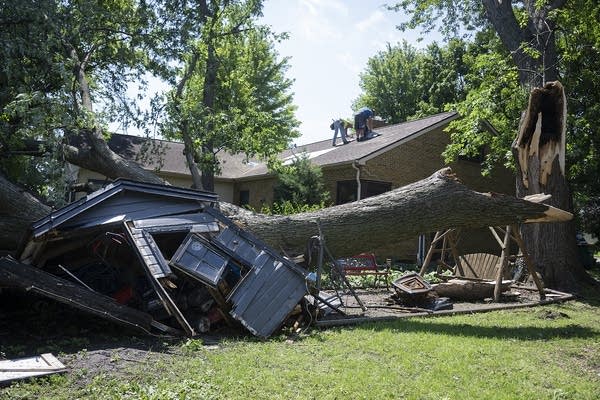
Gov. Tim Walz announced last week that he has authorized emergency assistance for areas of Northwest and West Central Minnesota following severe storms that caused significant destruction earlier this summer.
The governor's office says the storms damaged infrastructure, caused power outages, and downed hundreds of thousands of trees. The public assistance will aid residents and businesses in Beltrami, Cass, Clearwater, Hubbard, Mahnomen, Norman and Todd counties.
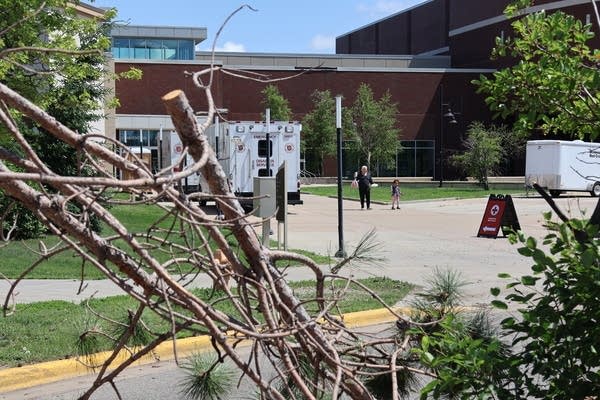
The series of storms in late June are among several severe weather events across the state in recent months, including tornadoes, wildfires, floods, and straight line winds that have damaged or destroyed hundreds of homes, displacing many Minnesotans.
And in a state where there’s already a shortage of affordable housing, it’s becoming more difficult for those displaced from their homes to find places to stay—especially during an emergency.
On July 23 in Mankato, more than five inches of rain fell in just two hours, overwhelming the stormwater systems in the city, flooding streets, parking lots, and low lying yards. And with no place else for all that water to go, water began rising up in the garden-level units in the Homestead Apartment complex, flooding them, too.
“You can see in some of the units, there are like seams, or like you can kind of follow them up,” said Joel Hollerich, as he pointed out the damage… “There are cracks underneath the flooring, and the water just started pushing its way up anywhere that it could.”
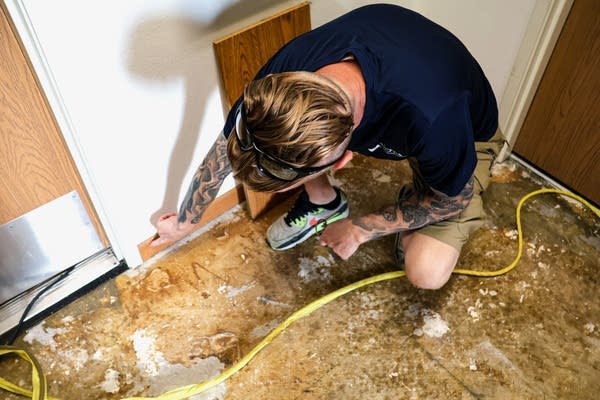
Hollerich is with the Southwest Minnesota Housing Partnership—a nonprofit affordable housing developer that has owned the site since 2017. The flood displaced 66 residents, and Hollerich says with an affordable housing crunch in the area, finding places for the residents to stay was difficult.
“We even had to put some people up in St. Peter because there weren’t hotel rooms available (in Mankato) over the weekend,” Hollerich said. “Otherwise, it was calling other places all over the city, trying to find vacancies, you know, wherever they can.”
The overall rental vacancy rate in Mankato is at just 1.7 percent, according to a Mankato housing study published in April. A healthy vacancy rate is five percent. There’s virtually a zero percent vacancy rate for senior housing or people with disabilities.
Multiple government and nonprofit agencies—including Southwest Minnesota Housing Partnership and the Homestead’s on-site manager, Lloyd Management–worked to get the residents housed. All residents have found new permanent housing or made other arrangements and are no longer staying at the hotels.
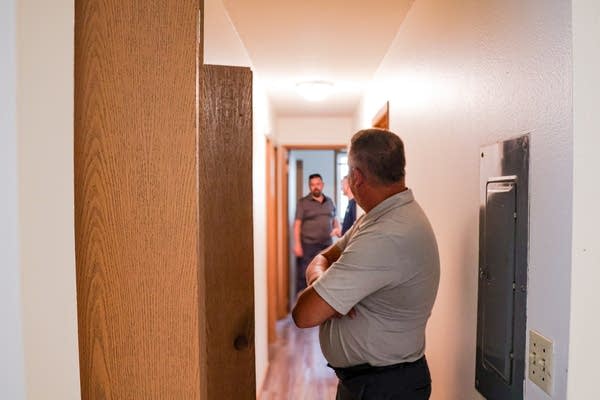
Chad Adams, chief executive officer of the Southwest Minnesota Housing Partnership, says there just isn’t enough temporary housing to meet the growing demand.
"There's always a need for more emergency shelter in housing, but there's long term need for more affordable housing in Mankato,” Adams said. “We’re one of the providers that wants to continue to build more and will continue to do so."
Homestead Apartments also flooded back in 2014 because of heavy rains and backed up stormwater infrastructure. Residents were displaced back then, too, for months. When Southwest Minnesota Housing Partnership took ownership in 2017, they made flood mitigation upgrades like waterproofing the foundation, installing tiling and drain tower systems in 2019.
But even that, Adams says, wasn’t enough to combat the increasing amount of rainfall that Mankato and other parts of southern Minnesota have been receiving in recent years. Southwest Minnesota Housing Partnership is also working with civil engineers to possibly look at stormwater infrastructure, but Adams says he’s not sure if more can be done on the site.
It’s not clear yet when repairs to the flooded units will be complete. Adams says it could be some time before residents will be able to return.

Many residents lost their personal belongings in the flood. Dumpsters filled with ruined clothes, toys and furniture are placed out in the parking lot to be thrown away. Adams said helping tenants find housing just confirmed what he already knew about the affordable housing market.
“Before this incident even occurred, I think we were pretty strong believers that there was a gap in the Mankato area,” he said. “But now that we’ve actually been through something and are working with our tenants, obviously, there’s a gap. There’s a need in the community.”
Mankato is not unique in having a significant lack of housing in the aftermath of disasters.
‘It just ended our place to live’
Just a couple of years ago, Dave and Carol Kochendorfer bought an ideal home for retirement: a four-bedroom house in Waterville in Le Sueur County. It’s an older house, one that they “tried to modernize” a little bit, situated in between Lake Tetonka and Sakata Lake near the Cannon River.
“We had been in the house for two years. We thought that last summer would be a summer to kind of enjoy the yard,” Dave Kochendorfer, 72, said. “Carol likes gardening, and just kind of relaxed a little more. Finally, maybe do a little fishing, have people in, whatever. And then, in June (2024), as this part of the world knows, we had this big rainstorm that lasted over a week.”
The town of Waterville experienced severe flooding. Water filled many homes and businesses and sat stagnantly for weeks after the rains finally stopped. Even though friends and neighbors helped with sandbagging around their home, floodwaters still managed to seep into the Kochendorfers house and cause significant damage.
The Kochendorfers had no choice but to evacuate.
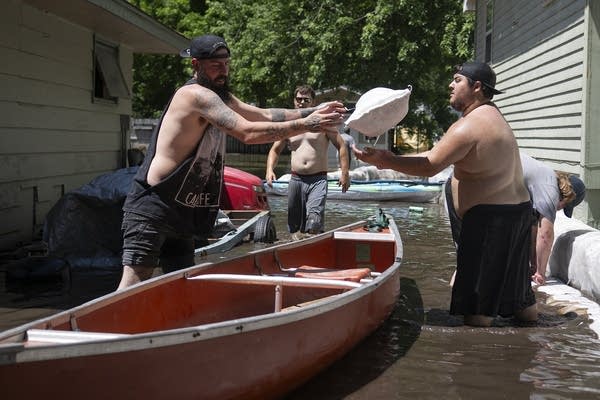
“We had a canoe,” Dave said. “We put everything we could on top of beds and other furniture. Packed up our suitcases because we had our son’s house up in the Minneapolis area to go to. So, we packed up everything and canoed out to where we parked our car on higher ground and left.”
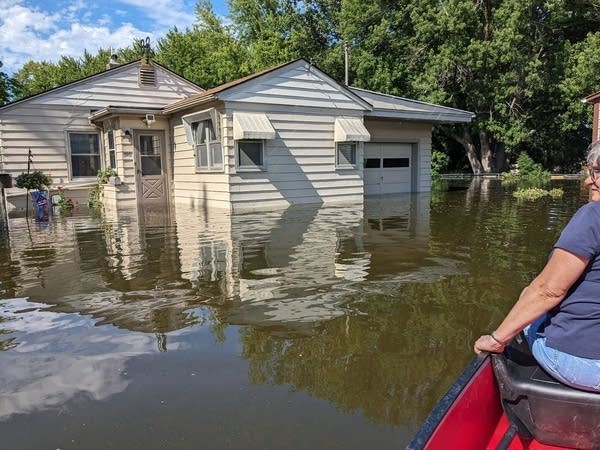
Now, 14 months later, the Kochendorfers are still displaced. They occasionally stay with friends and family, but most of the time, they live in a hotel-like room at The Village, a community retreat center in Waterville, that serves as a temporary shelter.
And while they’re grateful for the outpouring of support and donations that came in after the flood, Dave Kochendorfer says he's frustrated with the overall disaster response.
“There could be 300 tubes of toothpaste and shampoo and stuff (given to them),” Dave said. “Well, that wasn’t what we needed. We needed guidelines to how to get our house back together. You know, we could go to the store. I mean, the flood didn’t end our income. It just ended our place to live.”
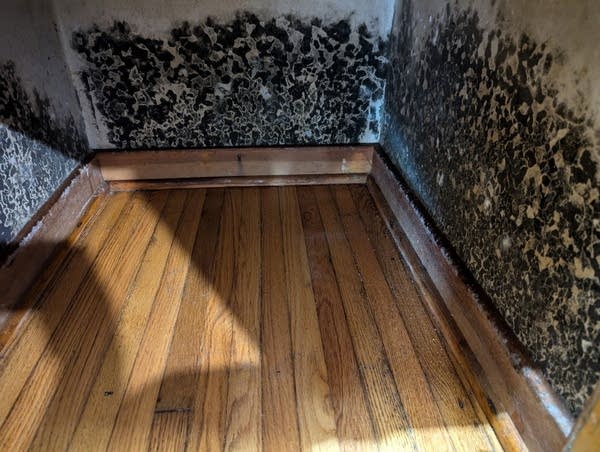
After the flood, mold rapidly grew in the Kochendorfers' house. The interior walls and cabinets needed to be torn out. Also, because their residence was built in a floodplain, it now needs to be raised, and brought up to code. All that work will take time, and with so many other homes and businesses similarly damaged, and too few contractors in the area, Carol Kochendorfer says they're tired of living out of their suitcases and just want to go home.
“It was more just that long waiting game…just waiting and waiting,” Carol, 72, said. “You would call electricians and they can’t come for the next four months and stuff like that. It’s just waiting and waiting."
They just recently were finally able to line up a contractor, and insurance will cover much of the rebuilding cost. Dave Kochendorfer says when the bought the home, they were required to buy flood insurance, which ended up saving them tens of thousands of dollars.
“A number of people in town who’ve been here a lot longer than us never had flood insurance,” Kochendorfer said. “They thought they were safe or they were never required to get it when they got their homes. …I know people say, ‘Oh, it’s expensive.’ …but boy, we are so thankful we’ve had it, because without it, we would have had to drain a major part of our retirement funds to replace our home.”
And the Kochendorfers say they’re both thankful to have a support system where they can have a roof over their head.
“We’ve been well provided for, and taken care of,” he said. “Other people haven’t been as fortunate. And you know, had to really kind of suffer more than we have.”
Building a resilient future
More people are being displaced from their homes after disasters for longer periods of time, as severe storms driven by climate change are becoming more frequent and causing greater damage.
Just between June to Aug. 11, the American Red Cross in Minnesota says it responded to 115 individual incidents involving floods, tornadoes, house fires, and storms. The Red Cross assisted 481 people, including helping some find temporary shelter and longer term housing.
Nick Cluppert of the American Red Cross office in Minneapolis, says generally, the disaster relief organization can open up shelters for displaced residents and operate it for anywhere from a day to about two weeks or more.
“We have seen situations where shelters have been open longer, especially for really big disasters where we have maybe hundreds of people in shelters,” Cluppert said. “The more people that are displaced, especially if the housing short term, or the affordable housing situation is limited in a community, if we have a larger number of people displaced, it’s going to take a little bit longer to help connect and find resources for everybody.”

Communities across Minnesota are experiencing increasing demand for temporary, emergency, and longer term housing after devastating storms, and these more frequent severe weather events are straining emergency management resources. Officials say the best way to improve disaster recovery is to invest more in planning and preparedness, including detailed plans for shelters and emergency housing solutions.
Blain Johnson, emergency management director of Lac qui Parle County and board member for the Association of Minnesota Emergency Managers, says investing in more resilient infrastructure, too, would help reduce or limit the damage caused by severe weather.
“If we don’t have good preparedness, we’re going to be at risk for way worse disasters in the future,” Johnson said. “We’ve got a great community, great state, but we need to start preparing. You save way more money before by preparing versus after.”
If you’d like to help:
As a 501 (c)(3) nonprofit organization, Southwest Minnesota Housing Partnership may accept donations for Homestead’s displaced residents at https://www.swmhp.org/about/donate/. All contributions will be distributed among affected households to help with immediate needs.


 English (US) ·