
ARTICLE AD BOX
The Great Minnesota Get-Together draws nearly two million people to the state fairgrounds every year. And that diverse collection of individuals provides a nice side benefit — the perfect pool of participants on which to conduct public health research.
Fairgoers can scream in a recording booth, spit in a test tube and march around for three minutes, all in the name of science.
The University of Minnesota has been conducting research at the state fair since 2014. Housed in the Driven to Discover building near the Grandstand, the university, along with peer institutions, survey, interview and test thousands of fairgoers. Half a million people have come through since its introduction 11 years ago.
“Minnesotans are generally very curious people,” said Ellen Demerath, who helped start Driven to Discover and codirects the project. “They love going to the fair to learn something new every year. We thought that the university could really benefit from bringing the public closer to the work we do in research.”
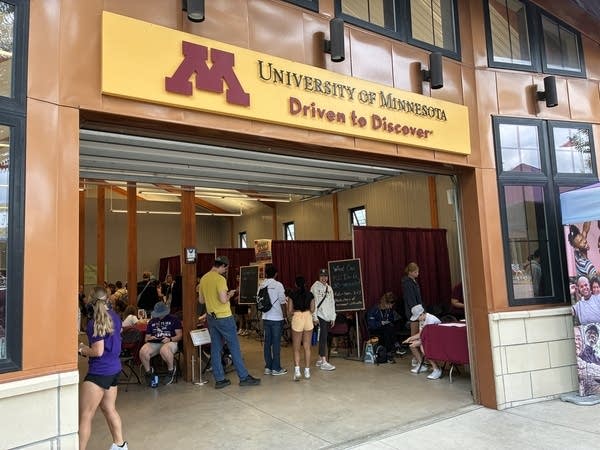
This year, there are more than 50 different research projects. One team is trying to develop low-cost tests to detect throat cancer early, so they’re having volunteers spit in a test tube.
Another team is leading people through a 3-minute march sequence to the U’s fight song, as they design a cardiovascular fitness app. And the research is not limited to public health. There are studies on everything from public perception of cannabis usage to the addictiveness of cell phones.
One of the most valuable benefits of the fair setting is that it allows researchers to meet with vast quantities of people over the course of just 12 days. Scientists say it can often be difficult to recruit people for studies — many teams rely on hanging signs around town or online postings, which deliver limited results.
Jeff Boissoneault, an anesthesiology professor, is leading a study on how drinking alcohol at large events like the fair impacts people’s mood and pain levels. In his first three days at the fair, he’d already interviewed nearly 150 people. He said normally meeting with that many participants would take years.
“Honestly, you can’t replicate the setting anywhere else,” Boissoneault said. “It is really unique. ... the kind of work we do in five days (here) would take years otherwise. It’s one of the things that drew me to the university.”
Demerath said that there’s nothing else like this in the country — no other fair or big public event where legitimate university research is being conducted. And, right now, this work is all the more critical.
“Research is really under threat from the budget cuts that were written into law with the recent budget from the federal government,” said Demerath, who is also a public health professor at the university.
“Federal funding is the way that advanced science and research happens in these United States, so there aren't just lots of other opportunities. While we wish it weren't happening, this facility is a helpful, low-cost option.”
Christie Naberhaus visited Driven to Discover on her way to the deep fried olives stand. She’s from Memphis, but has a farm in Wisconsin and said she never misses the State Fair. And she makes sure to stop in to participate in research every year.
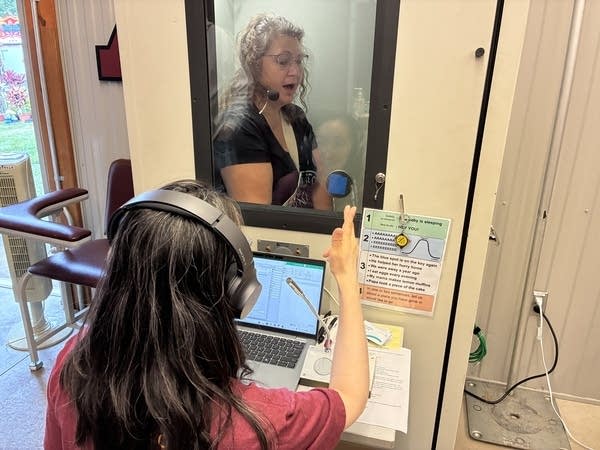
She helped out with a university study into vocal injuries. University volunteers are recording hundreds of people’s voices to figure out how to better help patients whose voice changes after an illness or surgery. Naberhaus sits in the recording booth and speaks into a microphone, cued by a researcher sitting outside.
“It’s fun, and who knows? I might be on TV someday or go down in science,” Naberhaus said, while laughing after she finished recording.
Demerath said another perk of the fair is that not only are they seeing a lot of people, they’re seeing a diverse cross section of the state and country. And that’s important in public health research.
For example, last year a design researcher took 3D measurements of people’s faces as part of her project to design a face mask that could better fit different face shapes. She tracked all the different dimensions. How high the cheekbones were, how much the chin jutted, how wide was the nose. She even had participants speak into a piece of equipment to collect the amount of air they were breathing out, to ensure there weren’t gaps in the mask.
“What if we just had five people come in and she did the whole mask design just on the basis of them. OK, that would be a good mask for five people,” Demerath explained. “But what we want is masks that are good for everybody.”
Outside the building, Steve Elmer, a physical therapy professor at St. Catherine’s University, is leading a research study into how healthy Minnesotans are, in an effort to create metrics that could be utilized in doctors’ offices someday.
His team has fairgoers toss four pound medicine balls to test their upper body strength. Laura Millstein, from Minneapolis, and her brother Eric, who is visiting from Chicago, participate. Millstein joked that she visits the building every year to see how her physical fitness stacks up to her family members and friends.
Unfortunately, her brother beat her at the ball toss. She blamed his long arms.
Demerath says fun activities like this helps make research seem less intimidating, which is an underlying goal of their research work at the fairgrounds.
“What we found was that by bringing our research selves, but dressed in shorts and t-shirts and smiles and we’re just having fun with the rest of them, it made people relax and feel that, oh, research might actually be something I could be a part of,” Demerath said.


 English (US) ·