
ARTICLE AD BOX
The wind is a threat to any farmer’s land. The topsoil could blow away, taking its valuable nutrients along with it. Vance Johnson, a Breckenridge farmer, can’t have that, which is why he’s got a plan.
“I’ve got something growing here with a root that's got it tied to the ground,” he says.
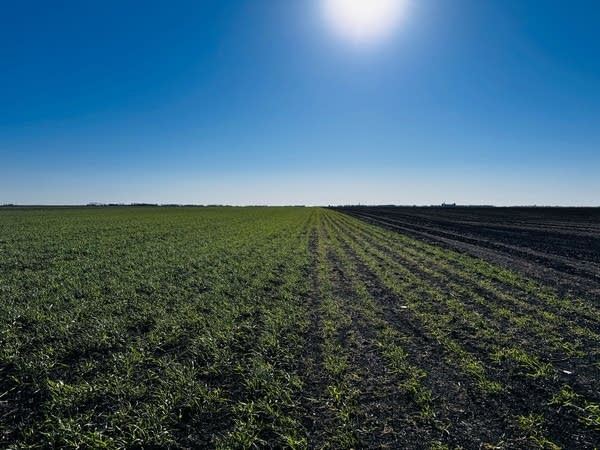
On a recent afternoon, he pointed to the ground, where barley is lined up in a row. Standing a mere inch tall, the young barley may not seem like much at first, but its leaves serve as windbreakers. Its roots also help anchor the soil to the earth.
“A large percentage of your fertility is in the top couple of inches of soil, and that's where the good ground is,” Johnson said. “It's lost money that ends up in the air.”
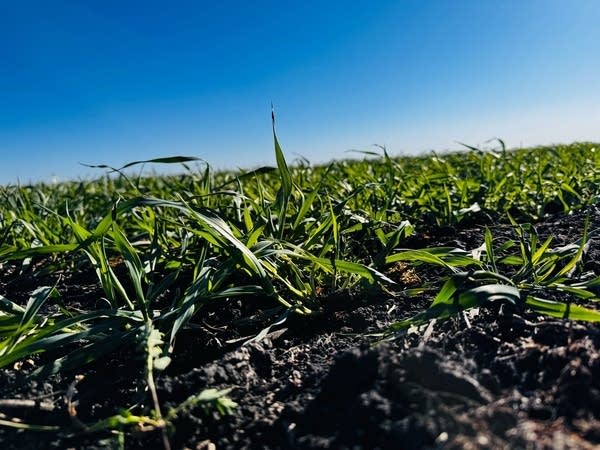
But thanks to a cost-share program through the Natural Resources Conservation Service (NRCS), which operates under the U.S. Department of Agriculture, he’s able to afford the tens of thousands of dollars needed to plant cover crops every year.
He has to submit receipts for conservation practice expenses every October to get reimbursed for his investments. But because the government had been shut down for over a month, no one was available to process his paperwork.
While his payment is scheduled for December, he’s worried about the potential delay in getting reimbursed $40,000 for his conservative investments, funding that’s important for his budget.
“Those payments help with the sleepless nights,” Johnson said. “The anxiety of what could happen as well as offsetting some of the costs that come with it.”
With the government now open, federal staff can now begin to work through the piling contracts.
“NRCS has resumed normal operations as of today,” a USDA spokesperson said. “Producers can expect contracts to be processed in a timely manner.”
But many observers worry delays could nevertheless be in the offing.
What a month’s delay could mean
“The folks that do all the reviewing of these projects and give final approval to the funding haven't been working for six weeks,” farm management analyst Kent Thiesse said. “It's going to take a while to get things back on track again.”
Through his work helping farmers with managing their land, Thiesse has noticed certain risks producers face.
“Every year they obviously have weather risk. They have marketing risks,” Thiesse said. “But the one that's kind of a newer one, I think, in the last few years, is government risk. Because we've had a lot of ups and downs on government policy.”
Earlier this year, the USDA froze certain NRCS programs that had previously been introduced during the Biden Administration. USDA Secretary Brook Rollins had said the programs were being reviewed to make sure they weren’t a part of “far-left climate programs.”
The NRCS has also seen layoffs recently, which could impact how much staff is available for reviewing contracts
“Up until recent years, usually you didn't worry too much about the federal government,” Thiesse said. “If you had some programs in place like conservation, you kind of knew those programs were there, and you could build that into your plan.”
NRCS contracts mean farmers and the government are business partners. And both business partners must trust the other to hold up their end of the deal.
“If we undermine that trust, why are farmers going to sign up for these programs in the first place?” said former Under Secretary of Agriculture for Farm Production and Conservation Robert Bonnie, who’s overseen the NRCS in past administrations.
Bonnie said, through that experience, he came to understand the risk farmers take when they decide to switch to conservation practices.
“You're asking farmers to take on debt. You're asking them to take on risk associated with these new practices,” Bonnie said. “When you have a shutdown, or when you’re reducing staff at the agency, it makes it harder on the farmer.”
The conservation investments NRCS helps fund
Farmer Vance Johnson has worked with NRCS for over a decade now to adopt conservation practices, a transition that hasn’t been easy. From an outside perspective, it may seem intuitive to adapt conservation practices to preserve your soil’s health; the reality is more complicated.
“It's not like trying something new at a restaurant,” Johnson said. “It’s a completely different mindset.”
For four generations, Johnson and his family have been taught to till the ground, a practice that landed him in trouble over 10 years ago when intense rain washed away his soil. Since then, he’s adopted more conservation practices on his land. But at first, it was still tough to break away from tradition.
“The biggest thing was to fight the urge in the fall after harvest to go out there and work that ground, because that's just what we always did,” Johnson said.

While, initially, the cover crops and no-till practices were funded out of his own pocket, he’s since shared the cost with NRCS.
Johnson said he’s seen the benefits of the conservation practices and is worried that disruptions like the government shutdown could deter other farmers who might be curious about conservation programs. It would be hard for farmers to start a program if they think payments might be delayed.
“It gets to be a little more critical for them, as far as trying to cash flow things and make things work,” Johnson said.
For Johnson, should his payment not arrive in December as scheduled, that means digging deeper into his pockets to pay for monthly costs he expected to be covered with his reimbursement.
“I'll have to access my operating note and pull money out to cover that payment if I don't have the crop sale to offset it,” he said.
The thought of going further into debt is not appealing. So, in the future, he said he’ll likely not consider his cost-share grant a guarantee. Instead, he’s considering marketing his crops differently to earn extra money if the government shuts down again and his reimbursement is delayed.
He’d take more drastic action if those conservation programs shrink.
“I would scale [my cover crops] back, you know, to be a little more financially palatable,” Johnson said. “If I'm not getting some more support to push these programs.”




 English (US) ·