
ARTICLE AD BOX
This story was produced in partnership with Harvest Public Media, a collaboration of public media newsrooms in the Midwest and Great Plains. It reports on food systems, agriculture and rural issues.
The air temperature in Garrison, North Dakota, is barely above zero degrees. And yet, the town’s wide main street is filled with bundled-up shoppers galore perusing the brightly lit storefronts.
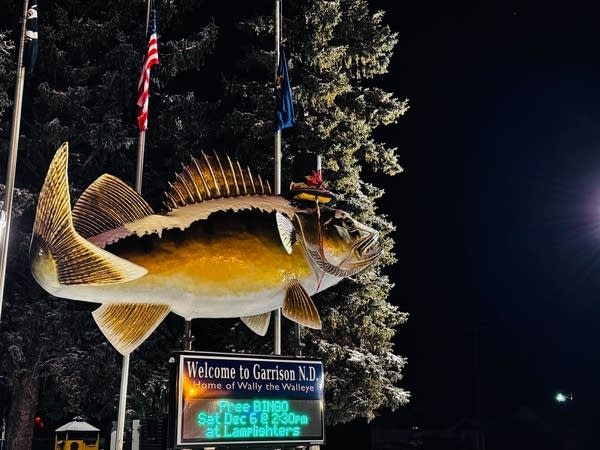
Snowflakes are lightly coating the statue of a large Walleye, now sporting a top hat — worn specially for this weekend’s annual Dickens Village Festival. For more than 30 years, Garrison’s population of 1,400 has celebrated Charles Dickens’ works, drawing visitors from all over the region.
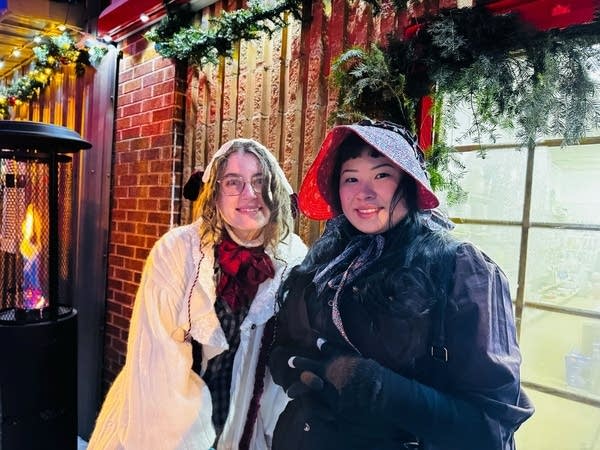
Maya Anderson, for example, traveled here with a friend from the Twin Cities, a full eight hours away. Wearing 1800s-era garments, they’re huddling around a dimly lit patio heater before exploring the town’s stores.
She says shopping at the usual big-box brands can be predictably safe, which takes away from the adventure and joy of discovering something new.
“There's a lot of times where I've sat around, and I'm like, ‘You know what? I want to try something,’” Anderson said. “I want to try a local business. I want to see what someone does differently.”
Her purchases will be among the many that help keep the Garrison community vibrant and growing.
It’s not just Garrison. Nearly every state has a handful of rural, out-of-the-way towns that drape their downtowns with lights, put on parades and festivals and heat up the hot chocolate in a bid for holiday visitors. These outside dollars are critical for such towns’ economies. But as online shopping grows, towns are having to do ever more to bring people’s business back to local economies.
In Garrison, those attractions look like a double-decker bus offering town tours, reindeer visits and a local production of “A Christmas Carol.”
“The big battle that we're up against is the big boxes and then shopping online with the Amazons and the Walmarts and the Targets and all those,” said Dick Messerly, president of the Dickens Village Festival. “Because people find that so convenient, so you've got to give them some other reason to come here.”
The festival is one of many events the town has put together to attract those outside visitors. And during this holiday festival, they get many of their tourists, whose purchases help the town maintain its streets and historic buildings.
Messerly says that while in the past, farmers and other rural communities would’ve supported the town’s economy year-round, attracting outsiders for special events is now critical.
“A lot of the small towns have a hard time keeping their main street open and their businesses going,” he said. “So, with all the events year-round, that sure helps our retail sector.”
‘They’re coming for an experience’
Online shopping isn’t just more convenient — it’s becoming more popular.
Salesforce, a commerce company, reported that digital sales for November and December in the U.S. are expected to reach $288 billion. That’s a 2 percent year-over-year increase.
As more people go online to shop, towns are getting ever more creative to pull them away from their screens.
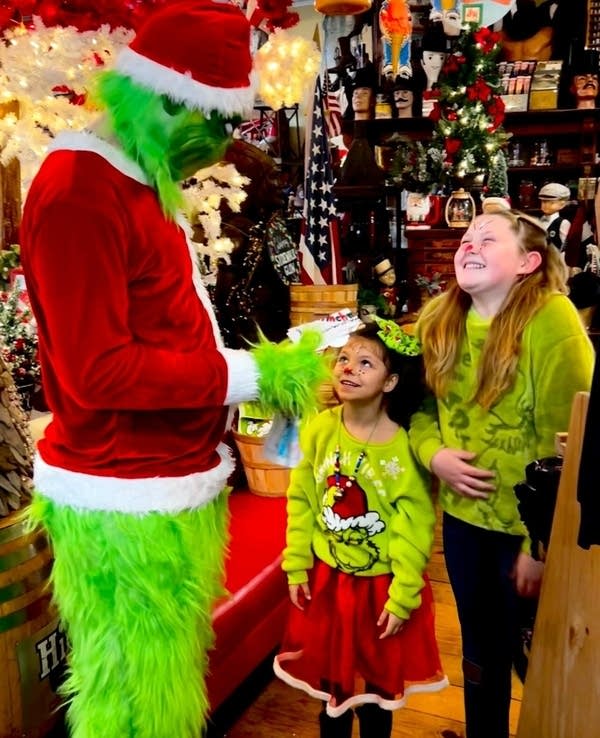
“People are coming for an experience with their family,” said Nina Gilliam, a business owner and village board trustee in Caledonia, Missouri.
With a three-digit population, Caledonia’s shop-owners know they can’t compete against the big box retailers and online giants, at least not alone. They have to work together.
The town’s businesses pool their profits to invest in local events that grow their foot traffic. Gilliam said while teamwork is the norm, they still get the occasional Grinch.
“[But] being the Hallmark town kind of turns the Grinch and grows the big heart,” she said. “Because they seem not to Grinch it up very much after they get into the village. It's a culture we have, and we all love it.”
This year, each store offered free chocolate for anyone who stopped in, even if they didn’t buy anything. And all of the free offerings leave more space in visitors’ wallets to spend.
Staying true to a town’s identity
Some towns are just made for attracting tourists at Christmas.
Santa Claus, Ind. — named by its residents in the 1850s — is proud of its namesake.
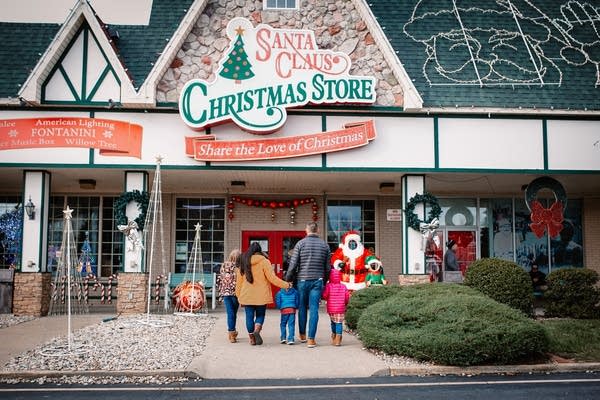
The town of just over 2,500 people in southwest Indiana offers chestnut roasts at Santa's Candy Castle, a theme park, a light show and letter writing to Santa at the town’s original post office, which is now part of a museum. Santa, of course, always writes back.
A town named Santa Claus naturally attracts holiday visitors.
It’s an annual tradition for many, according to Melissa Arnold, executive director of the county visitors bureau. But the secret to their success, she said, is staying grounded in their roots.
“I think the town of Santa Claus stays true to its name,” Arnold said. “We are famous because of our name and because of our offerings, but we're not trying to be something that we're not.”
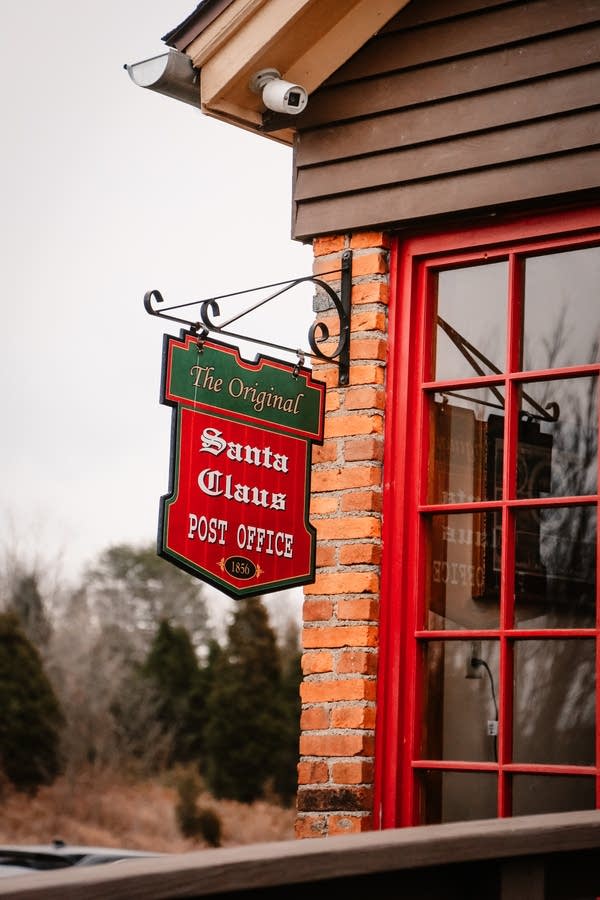
She admits that sometimes people don’t believe the town is a real place.
“It's fun to say you're from Santa Claus, Ind.,” she said, “especially to those unfamiliar, because sometimes they'll kind of hesitate and say, ‘really?’”
Controlling their destiny
Minden, Neb., is known as “The Christmas City.”
The town, located about two hours west of Lincoln, is regionally famous for lighting the entire city — from the county courthouse to commercial buildings.
“If you hear just ‘Christmas lights,’ it's maybe not something that gets you too excited,” said City Administrator and Economic Development Director Michael Krings. “But if you've seen it, it really is kind of breathtaking. The amount of lights and how much is involved in it.”
Krings said a light display alone isn’t enough to become an annual tourist destination. Minden also attracts visitors with its annual pageant, parade and craft fairs.
With a population of just over 3,000 people, Krings said the money visitors spend is critical to the small town, especially for locally-owned businesses. But he said it’s also important to keep the town’s identity and its people a priority.
“It can't be just about trying to bring in visitors,” he said. “It's about doing it in a way that the local people can be proud of it.”


 English (US) ·