
ARTICLE AD BOX
America’s national parks have been strained since February when the Trump administration began to lay off thousands of federal workers. For months, one Minnesota family got a front-row seat to the impacts of those cuts as they took a "roadschooling" trip across the nation.
The dream: National parks become classrooms
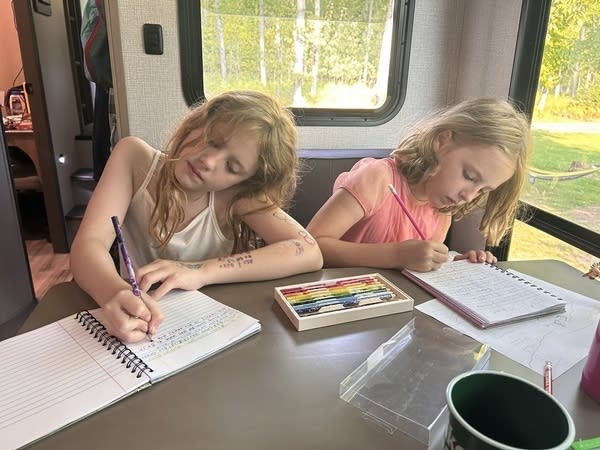
The family’s recreational vehicle would be their house and school bus, and the national parks would serve as their classroom and playground. That was Jen Goepfert and Travis Pedersen’s plan for when their twin girls reached third grade.
Then, Goepfert’s sister Chris, who works for the National Parks Conservation Association, reminded her that through the national program Every Kid Outdoors, families of fourth graders get free admission to all national parks and federal lands.
The idea of “roadschooling” came courtesy of Goepfert’s sister. A story about the nomadic-style homeschooling made the cover of one of the NPCA’s annual publications and caught her attention.
“Because as a teacher, I'm really interested in alternative ways to educate our students and for my own kids as well,” she said.
With the couple’s shared travel bug, love of national parks and commitment to lifelong learning, it didn’t take any convincing for Pedersen to agree to Goepfert’s idea in 2018.
“The big thing was that I was like, let's go now. So I'm like, very impulsive, and my husband is a planner,” she said.
The couple pumped the brakes, but started squirreling money into savings, foregoing bigger purchases and vacations, and funneling their energy into prepping for the year-long trip of a lifetime. She’s now a school district-level coordinator for classroom management, and he’s an architect. While Pedersen’s employer was initially reluctant to approve a year on the road, the COVID-19 pandemic demonstrated just how possible long-term remote work could be.
Hitting the road

Fast-forward to September 2024. The RV was packed. Twins Aela and Eva were starting fourth grade. Goepfert had developed her own curricula encompassing state education standards, novel studies drawing on her experience as an English teacher and the national parks’ Junior Ranger program. The family secured a travel-friendly Wi-Fi hotspot for remote school and work. Pedersen’s attention to detail manifested in a Gantt chart to map their route.
“So we knew we wanted to be in New England for fall. We knew we wanted to be in Disney World on a shoulder month. And we knew we wanted to be visiting his mom in Texas when she was there in the winter. We knew we wanted to be back here by a certain date. And once we plugged those in, we used the national parks to guide us,” Goepfert said.
There are 63 national parks in the United States, and more than 400 sites — historic sites, recreation areas and much more — managed by the National Park Service.
“Those big parks were our North Star around the country,” Goepfert said. “And then as we came into states, I would uncover all the little gems, the battlefields and monuments, and we would put those in on our itinerary.”
In total, the family moved their rig 66 times in the 2024-25 school year. They visited 66 NPS-managed sites, including about 20 big parks, across 37 states. Friends met them along the way, and they visited companions living on the route. They only deviated from the Gantt chart twice and kept up a blog to share their journey.
A front-row seat to layoffs, federal cut impacts
When Donald Trump won the presidential election last November, Goepfert considered packing up and heading home.
She worried that it would be selfish to keep going and put stress on parks, and that her energy might be of better use advocating for causes like education and reproductive rights back home. But her sister insisted that the best way to fight back was to continue on and show the Trump administration how valuable parks and public lands are to the people.
“They belong to us. We can't let the administration take that away from us because they're cutting funding,” Goepfert said. “And we need to show the administration that these parks are valuable. And when we stop going to them, we're sending the opposite signal.”
The Trump administration began to lay off federal workers en masse in February, led in part by Elon Musk and the fledgling Department of Government Efficiency.
By July, the National Park Service had lost 24 percent of its permanent workforce. That’s led to delays in maintenance and cleaning, limited conservation efforts, reduced hours at visitor centers, canceling education programs and leaving gaps in emergency services.
Goepfert began to notice a significant dip in morale among park workers in February. In March, the family made it to Texas, New Mexico and Arizona and encountered reduced hours and cuts to programming, which was part of her roadschooling curricula.
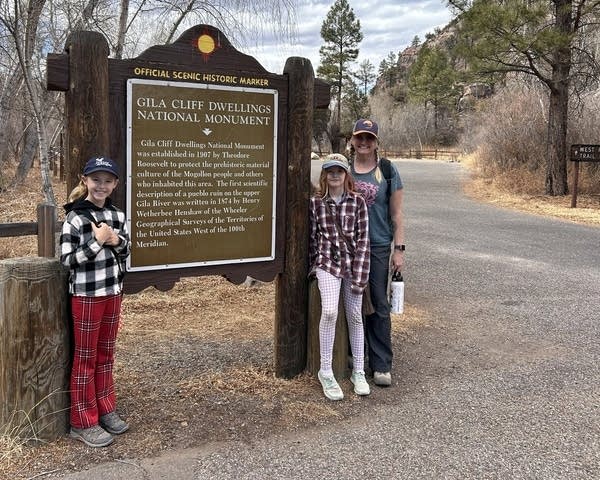
“There's a big part in almost every Junior Ranger book: talk to a ranger and ask them about their job. And it was harder and harder to find rangers to do that,” she recalled.
Fewer tours were available. She also observed more volunteers cropping up in front-facing jobs at the parks. Bathrooms weren’t clean. As visitor season peaked in July, Goepfert saw visitors upset with rangers, and rangers grew short with visitors as they were forced to keep up the facade of fully functioning parks while taking on additional responsibilities.
“We were in one park, and there was definitely a backcountry emergency happening, a rescue, and almost everybody that showed up were volunteers,” she said. “It's an inconvenience to have a dirty bathroom. It's really, really awful to not have emergency services.”
Most parks are still open with skeleton crews as the government shutdown reaches a record duration of 38 days, as of Friday. The U.S. Department of the Interior has furloughed more than 9,000 National Park Service employees — 64 percent of staff — as outlined in a contingency plan.
Several hundred former park employees, including two previous agency directors, recently called for the parks to close during the shutdown. Those calls have gone unanswered.
Meanwhile, President Donald Trump continues to threaten more federal job losses. And the U.S. Department of the Interior is planning to lay off another 272 park employees, according to a court filing last month.
Since the start of October, a wildfire ignited near an unstaffed campground within Joshua Tree National Park; there has been illegal jumping at Yosemite; and across the park system, bathrooms and trail maintenance are suffering, according to a letter from the ex-employees.
At Minnesota’s Voyageurs National Park, emergency and law enforcement services are only available four days a week due to understaffing, according to internal government data first reported by the New York Times. “On days when coverage does exist, visitors in need can expect extended response times of up to several hours depending on the location of the incident,” the entry reads.
Pipestone National Monument in southwestern Minnesota — the family’s final stop — had reduced its hours and services, affecting their visitor center, ranger-led tours and educational programs.
Vandalism and damage during the 2018-19 government shutdown, Goepfert said, are among the reasons why she thinks the national parks should close right now.
Life lessons on the road
The political turmoil did complicate the family’s trip, but it didn’t stifle the life lessons they learned on the road.
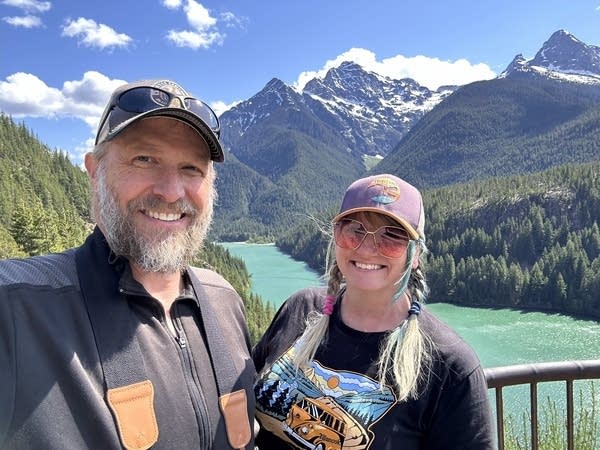
The adventure taught the family to live simply and small, embracing the space outside of their rig. Goepfert said it made her and her husband the closest they’d ever been in 15 years of marriage. She accepted that waking up at the crack of dawn to spend a whole day soaking up a park wasn’t practical and that space was tight.
“I had to let go of a lot of my expectations. I had to accept my family for who they were and adjust who I was to meet that and they had to do the same,” she said. “We did a lot of social-emotional learning on the road with my kids.”
Goepfert integrated that social and emotional curricula into the girls’ academics, like talking about navigating conflict, setting boundaries and respecting and saying the word “no.” All the while, the family became a stronger unit.
They’re back home now and the girls are enrolled in a local school’s fifth grade class.
Aela, the city girl, dreams of becoming a palentologist-marine biologist-singer. Eva, the country girl, wants to be a cartoonist when she grows up. One is happy to be back with her friends. The other misses homeschooling.
“I hear them talk about their experiences, and they talk about things they learned,” Goepfert said.” It's kind of just becoming part of who they are.”
In sharing her firsthand account, Goepfert said she’s concerned about history repeating itself and wants to get the message across that national parks belong to the people.
“I think they're ours. They're held in trust by the government for us. They are our history, they're our culture, they're our landscape. They tell us who we are, they remind us of where we came from,” she said. “If our trip can get anybody to think about how they're usually utilizing our public lands or our history, or want to learn more, that's all we want.”


 English (US) ·